
Planning a bathroom renovation? Before you start picking out tiles and tapware, it’s vital to consider the bathroom renovation plumbing. A successful project begins by checking your existing pipework for age and condition, assessing the drainage system for correct fall, testing your home’s water pressure, checking for hidden leaks, and evaluating your hot water system’s capacity.
Understanding these elements from the start helps prevent costly surprises and makes sure your new bathroom is both functional and beautiful.
This initial checklist is the foundation of a smooth renovation process. Failing to properly assess the plumbing can lead to major issues like water damage, low water pressure in your new rainfall shower, or even needing to demolish new work to fix an old problem. Getting a professional involved early is the best way to protect your investment.
For a comprehensive assessment on the Sunshine Coast, it’s best to consult an expert. Contact MJP Plumbing today before you change your bathroom layout or move any plumbing! Our team is here to provide expert advice and help your renovation run smoothly.
Key Takeaways
-
Start your renovation by planning with a licensed plumber before you finalise any designs to avoid expensive mistakes later.
-
Properties on the Sunshine Coast, especially older homes and those in coastal areas, have specific plumbing needs that require local knowledge.
-
An early and thorough assessment of your existing plumbing helps prevent unexpected costs and major problems during the renovation.
-
All plumbing work in Queensland must comply with strict Australian Standards and local building codes, making a professional plumber essential.
-
Consider choosing water-efficient fixtures and an energy-efficient hot water system to lower your running costs and environmental impact.
Jump to section
- What Plumbing Should You Check Before Your Bathroom Renovation Begins?
- How Do Layout Changes Affect Plumbing When Moving Bathroom Fixtures?
- What Are the Key Plumbing Stages From Rough-In to Fit-Out?
- How Do You Choose Fixtures, Hot Water & Sustainable Options for Your Sunshine Coast Bathroom?
- What Are Common Plumbing Challenges in Sunshine Coast Renovations?
- What Are the Plumbing Differences Between Commercial and Residential Renovations?
- Bringing Your Bathroom Vision to Life with MJP Plumbing
- Frequently Asked Questions
What Plumbing Should You Check Before Your Bathroom Renovation Begins?
The success of your bathroom renovation hinges on the invisible framework of pipes and drains behind your walls and under your floors. Before any demolition starts, a comprehensive plumbing check is non-negotiable for homeowners, builders, and property managers on the Sunshine Coast. This initial assessment identifies potential problems, informs your design choices, and helps create an accurate budget, preventing costly issues from surfacing mid-project. A thorough inspection of existing pipework and drainage is the first step, revealing the health of your system. Equally important is understanding the structural reality of your property’s foundation, whether it’s a concrete slab or a timber frame, as this dictates the cost and feasibility of any layout changes.
How Do You Assess Your Current Bathroom Plumbing Framework?
A detailed evaluation of your existing plumbing is the first item on your checklist. The age and type of your home on the Sunshine Coast will largely determine what lies behind the walls. Many older properties may have galvanised iron or old copper pipework, which are prone to corrosion that restricts water flow and can discolour your water. A renovation is the perfect time to upgrade to modern, durable materials like high-grade copper or cross-linked polyethylene (PEX) tubing. The team at MJP Plumbing conducts pre-renovation assessments to identify this aging pipework, recommending full upgrades to stop future leaks and protect your new bathroom.
The drainage system also needs a close look. We inspect the condition of the main sewer line and branch drains to make sure they are clear and functioning correctly. A critical factor is the ‘fall’ or gradient, which ensures water and waste flow away efficiently. The foundation of your house also plays a big part. Homes on a concrete slab require more intensive work like concrete cutting and trenching to relocate pipes, which increases costs. In contrast, properties with suspended timber floors offer much easier access for plumbers to reconfigure pipework, providing greater flexibility for your new design.
How Do You Check for Leaks and Water Pressure Before Renovating?
Hidden leaks are a renovator’s nightmare. A small, undetected drip behind a wall can lead to widespread water damage, mould growth, and the destruction of new tiling and waterproofing. Before you begin, look for signs like water stains on ceilings, musty smells, or patches of mould. You can also perform a simple check by turning off all taps and watching your water meter; if it’s still ticking over, you likely have a leak. At MJP Plumbing, we use advanced diagnostic tools like CCTV drain cameras to inspect pipes internally and conduct rigorous pressure testing during the rough-in plumbing stage to confirm the system’s integrity before it’s sealed up.
Assessing your water pressure is another essential step. If you’re dreaming of a luxurious rainfall shower, you need adequate pressure to support it. Low water pressure can be caused by corroded pipes, a faulty pressure limiting valve at your meter, or an undersized hot water system. A renovation provides the ideal opportunity to diagnose and fix these issues, making sure your new fixtures perform as they should. Don’t let hidden plumbing problems derail your renovation.
Contact MJP Plumbing for a comprehensive pre-renovation plumbing assessment today and help your project start on a solid foundation.
How Do Layout Changes Affect Plumbing When Moving Bathroom Fixtures?
Changing your bathroom’s layout can dramatically improve its flow and functionality, but it has significant plumbing implications. Relocating fixture locations like the toilet, shower, or vanity will affect the complexity and cost of your renovation, especially when dealing with the large waste pipes required for toilets. For a modern, seamless design, careful planning of wet zones and drainage points is absolutely necessary to prevent practical problems like water pooling and to make sure your new bathroom complies with Australian Standards. Early consultation with a licensed plumber is the key to balancing your design aspirations with plumbing realities.
What’s the Impact of Moving Toilets, Showers, and Vanities?
While moving a vanity or shower is relatively straightforward, relocating a toilet is the most complex and expensive layout change. Toilets require a large 100mm diameter waste pipe that must be installed with a specific gradient to make sure waste clears effectively. In a home with a concrete slab foundation, this involves cutting and trenching the concrete to lay new pipework. For homes with suspended timber floors, the new pipe route is constrained by the direction of the floor joists.
Moving showers and vanities is less complicated as their waste pipes are smaller (typically 40-50mm), offering more flexibility. However, relocating a shower requires precise planning of the floor waste position to create the correct fall for drainage. Any in-wall tapware for showers or basins also needs careful placement within the wall cavity. The experts at MJP Plumbing provide strategic planning consultations to determine the feasibility of your desired layout, making sure your design vision is achievable and functional.
How Do You Design for Optimal Drainage and Wet Areas?
Modern bathroom design often favours walk-in showers and wet rooms, which demand meticulous drainage planning. The floor must have a correct fall, or gradient, to direct water effectively towards the drain, preventing pooling which can lead to mould, moisture damage, and slip hazards. The minimum gradient is typically between 1:80 and 1:100, depending on the application.
Linear drains (also known as strip grates) are a popular choice for these contemporary designs. They offer a sleek look and simplify the tiling process, as the floor only needs to slope in a single direction, unlike a central drain which requires a more complex four-way slope. Planning for these features involves close coordination between your plumber and waterproofer to make sure the entire system is integrated and watertight. MJP Plumbing specialises in drainage installation, making sure the correct fall angles are achieved for a bathroom that is both beautiful and safe. Planning is paramount here, so if you’re thinking about a new layout with different wet areas, speak to MJP Plumbing early to map out your ideal drainage plan and avoid headaches down the track.
What Are the Key Plumbing Stages From Rough-In to Fit-Out?
A successful bathroom renovation follows a clear, sequential plumbing process. The most important stage is the ‘rough-in‘, where all the hidden pipework is installed with millimetre precision before any walls are closed in. Understanding this process helps you coordinate with other trades and appreciate the importance of professional workmanship. Every stage involves rigorous testing to verify the integrity and compliance of the system, which prevents very expensive and disruptive problems from appearing after your beautiful new bathroom is finished. This methodical approach is fundamental to a quality renovation.
Why is the Rough-In Plumbing Phase So Important?
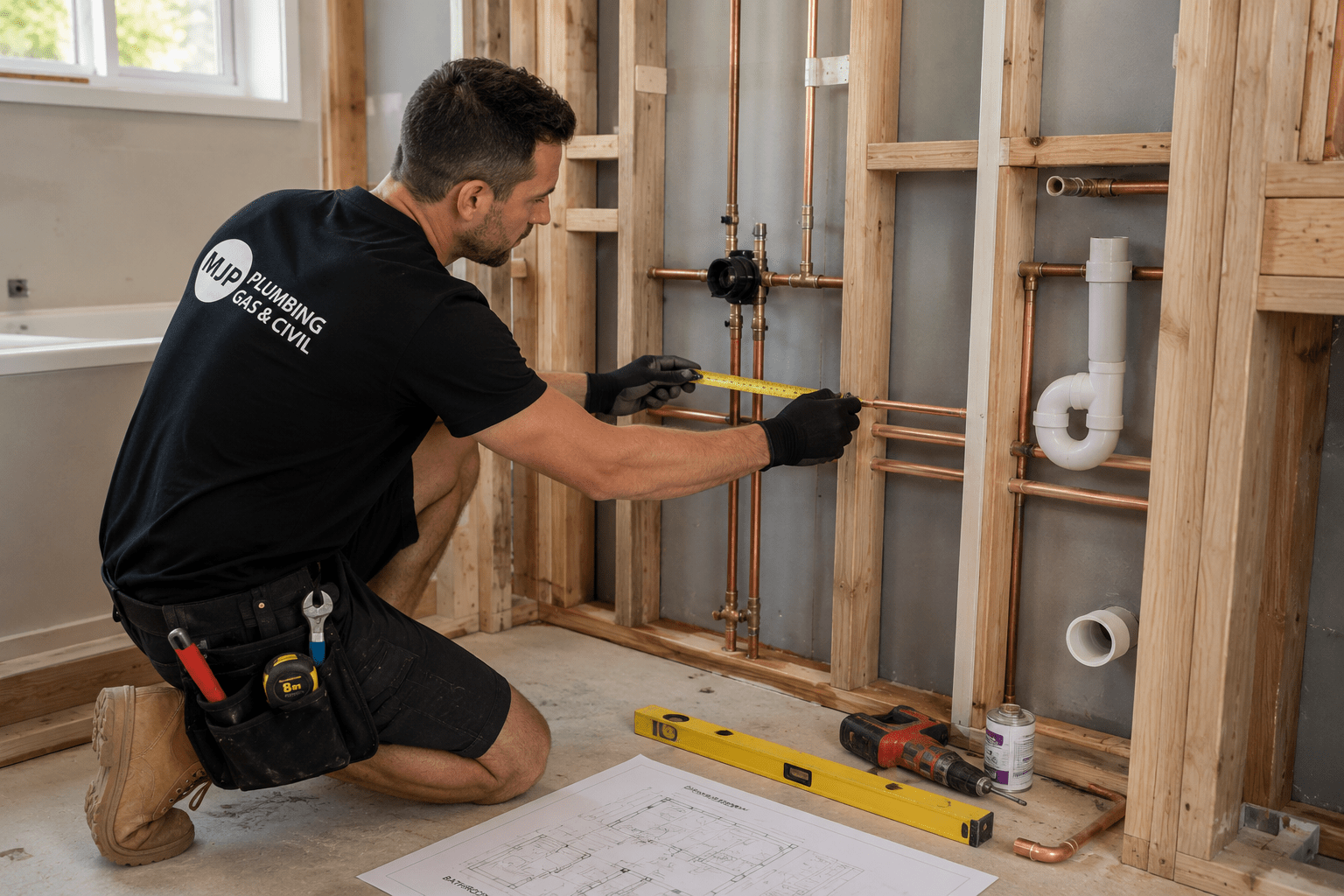
The ‘rough-in plumbing‘ is the term for installing all the unseen plumbing infrastructure. This includes the hot and cold water pipework and the drainage lines that sit inside wall cavities and under the floor. This work happens after demolition is complete but before wall sheeting, waterproofing, or tiling begins. Precision at this stage is absolutely paramount. Your plumber must account for the future thickness of the wall linings, tile adhesive, and the tiles themselves to make sure tapware and other fixtures protrude at the exact right depth.
Once all pipes are positioned, the entire system undergoes a rigorous pressure test. This involves capping the lines and filling them with pressurised water to detect any tiny leaks before the pipes are permanently sealed behind the walls. This step is a non-negotiable part of the process at MJP Plumbing, reflecting our “Done Right the First Time” commitment to minimise rework and protect your budget from unexpected blowouts.
What Happens From Plumbing Disconnection to Final Fit-Out?
The plumbing process begins with the disconnection stage. Here, the water supply is safely isolated, and old fixtures are removed before the pipes are capped to prevent sewer gases or debris from entering the system during demolition. This is also where shut-off valves for individual fixtures might be installed, allowing for easier maintenance later without shutting off the main house supply. The final plumbing stage is the ‘fit-out’ or ‘commissioning’ phase, which happens after the tiling, painting, and cabinetry installation is complete. This is when your new bathroom truly comes to life.
During the fit-out, your plumber installs all the visible fixtures, including the toilet, vanity basins, tapware, and showerheads. They connect the waste traps, apply silicone to create watertight seals, and adjust the hot water supply tempering valve. The last step is comprehensive testing. We turn the water on and check every component for correct water flow, temperature, and drainage, verifying everything is functioning perfectly before handing the space back to you.
How Do You Choose Fixtures, Hot Water & Sustainable Options for Your Sunshine Coast Bathroom?
Choosing the right fixtures and systems for your bathroom goes beyond aesthetics. Your selections directly impact water efficiency, long-term durability, and the underlying plumbing requirements. By opting for WELS-rated fixtures and energy-efficient hot water systems, you can achieve significant long-term savings and reduce your environmental footprint. It is also important to remember that modern fixture choices, particularly concealed or wall-mounted options, can increase installation complexity, requiring expert planning during the rough-in stage. Making informed decisions here makes sure your Sunshine Coast bathroom is sustainable, stylish, and built to last.
How Do You Choose Water-Efficient Fixtures and Tapware?
In Australia, the Water Efficiency Labelling and Standards (WELS) scheme helps you choose products that save water. Fixtures like taps, showerheads, and toilets have a star rating indicating their efficiency. Opting for products with a high WELS rating can significantly reduce your water bills and is a great choice for environmentally conscious Sunshine Coast residents. For example, a modern 4-star rated toilet uses far less water per flush than older models.
Durability is also key, especially in our coastal climate where salt-laden air can corrode finishes. When selecting tapware, look for superior finishes like PVD (Physical Vapour Deposition), which is far more resistant to scratching and tarnishing than standard coatings. The choice between modern mixer taps and traditional three-piece tapware also has plumbing implications, with mixers requiring a specific in-wall body to be installed during the rough-in. MJP Plumbing can guide you on the best WELS-rated and durable fixtures for your home.
What Hot Water Systems and Energy Efficiency Should You Consider?
A bathroom renovation is the perfect time to assess your hot water supply system. An old or undersized unit may not be able to meet the demands of a new, larger bathtub or multiple showerheads, especially for busy family bathrooms or rental upgrades. Upgrading to a more efficient system can save you money and energy. Heat pump hot water systems are incredibly efficient in the warm Queensland climate, while gas continuous flow systems provide endless hot water on demand and save space.
Under Queensland law, all new bathroom renovations must include the installation of a tempering valve. This essential safety device blends hot and cold water to make sure the water delivered to your taps and shower never exceeds a safe 50°C, preventing serious scalding accidents. As licensed gas fitters, the team at MJP Plumbing can expertly handle your hot water system upgrade, providing a compliant and energy-efficient installation.
What Are Common Plumbing Challenges in Sunshine Coast Renovations?
Even the best-planned renovations can uncover hidden issues. On the Sunshine Coast, common challenges include deteriorated old pipes hidden in walls and poor drainage planning from previous work, both of which can be costly to fix if not identified early. Proactive management of these potential problems is key to keeping your project on time and on budget. Furthermore, upholding strict compliance with plumbing codes and maintaining perfect waterproofing around all pipe penetrations is essential to prevent serious long-term damage to your home, particularly in coastal properties.
How Do You Address Old Pipes, Drainage, and Water Pressure Issues?
Many older Sunshine Coast homes contain hidden plumbing problems. Deteriorating galvanised steel or old copper pipes are a common discovery during demolition. These pipes risk leaks or bursts and can cause poor water quality and low water pressure. MJP Plumbing‘s pre-renovation assessments are designed to find these issues early, allowing for a full pipe upgrade to be included in the plan.
Poor drainage, often caused by an incorrect fall, leads to water pooling in the shower, which can cause moisture damage and mould. We address this by carefully planning the drainage layout during our initial consultation and verifying the correct fall angles during the rough-in plumbing. Low water pressure is another frequent complaint. This can stem from a faulty valve, an old hot water system, or corroded pipes. We can diagnose the cause and implement the right resolution, such as upgrading main water lines or installing a new hot water system.
How Do You Manage Waterproofing and Compliance for Bathroom Plumbing?
The coordination between your plumber and your waterproofer is one of the most important relationships in a bathroom renovation. Improperly sealed pipe penetrations through walls or floors can completely compromise the waterproofing membrane. This can lead to slow leaks, mould growth, and eventually, major structural damage. We install fittings called ‘puddle flanges’ on all floor wastes, which create a secure, integrated seal with the waterproof membrane. At MJP Plumbing, we take extreme care around waterproofed areas and work closely with other trades to maintain integrity.
All our work strictly adheres to Australian Standards (AS/NZS 3500) and the Plumbing and Drainage Act 2018. Any notifiable work, such as moving fixture locations, requires a Form 4 compliance certificate to be lodged with the QBCC. This demonstrates that your work meets Queensland plumbing compliance. We handle all compliance matters, providing you with the necessary documentation and peace of mind that your renovation is safe, legal, and built to the highest standard.
What Are the Plumbing Differences Between Commercial and Residential Renovations?
While the core principles of plumbing remain the same, commercial bathroom renovations on the Sunshine Coast have vastly different requirements from residential projects. Business and property owners must prioritise durability, public health, and accessibility. Commercial bathrooms need sturdy, high-traffic installations designed to withstand constant use and potential vandalism. Moreover, adherence to specific commercial regulations, including the strict accessibility standards outlined in AS 1428.1, is not optional—it is a legal necessity for any public-facing business.
What Plumbing Arrangements Work Best for Sunshine Coast Businesses?
Commercial bathrooms in cafes, offices, or retail spaces demand plumbing that is built to last. We install strong, vandal-resistant fixtures, including stainless steel basins and commercial-grade tapware, to handle high-traffic use. Hygiene is also a top priority. The integration of sensor-activated (touchless) taps and flushers is now standard practice to improve public health and conserve water. We also install advanced drainage systems and waterless urinals to boost efficiency and ease of maintenance.
Accessibility is a non-negotiable legal requirement. We make sure of strict adherence to AS 1428.1, which dictates the precise height and placement of toilets, basins, and grab rails for wheelchair access. For public safety, we install thermostatic mixing valves (TMVs) to deliver precisely regulated water temperatures. Commercial properties also require specific backflow prevention devices to protect the municipal water supply from contamination. MJP Plumbing has the advanced technical capability to manage these complex commercial upgrades, minimising operational downtime for your business.
Bringing Your Bathroom Vision to Life with MJP Plumbing
Expert plumbing is the unseen foundation that makes a beautiful bathroom renovation a long-term success. From providing flawless water pressure in your new shower to guaranteeing compliant and leak-free drainage, the quality of the work behind the walls is paramount. At MJP Plumbing, we combine local Sunshine Coast expertise with a commitment to “Done Right the First Time” quality.
By getting our team involved early in your planning process, you prevent costly problems and help achieve a seamless project from start to finish. We offer homeowners, builders, and property managers comprehensive services, proactive advice, and personalised attention. Let us help you build a bathroom that is not only visually stunning but also perfectly functional and built to last.
Frequently Asked Questions
What are the estimated plumbing costs for a bathroom renovation?
Plumbing costs vary significantly based on the project’s scope. A simple like-for-like swap of fixtures is the most budget-friendly option. Relocating fixture locations, especially a toilet, is more expensive due to the need for new pipework, particularly through concrete slabs. Upgrading old pipes adds to the initial cost but prevents expensive future repairs. MJP Plumbing provides detailed, itemised quotes for full transparency, separating fixed costs from potential variations.
Do I need a permit for bathroom plumbing work in Queensland?
Yes, in many cases. Any “Notifiable Work,” which includes relocating fixtures, extensive re-piping, or installing an entirely new bathroom, requires a Form 4 compliance certificate to be lodged with the QBCC by a licensed plumber. Simply replacing a tap or toilet in the same position generally does not require this. MJP Plumbing will guide you through all permit obligations to make sure your project is fully compliant.
Can I do any DIY plumbing during my bathroom remodel?
No. In Queensland, all sanitary plumbing, drainage, and hot water supply work must be performed by a licensed plumber. Attempting DIY plumbing is not only illegal but also voids your home insurance and can result in unsafe installations that are expensive to rectify. Using a professional like MJP Plumbing protects your home, your insurance, and your investment by making sure all work meets strict legal and safety standards.
How do I check for existing plumbing issues before starting?
You can start by looking for visible signs of trouble like water stains, peeling paint, or mould. Check your water pressure by turning on a few taps at once to see if the flow drops significantly. Listen for any strange gurgling or banging noises from pipes. For a definitive answer, MJP Plumbing offers comprehensive pre-renovation assessments using specialised tools to identify hidden issues like corroded pipes or partial blockages.
What is ‘rough-in’ plumbing and why is it important?
The ‘rough-in plumbing‘ is the critical stage where all the hidden plumbing for hot and cold water and drainage is installed in the walls and floor before they are covered. It is so important because it sets the exact fixture locations for all your bathroom elements. Precise measurements are essential to make sure everything fits perfectly after tiling. MJP Plumbing conducts rigorous pressure testing during the rough-in to guarantee there are no leaks behind your new walls.
How can I make my bathroom plumbing more water-efficient?
The best way is to choose fixtures with a high WELS (Water Efficiency Labelling and Standards) star rating. High-efficiency taps, showerheads, and dual-flush toilets can drastically reduce your water consumption. You can also upgrade to an energy-efficient hot water supply system, such as a heat pump or a continuous flow gas unit. MJP Plumbing can advise on the most effective water-saving approaches for your Sunshine Coast home.
Why is coordinating plumbing and waterproofing so crucial?
Waterproofing failure is a leading cause of building defects. If pipe penetrations through the floor and walls are not sealed correctly, they create weak points in the waterproofing membrane, leading to leaks, rot, and structural damage. Plumbers must install puddle flanges on floor drains to integrate with the membrane. MJP Plumbing works in close collaboration with waterproofers to make sure of a completely seamless and durable installation.
What should I look for in a Sunshine Coast plumber for my renovation?
Always choose a fully licensed plumber who is insured and has proven experience in local Sunshine Coast renovations. Look for a professional who insists on an early consultation, communicates clearly, and provides detailed quotes. A commitment to quality and compliance is essential. MJP Plumbing ticks all these boxes, offering personalised, reliable service to make sure your renovation is a success from start to finish.