
For Sunshine Coast homeowners, knowing when old taps and pipes need replacing is essential. Waiting too long can lead to costly water damage, health risks, and emergency repairs. Key signs include recurring leaks, visible rust, corrosion, a drop in water pressure, noisy pipes, or discoloured water. These components can become a silent threat to your property if ignored.
The distinctive coastal environment on the Sunshine Coast accelerates this wear and tear on plumbing systems. This guide explains the warning signs to look for, the risks of outdated plumbing, and how to make the best decision for your property. If your taps are leaking, fixtures are corroded, or pipework looks worn, we recommend contacting MJP Plumbing for an expert assessment.
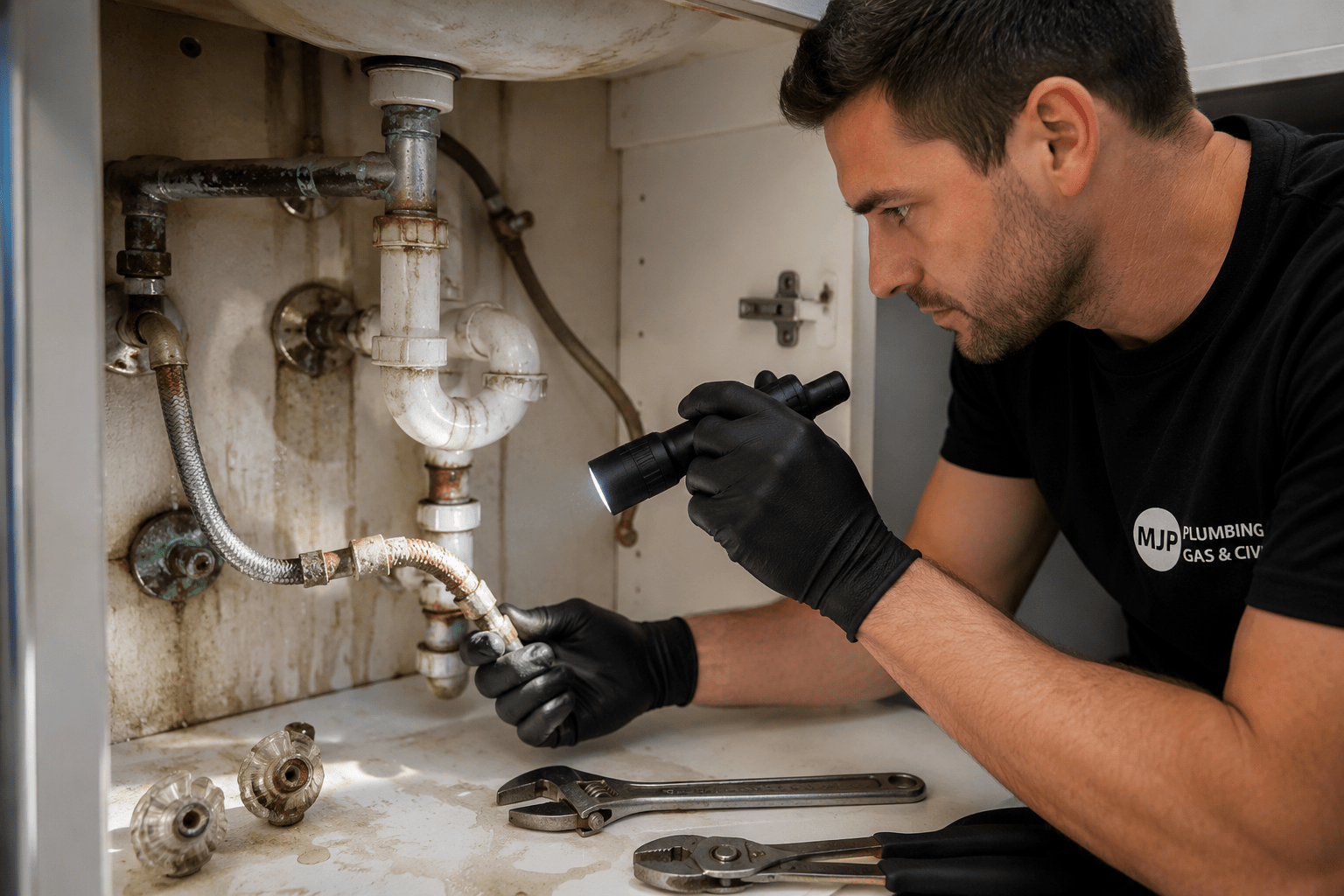
Key Takeaways
-
Recognising the early warning signs of ageing plumbing, like low water pressure or discoloured water, is important for preventing major issues.
-
The harsh coastal environment on the Sunshine Coast, with its salt air and humidity, significantly speeds up the wear on pipes and fixtures.
-
Deciding between repairing or replacing old plumbing involves weighing the long-term costs against the short-term fix.
-
Modern plumbing materials and fixtures offer superior durability, reliability, and water efficiency for your home or business.
-
A professional assessment and preventative maintenance from a trusted local plumber like MJP Plumbing provides a lasting fix and peace of mind.
Jump to section
- Why Are Old Pipes, Taps, And Fixtures A Big Problem On The Sunshine Coast?
- How To Tell If Your Taps Or Pipes Need Replacing?
- Can Ageing Plumbing Endanger Your Health And Safety?
- Repair Or Replace: How To Make The Right Decision For Sunshine Coast Homes?
- How To Upgrade Your Home’s Plumbing And Fixtures Smartly And Effectively?
- An Essential Plumbing Replacement Checklist For Sunshine Coast Owners
- Why Is MJP Plumbing Your Trusted Partner For Plumbing Upgrades On The Sunshine Coast?
- Conclusion: Protecting Your Home And Health With Modern Plumbing
- Frequently Asked Questions
Why Are Old Pipes, Taps, And Fixtures A Big Problem On The Sunshine Coast?
Old plumbing systems present a significant problem for Sunshine Coast properties because they are often a hidden source of risk. Components installed decades ago are now reaching the end of their functional lifespan, making them prone to failure. This ageing infrastructure can affect everything from your water quality and water pressure to the structural soundness of your building, often leading to unexpected and expensive damage. Pipework refers to all the pipes, fittings, and connections that carry water through your home.
The risks associated with old taps and pipes are magnified by the local environment. What might seem like a minor drip or a small patch of rust can be an early indicator of a more serious systemic problem. Ignoring these signs can result in burst pipes, extensive water damage to floors and walls, and the growth of unhealthy mould. For property owners, proactive assessment and replacement are key to avoiding these widespread issues.
How Does The Sunshine Coast Environment Affect Plumbing?
The Sunshine Coast’s beautiful coastal environment creates particular challenges that accelerate the breakdown of plumbing systems. The combination of salt-laden air, high humidity, sandy soil, and local water chemistry puts constant stress on pipes, taps, and fixtures, causing them to degrade faster than in other regions. This corrosion is the gradual wearing away of metal, often turning it green or brown.
Salt air and humidity are primary culprits, promoting rapid corrosion on metal pipes and tapware, especially in properties close to the beach. You might notice this as green staining on copper or rust spots on galvanised steel. Below ground, the sandy and often reactive soil can shift, particularly during wet seasons, putting physical strain on buried pipes and leading to cracks or joint failure. Furthermore, the mineral content in the local water supply can contribute to internal scale buildup over decades, restricting flow and damaging the internal walls of older pipes. Homes built in the 1970s, 80s, and 90s are especially vulnerable, as the materials used then are now well past their expected service life.
How To Tell If Your Taps Or Pipes Need Replacing?
You can tell if your taps or pipes need replacing by looking for clear visual, audible, and performance-based signs of deterioration. These indicators often start small but point towards bigger problems within your plumbing system. Paying attention to these warning signs allows you to act before a minor issue becomes a major disaster, saving you money and stress in the long run.
These symptoms are your home’s way of telling you that its plumbing infrastructure is under strain. From a persistent dripping sound to a noticeable change in how your water looks or tastes, each sign provides a clue about the condition of the pipes and fixtures hidden behind your walls and under your floors. Fittings refers to the connectors and joints that link different pipe sections or fixtures together. Being observant can make all the difference.
What Signs Can You Identify Yourself?
You can spot several clear signs of failing plumbing yourself without needing any special tools. Keep an eye and an ear out for these common red flags in areas like high-use family bathrooms or a busy kitchen:
-
Leaking and Dripping Taps: A tap that constantly drips or leaks around its base is a classic sign of worn-out internal parts, such as washers, O-rings, or ceramic disc cartridges. While sometimes fixable, on an older tap it often signals the entire unit is nearing the end of its life and replacement might be a better option.
-
Rust and Corrosion: Look for visible signs of rust on pipes, especially at the joints of old galvanised steel pipework under your sinks. For copper pipes, a green patina indicates corrosion. Rust stains in your basin, shower, or around fixture bases also point to deteriorating metal components.
-
A Drop in Water Pressure: If the water flow from your taps or shower has become noticeably weaker over time, it’s a strong indicator of a problem. This is often caused by a buildup of rust and mineral scale inside old pipes, which narrows the passage for water, or it could signal a hidden leak somewhere in the system. Water pressure refers to the force that pushes water through your pipes.
-
Unusual Water Noises: Listen for strange sounds in your walls. A loud banging or shuddering noise when you turn a tap off quickly is called ‘water hammer‘ and suggests the pipe mountings have loosened or degraded. Whistling or screeching sounds can indicate a restriction or worn valve inside a tap.
-
Changes in Water Colour or Taste: If the water from your tap runs brown or yellow, particularly first thing in the morning, it’s a clear sign of internal rust flaking off from old pipes. A metallic taste is another indicator that metal components in your plumbing system are breaking down.
Can Ageing Plumbing Endanger Your Health And Safety?
Yes, ageing plumbing can absolutely endanger the health and safety of your household by introducing harmful contaminants into your drinking water and creating an environment for mould to grow. The materials used in older plumbing systems and the way they degrade over time can pose serious risks that are often invisible to the naked eye. These dangers go beyond the financial cost of a leak or burst pipe.
The internal corrosion of old taps and pipes is not just a structural problem; it directly impacts the quality of the water you use every day for drinking, cooking, and bathing. As pipes and fittings break down, they can release substances that are harmful to human health. Furthermore, slow leaks hidden within walls can compromise your home’s air quality, creating another layer of health concerns.
What Dangers Lurk In Old Plumbing?
Several specific health and safety dangers are associated with outdated plumbing systems, particularly those found in older Sunshine Coast homes. These hidden threats can have long-term consequences for your family’s wellbeing.
-
Lead Contamination: In Australia, lead-based solders were commonly used to join copper pipes until 1989. Many older brass taps and fittings also contained a higher percentage of lead, and research into the copper content of some Queensland butters highlights how metals can migrate into consumable substances through contact with plumbing materials. As these components corrode, lead can leach into your drinking water, posing a serious neurotoxin risk, especially for the development of children.
-
Bacteria and Biofilms: The rough, pitted internal surfaces of old, corroded pipes create an ideal breeding ground for biofilms. These are slimy layers of bacteria that can harbour harmful pathogens, such as Legionella. These biofilms can protect the bacteria from the chlorine in the municipal water supply, allowing them to multiply.
-
Mould and Moisture: Tiny, slow leaks from deteriorating pipes or failing tap seals inside wall cavities or cabinets create the perfect damp, dark conditions for mould to thrive. Exposure to mould spores can trigger allergies and respiratory problems, particularly for individuals with asthma or compromised immune systems. This often shows as water stains around cabinets or cracked basins.
Repair Or Replace: How To Make The Right Decision For Sunshine Coast Homes?
Making the right decision between repair and replacement depends on a careful evaluation of the long-term costs, the age and material of your plumbing, and the frequency of the problems you are experiencing. While a quick repair might seem like the most affordable option, recurring leaks often mean that a full replacement is the more financially sound choice in the long run.
For instance, continually paying for call-outs to fix the same dripping tap or patch another leak in a 50-year-old pipe can quickly add up. Eventually, the cumulative cost of these small repairs will surpass the price of a modern, reliable replacement. A professional assessment from a company like MJP Plumbing can provide clarity, helping you understand whether you are dealing with an isolated fault or a systemic failure.
When Is Replacement The Smart Choice?
Opting for a full replacement is the smartest choice when you encounter specific situations that indicate your plumbing system is fundamentally compromised. It’s an investment in your property’s reliability and safety.
-
Recurring Leaks: If you are experiencing repeated leaks in the same area or multiple leaks throughout your system, it’s a sign of widespread material failure, not just a single weak spot. Patching one section of an old, brittle pipe often just moves the pressure to the next weakest point. This includes toilet leaks that just keep coming back.
-
Outdated Pipe Materials: If your home has galvanised steel pipes (common before the 1970s) or polybutylene pipes (used in the 80s and 90s), replacement is strongly recommended. These materials are known for their high failure rates as they age and are no longer used in modern construction. This is a common issue in many older Sunshine Coast homes.
-
Persistent Water Quality Issues: When you have ongoing problems with discoloured, rusty, or bad-tasting water, it points to severe internal corrosion that cannot be fixed with a simple repair. Replacing the old pipes is the only way to make sure you have clean, healthy water.
-
Major Renovations: A kitchen upgrade or bathroom renovation is the perfect opportunity to upgrade hidden plumbing. It is far more cost-effective to replace old pipework when the walls are already open than to risk a leak that destroys your new cabinetry and tiles down the line.
-
Long-Term Reliability and Warranties: Installing new taps, pipes, and fixtures provides peace of mind with a longer lifespan and manufacturer warranties, especially when the installation is carried out by a licensed plumber.
How To Upgrade Your Home’s Plumbing And Fixtures Smartly And Effectively?
Upgrading your home’s plumbing and fixtures smartly involves choosing modern, durable materials and focusing on water efficiency. A successful upgrade not only addresses existing problems like leaks and low pressure but also improves functionality and reduces your utility bills. It’s about making strategic choices that improve your property’s value and resilience for years to come.
Instead of just replacing a broken tap with an identical model, consider it an opportunity to improve your entire system. This means looking at the pipes behind the wall, the efficiency of the fixtures you use every day, and even the water pressure coming into your home. A holistic approach makes certain your new plumbing is reliable, efficient, and built to last.
What Are The Best Options For Plumbing Upgrades?
When upgrading your plumbing, several modern options offer significant advantages over the materials and technologies of the past. These approaches provide better performance, longevity, and efficiency.
-
Modern Pipe Materials: The industry standard for new water lines is now PEX (cross-linked polyethylene). PEX is flexible, resistant to corrosion and scale buildup, and easier to install, with fewer joints needed. For exposed pipework, modern copper used with B-Press fittings provides a durable and clean installation without the fire risk of older soldering methods.
-
WELS-Rated Taps and Showerheads: The Water Efficiency Labelling and Standards (WELS) scheme helps you choose fixtures that save water. Modern taps and showerheads with high WELS ratings can drastically cut your water consumption without sacrificing pressure, thanks to advanced aerator technology. This translates to lower water and energy bills, especially valuable for rental properties on the Sunshine Coast concerned with water usage.
-
Whole-House Repiping: For homes with systemic issues from old galvanised or polybutylene pipes, a whole-house repipe is often the best long-term approach. This involves decommissioning the old lines and running new, reliable PEX pipes, often through the ceiling cavity to minimise disruption to your walls. This is particularly relevant for many older unit bathrooms and homes across the Sunshine Coast.
-
Installing a Pressure Limiting Valve (PLV): High municipal water pressure can accelerate wear on your taps, hoses, and appliances. Installing a PLV at your water meter regulates the pressure to a safe level, protecting your entire plumbing system and extending the life of your new fixtures. An isolation valve is a smaller valve that can shut off water to a single fixture like a tap or toilet, allowing for easier maintenance without affecting the whole house.
An Essential Plumbing Replacement Checklist For Sunshine Coast Owners
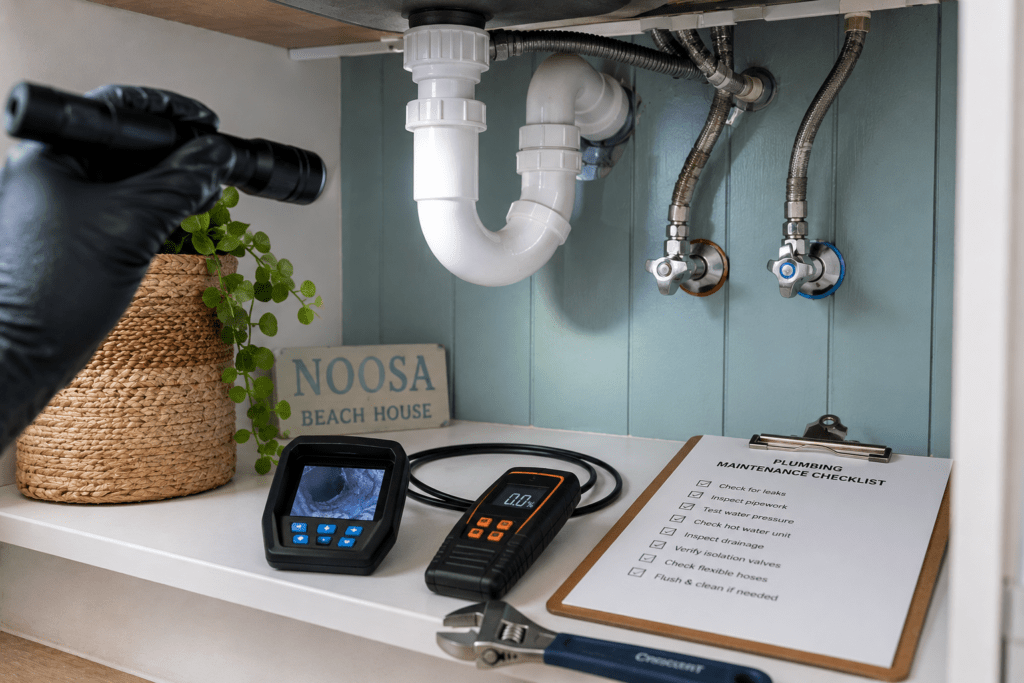
To help you assess your property’s needs and plan for replacements, use this practical checklist. Regularly reviewing these items can help you catch problems early and prevent costly water damage.
Tapware Assessment
-
Check all taps in the kitchen, bathrooms, and laundry for persistent drips or leaks around the handle.
-
Test the handles. Are they stiff, loose, or difficult to turn? This can indicate a worn-out internal cartridge.
-
Consider upgrading old taps with rubber washers to modern ceramic disc mixer taps for improved durability and ease of use.
Pipework Inspection
-
Look at any visible pipework under sinks and in laundries for signs of rust, green corrosion, or dampness at the joints.
-
Listen for water hammer (banging noises) when turning off taps or when appliances like the dishwasher are running.
-
Note any gradual decline in water pressure, as this is a key sign of internal blockages in old taps and pipes.
Flexible Hoses and Connections
-
Inspect the flexible braided hoses connecting to your sinks, toilet cisterns, washing machine, and dishwasher. Check their installation or compliance date tag.
-
It is highly recommended to replace these hoses every 5 to 10 years, as they are a common cause of major indoor flooding when they burst. Look for any signs of fraying, rust spots, or bulging.
Fixtures Inspection
-
Check toilets for silent leaks by adding a few drops of food colouring to the cistern; if colour appears in the bowl without flushing, the flush valve is leaking.
-
Examine basins, baths, and sinks for any cracks, chips, or significant wear that could worsen over time.
-
Test showerheads and shower mixers for leaks, poor pressure, or inconsistent temperature control.
Water Stains and Mould Check
-
Look for water stains, peeling paint, or warped timber inside cabinets, on walls, or on skirting boards, as these indicate a hidden leak.
-
Check for any musty smells or visible mould growth in bathrooms and under sinks, which points to a persistent moisture problem.
When to Call a Licensed Plumber
-
If you identify several concerns from this checklist or suspect a hidden issue.
-
For a comprehensive annual inspection to catch problems before they escalate.
-
Before starting a major renovation, to make sure your plumbing is compliant and reliable.
-
To get professional advice on the best replacement options for your home.
If you’ve noticed any of these issues, book a professional plumbing inspection with MJP Plumbing to get clear advice and assistance.
Why Is MJP Plumbing Your Trusted Partner For Plumbing Upgrades On The Sunshine Coast?
MJP Plumbing is your trusted partner for plumbing upgrades on the Sunshine Coast because we combine local expertise with a commitment to consistent, high-quality, and personalised service. We understand that replacing old plumbing is a significant investment, and our goal is to provide reliable options that protect your property and give you peace of mind. Our team is fully licenced, insured, and dedicated to upholding the highest standards of workmanship.
We take a proactive approach, helping you identify potential issues before they become emergencies. Unlike larger companies where you might get a different technician every time, we pride ourselves on building lasting relationships. You work with the same trusted professional who understands the history of your property’s plumbing, providing a level of care and continuity that is unmatched.
Why Choose MJP Plumbing For Your Plumbing Needs?
Choosing MJP Plumbing means opting for a service that is tailored to the distinct demands of the Sunshine Coast and focused on your long-term satisfaction. Here is what sets us apart:
-
Local Knowledge and Coastal Expertise: We understand how the local salt air, humidity, and soil conditions affect plumbing systems. We recommend approaches, like annual inspections for coastal homes, that are specifically designed to combat saltwater corrosion and other regional challenges.
-
Licenced and Trustworthy Professionals: All our work is performed by licenced technicians, guaranteeing compliance with Australian Standards and protecting your warranties. We provide transparent, upfront quotes so you know exactly what to expect. This also aligns with Queensland plumbing compliance.
-
Consistent, Personalised Service: Our particular service model means you work with the same plumber from your first call to the completion of every job. This builds trust and makes sure we have a deep understanding of your property’s specific plumbing needs.
-
Quality Workmanship and a ‘Right-First-Time’ Commitment: We are dedicated to delivering superior workmanship and getting the job done correctly the first time. From simple tap replacements to full bathroom plumbing renovations, we provide plumbing that is built to last.
-
A Proactive Maintenance Approach: We offer preventative maintenance plans to identify wear and tear early, helping you avoid costly emergencies. This proactive strategy helps you manage replacements in a planned, cost-effective way rather than reacting to a failure.
Conclusion: Protecting Your Home And Health With Modern Plumbing
Replacing your old taps, pipes, and fixtures is more than just a home improvement project; it’s a vital investment in your property’s long-term health, safety, and value. By being vigilant for the early warning signs of failure, you can act decisively to prevent expensive water damage and protect your family from the health risks associated with outdated plumbing.
Modernising your plumbing system with durable materials and water-efficient fixtures makes certain reliability for decades to come. For professional advice and trustworthy help on the Sunshine Coast, MJP Plumbing is here to help. Contact our team for a comprehensive assessment and a free quote to secure your property’s plumbing future.
Frequently Asked Questions
Question: How often should I check and replace my flexible hoses?
Answer:
You should visually inspect your flexible hoses annually for any signs of fraying, rust, or bulging. It is highly recommended to replace them every 5 to 10 years as a preventative measure, even if they look fine. These hoses are a leading cause of unexpected indoor floods, and a professional replacement by a licenced plumber from MJP Plumbing makes certain correct installation and protects your home from water damage.
Question: Can I replace my old taps and pipework myself?
Answer:
While you might be able to fix a simple dripping tap by changing a washer, most plumbing replacements should be left to a professional. DIY work on pipework is not recommended as it can void your home insurance, lead to major water damage if done incorrectly, and may not comply with Queensland’s strict plumbing regulations. A licenced plumber guarantees the work is safe, compliant, and reliable.
Question: What are my responsibilities as a landlord or tenant for ageing plumbing on the Sunshine Coast?
Answer:
Landlords are responsible for keeping the property’s plumbing in good repair and undertaking major works like replacing failing pipes to make sure the home is safe and habitable. Tenants have a responsibility to report any plumbing issues, such as leaks or low water pressure, to their landlord or property manager promptly to prevent further damage. Regular property inspections can help identify ageing plumbing before it becomes a major problem.
Question: Does low water pressure always mean my pipes need replacing?
Answer:
Not always. Low water pressure can sometimes be caused by simpler issues like a clogged tap aerator, a blocked showerhead, or a partially closed water meter valve. However, a gradual decline in pressure throughout the house is often a primary symptom of internal corrosion or scale buildup inside old galvanised pipes or a hidden leak. A licenced plumber can accurately diagnose the cause and recommend the right fix.
Question: How long should my new taps and pipes last after replacement?
Answer:
When installed professionally, modern plumbing materials offer excellent longevity. High-quality PEX or copper pipes can last 50 years or even longer. Modern ceramic disc taps are also very durable, typically lasting 10 to 20 years or more, depending on usage and water quality. Regular maintenance, such as managing water pressure with a PLV, will help maximise the lifespan of your entire system.
Question: What is MJP Plumbing’s advantage for commercial plumbing upgrades on the Sunshine Coast?
Answer:
MJP Plumbing minimises business disruption for commercial clients by offering customised maintenance schedules and strategic installations, like isolation valves, that allow for targeted repairs without shutting down the entire operation. We are experts in commercial compliance, including AS/NZS 3500 standards, backflow prevention, and grease trap servicing. Our local expertise makes certain that options are tailored to the high-use demands and regulations of Sunshine Coast businesses.