
There’s a distinct pleasure that comes with standing in your own home, dreaming up a renovation. You can almost see the sleek new kitchen benchtops or feel the steam from a luxurious new shower. But before those plans take shape, understanding Plumbing Compliance is essential to make sure your renovation is safe, legal and built to last on the Sunshine Coast.
But as the daydreams solidify into blueprints, a different reality emerges. Beneath the beautiful tiles and shiny new taps lies a network of pipes and connections governed by strict rules. Suddenly, terms like plumbing compliance, permits, and Australian Standards can feel overwhelming, changing that initial excitement into a wave of stress. What if you do something wrong? The thought of fines, safety hazards, or even having to tear out your beautiful new work is enough to give any homeowner pause.
This is where understanding your obligations becomes so important. Plumbing compliance isn’t just about ticking boxes; it’s the very foundation that makes sure your renovation is safe, legal, and built to last. It’s the framework that protects your family’s health, your property’s value, and your financial investment. This guide helps Sunshine Coast homeowners learn what they need to know, making compliance easier and giving you the confidence to turn your renovation ideas into a beautiful, legally sound reality.
Key Takeaways
-
Plumbing compliance isn’t optional for renovations that affect water, drainage, or gas systems; it is a legal and safety requirement. Following the rules protects you, your family, and your home.
-
For any major renovation plumbing on the Sunshine Coast, you must always hire a plumber who is licensed by the Queensland Building and Construction Commission (QBCC) to make sure all work meets Australian Standards.
-
A ‘Form 4’ is the official plumbing certificate of compliance in Queensland. This document is your legal proof that the plumbing work completed during your renovation is safe, compliant, and correctly registered.
-
Choosing to ignore plumbing compliance can result in serious consequences, including large fines from regulatory bodies, your home insurance being voided in the event of a claim, and the need for expensive rework.
Understanding Plumbing Compliance: What It Is and Why It Matters for Your Renovation
When you start a renovation, plumbing compliance might seem like a technical term, but it’s quite simple at its core. It means that all plumbing work done in your home must follow a set of official rules and standards designed to keep everyone safe. In Queensland, this framework is built on several key pillars: the National Construction Code (NCC), the state-based Plumbing and Drainage Act 2018, and the specific technical instructions found in the Australian/New Zealand Standard AS/NZS 3500.
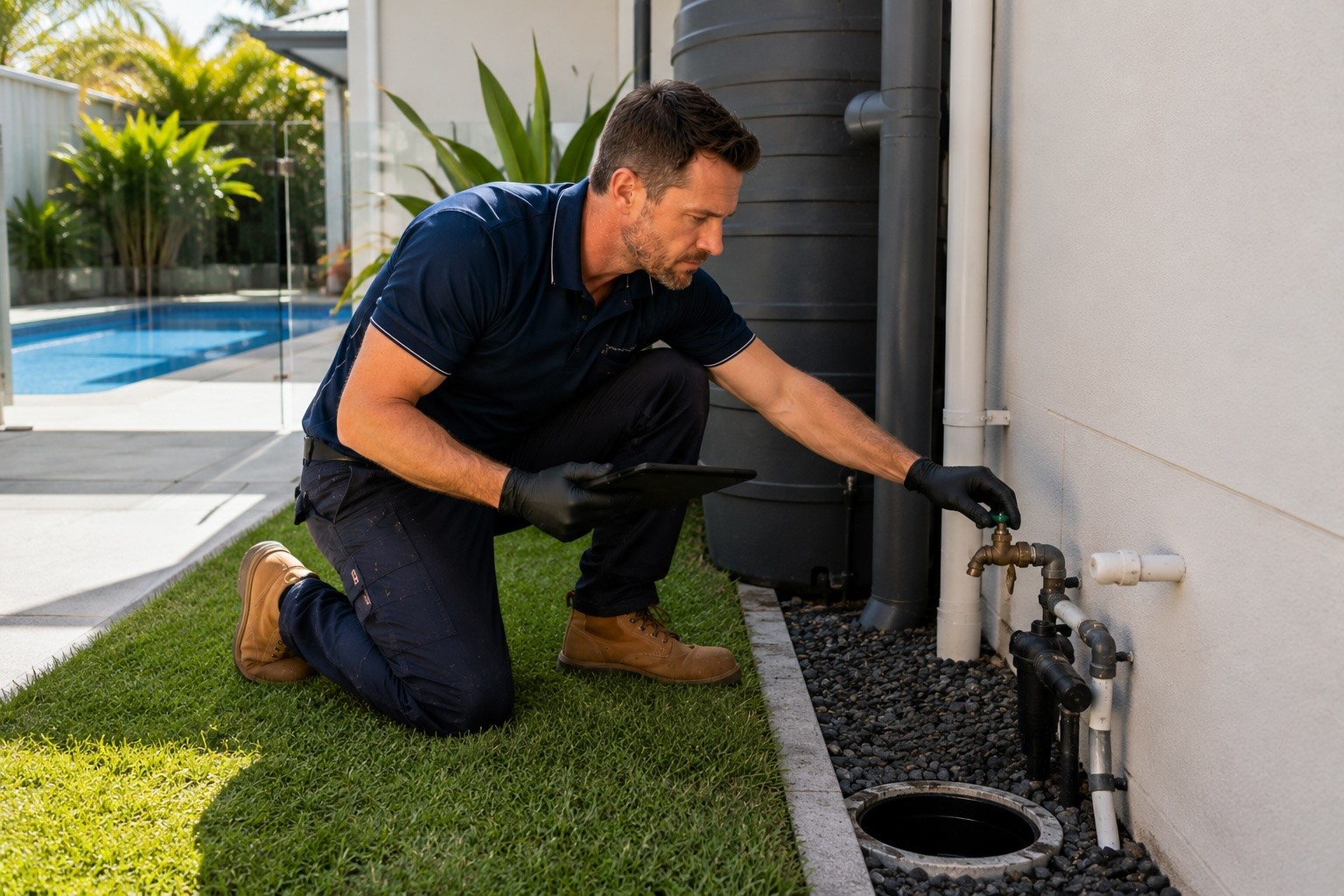
In the context of a renovation, ‘plumbing work’ covers much more than just fixing a leak. It includes any changes you make to your water supply, drainage, or gas systems. If you’re moving a kitchen sink, adding an ensuite bathroom, repositioning a toilet, or even installing a new type of hot water system, you are undertaking notifiable plumbing work that falls under these regulations. This makes certain every pipe, fixture, and connection is installed correctly.
According to the industry analysis, adherence to plumbing codes and standards is a foundational requirement across the industry, and adhering to these rules is required for several key reasons:
-
Health and Safety: This is the most important aspect. Compliant plumbing prevents serious health risks like contaminated drinking water from backflow, scalding from water that is too hot (thanks to mandatory tempering valves), and dangerous gas leaks from improperly fitted appliances.
-
Property Protection: Shoddy or non-compliant plumbing is a primary cause of water damage, persistent mould growth, and even structural problems. Proper compliance helps make your plumbing systems durable and reliable, protecting your biggest investment.
-
Legal & Financial Implications: The outcomes of not complying are serious. The QBCC can issue great fines, and if a problem arises from uncertified work, your home insurance provider may refuse to cover the damage. Unapproved plumbing work can create major headaches and devalue your property when it comes time to sell.
-
Environmental Responsibility: Modern plumbing standards also focus on efficiency. Compliant installations include measures for proper wastewater disposal and often feature water-saving fixtures, which is good for the environment and your utility bills.
“Good plumbing isn’t just about flow; it’s about safeguarding health, property, and the environment for years to come. It’s an investment in the longevity and safety of your home.” – Australian Plumbing Industry Expert
Navigating Plumbing Regulations for Renovations on the Sunshine Coast
For Sunshine Coast homeowners, understanding the local regulatory environment is key to a smooth renovation process — particularly as the broader plumbing sector navigates what industry analysts describe as cautious growth through critical regulatory and economic change heading into 2026. While simple, like-for-like fixture replacements (such as swapping an old tap for a new one in the exact same spot) typically don’t require formal approval, the moment your project becomes more ambitious, the rules change.
If your renovation involves relocating fixtures, running new pipes, adding a new bathroom or kitchen, or changing your hot water system, it almost certainly qualifies as ‘notifiable work’. This means a licensed plumber must notify the QBCC before and after the job is done. For very large or intricate projects, a private plumbing certifier might be needed to oversee the plans and inspections.
Two main bodies oversee these rules:
-
QBCC (Queensland Building and Construction Commission): This is the state-level authority that licenses all plumbers and enforces the overarching plumbing and building codes. They are the guardians of industry standards.
-
Sunshine Coast Council: Your local council manages specific bylaws. This can include regulations around stormwater management, approvals for onsite wastewater systems like septic tanks, and specific requirements for connecting to the town water and sewer mains.
Within a renovation, several key areas have strict compliance requirements:
-
Hot Water Systems: When you install or replace a hot water system that services a bathroom or kitchen, a tempering valve is mandatory. This device limits the water temperature at the tap to a maximum of 50°C to prevent scalding. The system must also meet Minimum Energy Performance Standards (MEPS). When considering your hot water system, remember that the tempering valve isn’t just a regulatory item; it’s a vital safety component. Every year, many injuries occur from scalding hot water, particularly affecting children and the elderly. The 50°C limit at the tap, mandated by the standards, significantly reduces this risk, making your home safer for everyone.
-
Drainage and Wastewater: All pipes must have the correct ‘fall’ or slope to make sure waste flows away properly and doesn’t pool, which can lead to blockages and leaks. Only materials that meet AS/NZS 3500 standards are permitted.
-
Water Supply: All materials used for drinking water pipes and fittings must be lead-free and approved for use in Australia.
-
Gas Fitting: Any work involving gas appliances or pipes must strictly follow the AS/NZS 5601 standard and can only be performed by a licensed gas fitter.
-
Local Considerations: On the Sunshine Coast, the coastal environment means that selecting corrosion-resistant materials for your plumbing is a smart, long-term choice. In addition, with an emphasis on sustainability, installing fixtures with a high WELS (Water Efficiency Labelling and Standards) rating is highly encouraged to conserve water.
The Essential Role of Licensed Plumbers and Compliance Certificates for Your Renovation
When it comes to your renovation’s plumbing, hiring a licensed professional isn’t just a good idea—it’s a legal requirement. Any ‘notifiable work’ must be carried out by a plumber who holds a current licence from the QBCC. Attempting to save money by using an unlicensed individual puts your home, your family, and your finances at great risk.
A licensed plumber is non-negotiable for several reasons:
-
Expertise: A licensed professional possesses a deep understanding of the National Construction Code, Queensland’s specific legislation, and the specific details of AS/NZS 3500. They are trained to do the job correctly and safely.
-
Accountability & Insurance: Licensed plumbers are accountable for their work and are required to hold public liability insurance. This protects you in the unlikely event that something goes wrong. At MJP Plumbing, all our technicians are fully licensed and insured, giving you complete peace of mind that your renovation is in safe hands.
-
The Certificate of Compliance (Form 4): This is arguably the most important document you will receive. A Form 4 is a legal certificate issued by the licensed plumber to both you and the QBCC. It confirms that the completed plumbing, drainage, or gas work meets all regulatory standards. It is your official proof that the job was done right. This document is important for insurance claims and is often required when you sell your property. We make certain a Certificate of Compliance is provided for all relevant jobs, particularly for gas fitting where it is mandatory.
“Hiring a licensed plumber is not an option; it’s a safeguard for your investment and your family’s well-being. The QBCC license acts as a promise of quality and adherence to strict standards, protecting homeowners from potentially costly and dangerous outcomes.” – Queensland Building and Construction Commission Representative
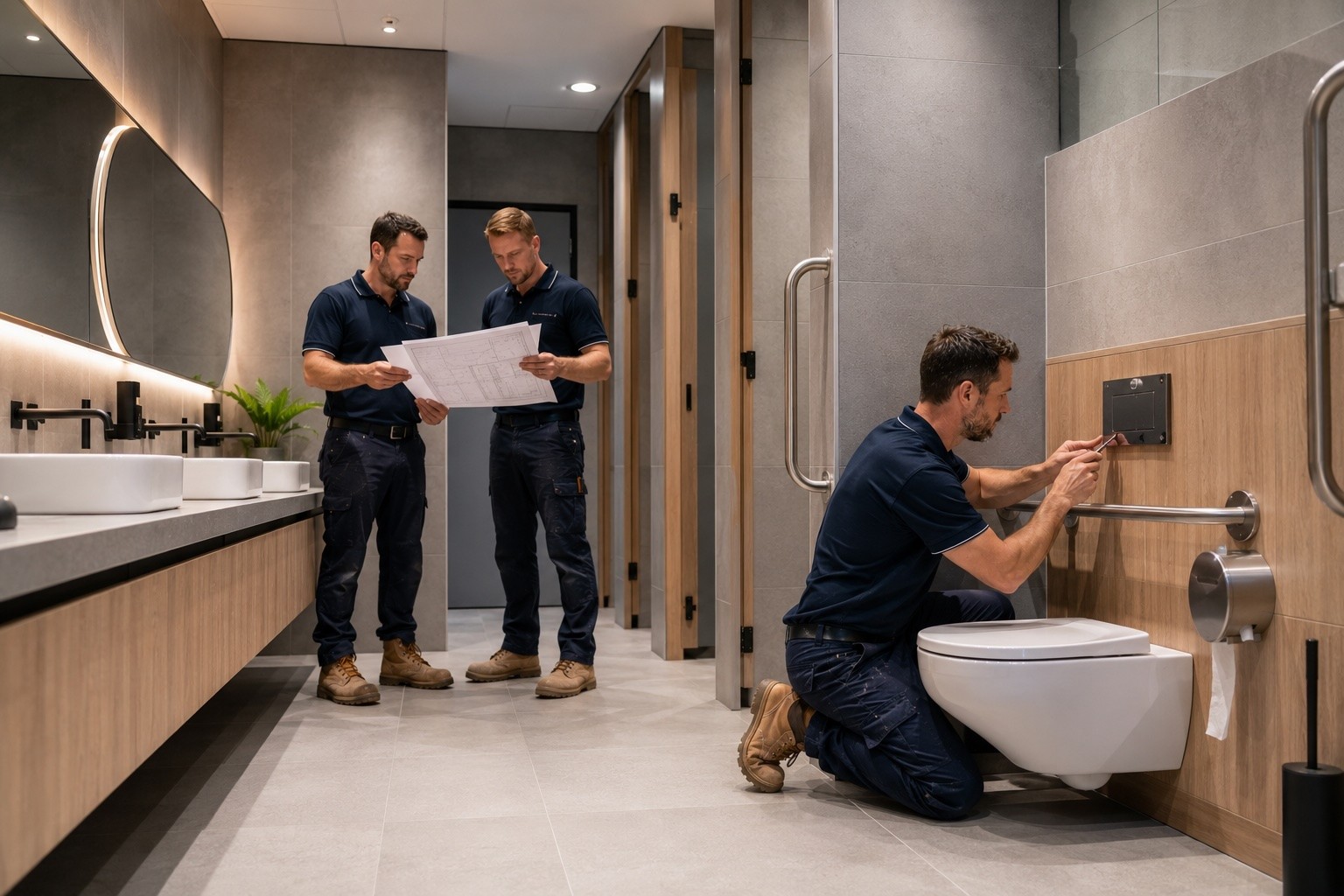
At MJP Plumbing, we approach renovation compliance with the seriousness it deserves. We offer complete services that cover every stage, from initial assessment and planning to final installation. We provide clear guidance on permit requirements, making sure your project meets all QBCC and local council codes. Our commitment is to deliver guaranteed compliant work that stands the test of time. Because we offer a personalised service, you work with the same trusted professional from start to finish, building a relationship based on a deep understanding of your needs. We believe in transparency, offering complimentary advice and detailed, no-obligation quotes to help you make informed decisions.
Avoiding Common Pitfalls and Making Sure Your Renovation is Compliant
Even with the best intentions, renovation projects can encounter plumbing-related hurdles that cause delays and budget blowouts — a challenge well-documented in analyses like opportunity through disruption: 2026 plumbing industry outlook, which highlights how disruption in supply and regulation is reshaping project delivery across the sector. Being aware of these common challenges is the first step in avoiding them and making sure your project runs smoothly from start to finish.
Some of the most frequent issues include overlooking the need for permits, poor planning that leads to inefficient pipe layouts, and incorrect placement of fixtures. Other problems can arise from ignoring the structural limits of your home or, most dangerously, hiring an unlicensed person who performs non-compliant work. These mistakes can be costly to fix and can compromise the safety and integrity of your new space. For example, one common pitfall is the assumption that a new appliance can simply replace an old one without checking the plumbing connections. Upgrading an old electric hot water system to a heat pump system, for instance, often requires changes to drainage and potentially electrical supply, which must be planned carefully and executed by licensed professionals. Another issue arises when homeowners wish to install a heavy, freestanding bath on an upper floor without considering if the existing floor joists can safely bear the additional weight, a detail that a professional plumber would flag during the planning stage.
Here is how you can proactively make sure of compliance and a successful outcome, with suggestions offered by MJP Plumbing:
-
Early Planning is Paramount: The best renovations start with a solid plan. At MJP Plumbing, we always say you should plan the “skeleton” (the plumbing) before you decide on the “skin” (the tiles and finishes). We conduct a thorough assessment of your existing pipework and drainage to develop a specific approach that prevents unforeseen problems down the line.
-
Always Verify Licences: Before hiring any plumber, check their QBCC licence number on the commission’s website. It’s a simple step that provides immense protection. MJP Plumbing guarantees that all work is performed by our team of fully licensed technicians.
-
Demand a Form 4: Never consider a notifiable plumbing job complete until you have the Certificate of Compliance in your hands. This is your non-negotiable proof of a safe and legal installation. We provide this for all applicable work.
-
Ask for Transparent Advice: A good plumber should be able to explain what they are doing and why it’s necessary. We pride ourselves on offering complimentary, transparent advice and detailed quotes so you understand every aspect of the job.
-
Consider Water Efficiency: A renovation is the perfect opportunity to make your home more efficient. We can advise on and install a range of WELS-rated, low-flow fixtures and energy-efficient hot water systems that can lead to great long-term savings.
Conclusion
A home renovation on the Sunshine Coast should be an exciting chapter, not a source of stress. By making plumbing compliance a priority, you are laying the groundwork for a safe, valuable, and enjoyable new space. It’s the important step that changes a beautiful design into a high-quality, lasting investment. Partnering with a trusted, licensed professional protects that investment and provides you with great peace of mind. For expert advice and guaranteed compliant work on your next renovation project, contact the team at MJP Plumbing.
Ready To Ensure Your Renovation Meets Plumbing Compliance?
Getting plumbing compliance right from the start is what protects your renovation from costly mistakes, delays and legal issues down the track.
Whether you’re:
-
Planning a bathroom, kitchen or full home renovation
-
Unsure about permits, approvals or compliance requirements
-
Or wanting peace of mind that everything is done correctly
Working with a licensed professional makes all the difference.
At MJP Plumbing, we help Sunshine Coast homeowners navigate compliance with confidence:
-
Fully licensed and QBCC-compliant plumbing services
-
Clear guidance on permits, Form 4 certificates and regulations
-
Expert planning to avoid costly rework and delays
-
Reliable, compliant installations built to last
👉 Contact MJP Plumbing today for expert advice and a no-obligation quote.
Or, if you’re ready to move forward:
👉 Book a consultation and ensure your renovation is compliant from day one
FAQs
Do I Need a Plumbing Permit for All Home Renovations on the Sunshine Coast?
No, not for all renovations. Minor jobs like replacing a tap or showerhead in the same position typically do not require a permit. However, if your project involves relocating fixtures, altering the pipework system, adding a new wet area like a bathroom, or installing a new hot water system, then ‘notifiable work’ approval from the QBCC is required.
What is a Plumbing Certificate of Compliance (Form 4) and Why Is It Important for My Renovation?
A plumbing certificate of compliance (Form 4) is a legal document provided by your licensed plumber. It confirms that the work completed meets all Australian Standards and QBCC regulations. This certificate is your official proof that the installation is safe and legal, which is important for protecting your home insurance policy and for avoiding complications if you decide to sell your property.
How Can I Verify if a Plumber is Licensed and Qualified for My Renovation Project on the Sunshine Coast?
You can easily check if a plumber is licensed by visiting the Queensland Building and Construction Commission (QBCC) website and using their online licence search tool. Simply ask the plumber for their QBCC licence number and enter it to confirm their details are current. Working with a verified licensed plumber, like the professionals at MJP Plumbing, guarantees your renovation adheres to all standards.