
Low water pressure at home is frustrating and makes showers, sinks and appliances feel weak. Before calling a plumber, a few simple checks can quickly show what is going on. Compare a few taps, make sure valves are fully open, clean showerheads and aerators, and glance at the water meter for hidden leaks.
Low water pressure simply means your plumbing is not delivering enough push to fixtures when water is running. On the Sunshine Coast this often links to Unitywater supply limits, ageing pipes, pipe blockage, hard water build up, leaking pipes or hot water system problems. This guide explains common causes, safe DIY checks, professional water pressure diagnosis and lasting plumbing repairs used by MJP Plumbing.
Read the quick answer and key takeaways next for a simple plan, then move through each section in more detail.
Key Takeaways
-
Low water pressure in a Sunshine Coast home or business usually comes from either the street water supply or the internal plumbing. By comparing inside taps to the garden tap, and asking neighbours about their water, most people can quickly guess which side is more likely. That simple step already helps MJP Plumbing target the real cause faster.
-
Everyday low water pressure signs include weak showers, slow filling toilets and long dishwasher cycles. When only one outlet is affected, the problem often sits right at that fixture. When several rooms or floors are weak, the issue is more likely in branch pipes, valves or the hot water system and needs a licensed plumber Sunshine Coast.
-
Safe DIY checks include inspecting and cleaning aerators and showerheads, confirming isolation valves are fully open, watching the water meter with everything turned off and noting hot versus cold performance. These checks rarely fix serious faults but give very helpful clues. Keeping a short log of what was tested makes the first visit from MJP Plumbing more efficient.
-
A Sunshine Coast plumber should be called straight away for sudden whole house drops, any signs of leaks, no water pressure in shower, or pressure issues in rentals and commercial sites. Ongoing maintenance, including hot water servicing and periodic plumbing inspections, greatly reduces future water pressure problems and protects property value.
“If pressure suddenly drops across the whole house or you can hear water but can’t see it, treat it as urgent – you may have a hidden leak.” – MJP Plumbing, Sunshine Coast
Quick Answer – What Should You Do If You Have Low Water Pressure?
If you notice low water pressure or low water flow, start with a few simple checks yourself before calling a plumber.
-
Work out whether the problem affects one fixture, one area or the entire property.
-
Check the main meter valve, mini stop valves, aerators and showerheads.
-
Compare hot and cold performance and ask neighbours if they have noticed changes.
If those steps do not help, or leaks are suspected, MJP Plumbing can carry out structured pressure and flow tests to find the real cause and fix it properly.
Simple Steps To Check Right Now
Simple checks for low water pressure should focus on safety and easy access, not on pulling fittings apart. The aim is to spot obvious restrictions and gather facts a plumber can use. These steps take only a few minutes and often clarify whether a quick fix is possible.
Use this quick checklist:
-
Compare different outlets
-
Run an outside garden tap, the kitchen sink and a bathroom tap or shower.
-
If the garden tap near the meter is strong but the bathroom is weak, the issue usually sits inside the property.
-
If every outlet feels poor, including the garden tap, the street supply, meter or boundary valve may be the main suspect.
-
-
Confirm valves are fully open
-
Check the main isolation valve beside the water meter is fully open by turning it anticlockwise to the stop or aligning the handle with the pipe.
-
Look under sinks, basins and toilets for small chrome mini stop valves and turn them fully on unless a fixture is meant to be isolated.
-
Partly closed valves are one of the most common reasons for low water pressure in a single room.
-
-
Clean aerators and showerheads
-
Unscrew tap aerators and take off showerheads to rinse out grit or mineral build up, which is common with harder water in coastal areas.
-
Briefly run the tap or shower with the fitting removed, pointing water safely into the basin or shower recess.
-
If flow improves a lot with the head off, a new showerhead or aerator may be all that is needed.
-
-
Compare hot and cold
-
Run hot only, then cold only, from a few mixer taps and note any difference.
-
Weak hot but strong cold usually means a hot water or tempering valve problem that needs a licensed plumber.
-
Ask nearby neighbours if they have noticed pressure changes, which can point toward Unitywater mains work or wider water supply issues.
-
When You Should Call A Sunshine Coast Plumber Immediately
Some low water pressure situations go beyond simple checks and need fast professional help. In these cases, waiting or attempting DIY repairs can increase damage or breach Queensland regulations.
Call a Sunshine Coast plumber such as MJP Plumbing straight away if you notice:
-
Sudden, sharp drop in pressure across the whole house or building
-
Often points to a burst pipe, valve failure or major supply change.
-
Low pressure combined with very damp patches, hissing in walls or an unusually green strip of lawn suggests a hidden leak.
-
These situations suit an urgent visit from MJP Plumbing, which uses pressure gauges and leak detection gear to locate the fault.
-
-
No water pressure in shower or taps, or hot water that cuts in and out
-
Can indicate hot water unit problems, failed valves or serious blockages.
-
In rentals, hospitality venues, health clinics and other commercial sites, poor water pressure can affect hygiene and legal obligations.
-
MJP Plumbing offers 24/7 response across the Sunshine Coast for sudden water pressure problems and burst pipes.
-
What Is Considered Low Water Pressure?
Low water pressure means the water arriving at taps, showers and appliances does not have enough force to work as designed. It is less about a single magic number and more about how water behaves when several fixtures run.
In simple terms, plumbers look at two things: pressure (kilopascals – kPa) and flow (litres per minute – L/min).
According to Unitywater, normal residential supply pressure at the meter usually sits somewhere between about 220 and 500 kPa, although this varies with location and height. When everyday use feels weak, it is time to check what is happening.
How Plumbers Measure Water Pressure In Sunshine Coast Homes
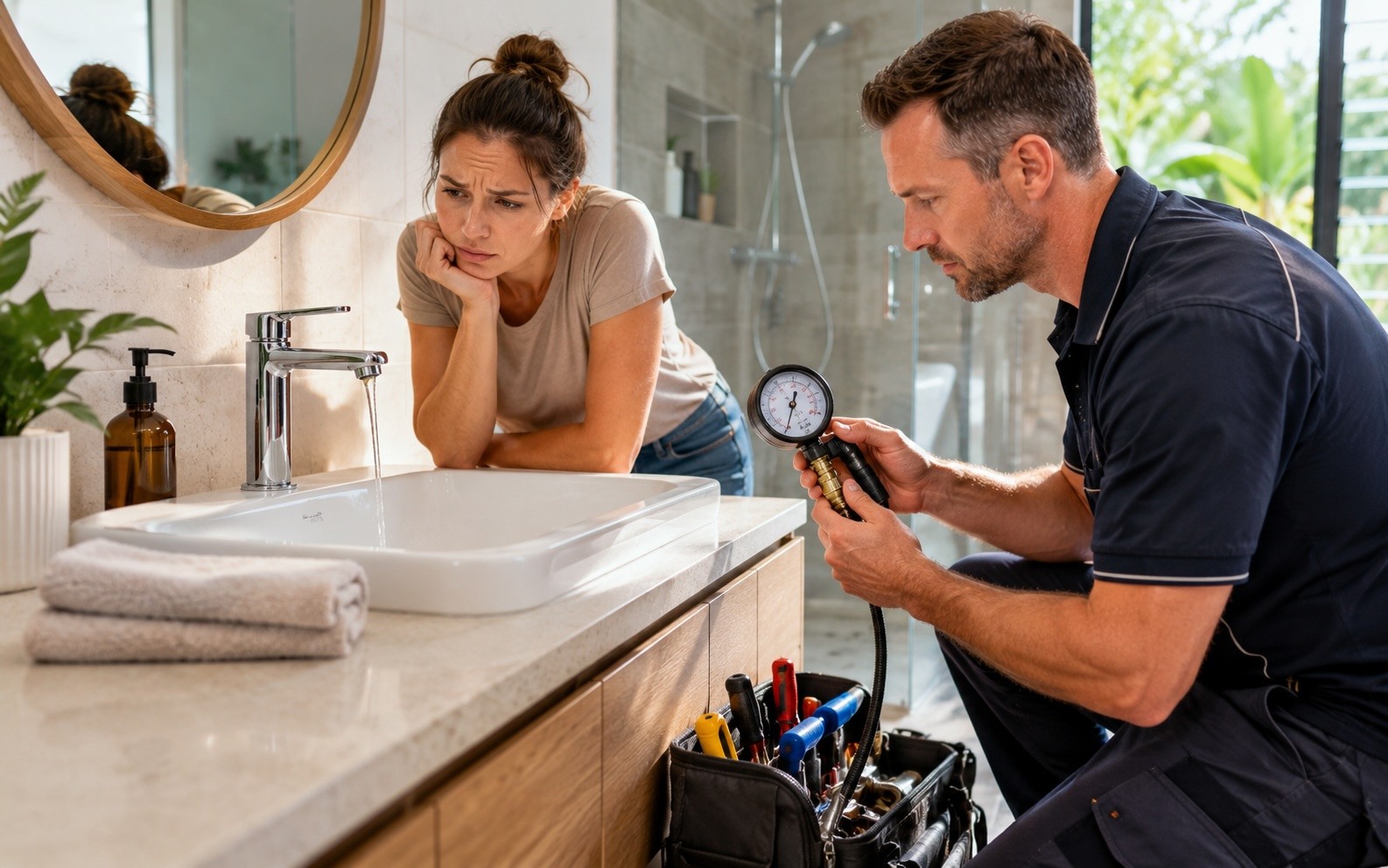
Plumbers test water pressure using small gauges and flow checks, not guesswork. This testing shows whether the issue starts at the street, the meter or inside the building.
They will usually:
-
Measure static pressure (all taps off), often at an outside garden tap near the meter.
-
Measure dynamic or working pressure while one or more fixtures run, to see how much pressure drops when water is moving.
-
Check flow rate by timing how long it takes to fill a known container or by using a flow meter at showers, kitchen sinks and garden taps.
Guidance from the Australian Building Codes Board notes that plumbing standards set both minimum and maximum pressures and flow rates to protect fixtures and keep performance comfortable.
When Does Low Water Pressure Become A Problem?
Low water pressure becomes a problem when it starts to:
-
Affect everyday living – slow showers, hard to rinse soap or shampoo.
-
Make toilets take ages to refill.
-
Cause washing machines or dishwashers to drag through cycles.
When one person showering causes another shower or the kitchen tap to drop to a trickle, pressure is not keeping up with demand. In multi storey homes, top floor showers and taps often show weakness first because water has to work against gravity.
Leaving low pressure unchecked can:
-
Hide leaks and water supply issues.
-
Shorten the life of hot water units and pumps.
-
Lead to ongoing tenant complaints in rentals and strata complexes.
Common Signs Of Low Water Pressure In Sunshine Coast Properties
Common signs of low water pressure include weak showers, thin streams from taps and appliances that seem to run forever. The pattern across the property gives important clues about the cause.
Sunshine Coast homes often mix older pipework with modern bathrooms and kitchens, so pressure problems are frequent in suburbs like Buderim, Nambour, Caloundra and Noosa. According to Sydney Water, a typical water efficient shower uses about 7–9 L/min at normal pressure, so drops in flow are easy to feel.
Everyday Symptoms In Showers, Taps And Appliances
Everyday symptoms tend to show up first at fixtures people use most. Bathrooms, kitchens and laundries are common trouble spots, especially during busy times.
You may notice:
-
Low water pressure in shower that feels more like a drizzle than a spray, with shampoo taking longer to rinse.
-
Weak water pressure in shower when someone opens a basin tap or starts the washing machine.
-
Taps running as thin, stringy streams.
-
Baths or sinks taking much longer to fill than they did a few years ago.
-
Dishwashers and washing machines pausing mid cycle or showing error codes because inlet pressure is not high enough.
Patterns That Help Narrow Down The Cause
The pattern of low water pressure often points toward the fault even before a plumber arrives. Looking at where and when pressure is low helps narrow the options.
-
Only one outlet weak
-
Likely cause is local, such as a blocked aerator, clogged showerhead, kinked flexi hose or failing mixer cartridge.
-
-
One bathroom or one level affected
-
Issue may sit in a branch pipe, tempering valve, partial pipe blockage or a low water pressure second floor problem.
-
-
Whole house, including garden taps, has poor flow
-
The street supply, meter, boundary valve, shared supply line or pressure-limiting device needs checking.
-
-
Pressure drops mostly at peak times (mornings, evenings, holidays)
-
Often reflects higher network demand. MJP Plumbing can confirm this with proper tests and discuss options such as internal upgrades or, where allowed, booster systems.
-
The Most Common Causes Of Low Water Pressure
The most common causes of low household water pressure fall into two groups:
-
Supply side issues – council mains, elevation and boundary controls.
-
Internal plumbing problems – pipework, valves, leaks and hot water systems.
On the Sunshine Coast, both can appear in the same property, especially where old galvanised pipes meet newer fittings.
External issues include Unitywater mains limits, elevation and boundary valves. Internal causes include corroded pipes, blocked fittings, failing valves, hidden leaks and undersized pipework. Research from the Australian Bureau of Statistics shows that most Australian households rely on town water, so network behaviour strongly influences how water pressure in house feels each day.
Supply, Valve And External Causes
Supply and valve related causes sit at or before the property boundary. These often affect several homes in a street or a whole complex.
Common external causes on the Sunshine Coast include:
-
Zones at higher elevation in suburbs such as Buderim and Nambour, which naturally receive lower pressure because of height and distance from pumping stations.
-
Unitywater maintenance, main repairs, new connections or fire fighting, which can temporarily reduce pressure in an area.
-
Partially closed or seized isolation valves at the water meter after earlier works, restricting flow into the whole property.
-
Faulty or incorrectly adjusted pressure-limiting valves (PLVs) that hold household pressure too low.
-
Shared supply lines in duplexes, units and commercial sites where heavy water use in one tenancy drags down pressure in another.
Internal Pipework, Blockages And Ageing Systems
Internal causes often grow slowly over many years, so residents may not notice low water pressure until it becomes quite bad. Established areas such as Caloundra, Maroochydore and Noosa Heads still contain many older pipe systems.
Issues often include:
-
Galvanised steel pipes that corrode and narrow inside, turning from a clear pipe into something that looks more like a rusty straw.
-
Scale and mineral build up from hard water collecting in showerheads, tap aerators, valves and hot water lines, further cutting flow.
-
Poorly planned renovations that leave long, undersized pipe runs with many tight bends that sap pressure before water reaches new bathrooms.
-
Hidden leaks in walls, under slabs or in yards that bleed pressure away constantly.
-
Tree root intrusion into underground pipes, especially on leafy blocks, which can cause both leaks and pipe blockage.
MJP Plumbing uses inspection cameras, pressure gauges and leak detection gear to find these hidden problems and design long lasting fixes.
How To Diagnose The Problem
Diagnosing low water pressure starts with simple checks by the property owner, followed by structured testing from a licensed plumber if needed. The aim is to separate easy fixes from faults that need tools and expertise.
Many Sunshine Coast homeowners, landlords and property managers can safely do a short checklist in under half an hour. For anything involving pressure valves, hot water systems, concealed pipework or gas, a professional such as MJP Plumbing is the right choice.
Safe DIY Checks For Homeowners And Property Managers
Safe DIY checks focus on observation, cleaning and basic valve positions, not on dismantling equipment. These steps help confirm whether low water pressure in house is localised or widespread.
A practical DIY checklist:
-
Compare flow at the garden tap, kitchen sink and a bathroom.
-
Check the meter valve and under sink mini stops are fully open.
-
Clean or briefly remove aerators and showerheads to see if flow improves without them.
-
Run hot and cold separately at a few mixers to spot differences.
-
With all fixtures off, look at the water meter and see whether it still turns, which can hint at a leak.
-
Write down which fixtures were tested, the time of day and what happened so MJP Plumbing can review that information later.
DIY work has limits. Do not:
-
Dismantle pressure-limiting valves, tempering valves or backflow devices.
-
Open up gas or electrical hot water units.
-
Cut into walls, floors or slabs to reach pipes.
These items affect safety and must stay in the hands of licensed tradespeople.
Professional Testing And Low Water Pressure Diagnosis By MJP Plumbing
Professional diagnosis goes further by measuring and isolating parts of the system. MJP Plumbing follows a structured process to avoid guesswork and repeat visits.
Typical steps include:
-
Static and dynamic pressure testing at key points, starting near the meter, to show how much pressure is arriving from Unitywater and how much is lost inside the property.
-
Flow rate checks at showers, kitchen sinks and external taps to reveal where restrictions sit.
-
Inspection of isolation valves, pressure-limiting valves, non return valves and tempering valves for wear, incorrect settings or grit.
-
Checking accessible pipework in roof spaces, under floors and in service cupboards for galvanised sections and undersized branches.
-
Using acoustic equipment, leak detection and pressure tests where leaks are suspected, to locate faults with minimal cutting.
-
Testing hot water systems (electric, gas, solar, heat pump), since many complaints about low water pressure in shower relate to the hot side.
This root cause focus helps avoid patching symptoms and instead fixes the real problem.
Internal Plumbing Vs Water Supply Issues – How Can You Tell?
Working out whether low water pressure comes from Unitywater’s supply or from internal plumbing helps direct the next steps. A few simple comparisons often give a very strong hint.
Even where council supply pressure is modest, valve repairs, pipe upgrades and hot water adjustments often improve performance a great deal. Knowing where to look first saves time and cost.
Signs It’s A Council Supply Or Street Main Problem
Some patterns point more toward the council side of the meter than the house plumbing. These are worth checking before planning major internal work.
Likely supply-side signs:
-
The whole property, including the garden tap beside the meter, has consistently weak flow.
-
Nearby neighbours in suburbs such as Maroochydore, Mooloolaba or Kawana report the same problem at the same time.
-
There are recent or ongoing roadworks, Unitywater notices or main repairs in the area.
-
Pressure dips mostly at busy times or during holiday periods near coastal strips, often linking to high demand on the shared network.
In these cases, residents may contact Unitywater first, then engage MJP Plumbing to test and confirm what is happening at their property.
Signs It’s An Internal Plumbing Or Property Issue
Other patterns usually point to internal plumbing faults. These are the cases where a licensed Sunshine Coast plumber can make the biggest difference.
Look for:
-
Good pressure at the garden tap but poor pressure inside – strongly suggests an internal restriction, faulty pressure-limiting valve or ageing pipework.
-
Low water pressure second floor, or in one wing of a building – often relates to undersized branches, long pipe runs or tempering valves feeding those areas.
-
No water pressure in house hot taps while cold remains fine – points towards hot water units, non return valves or tempering valves.
-
A meter that turns while every tap and appliance is off, or damp patches and unusually green lawn strips – hints at leaks.
MJP Plumbing can isolate sections and test them one by one to pinpoint where pressure is being lost.
Hidden Leaks And Pipe Restrictions
Hidden leaks and internal pipe restrictions are common causes of gradual low water pressure across Sunshine Coast properties. They usually start small and grow over time, so the change can be easy to miss.
Ageing galvanised pipes, old joints, shifting sandy soils and coastal conditions all contribute to this slow decline. According to Sydney Water, even small leaks can waste thousands of litres of water each year, which also means less pressure at fixtures.
How Hidden Leaks And Blocked Pipes Cause Poor Water Pressure
Hidden leaks and blockages reduce both pressure and flow long before water surfaces. They also waste water and can harm building structures.
Typical problems include:
-
Underground leaks under driveways, gardens or slabs bleeding pressure away before water reaches taps and showers.
-
Leaks in walls and ceilings causing hissing sounds, wet patches and mould, as well as bad water pressure in house rooms on that line.
-
Rust flakes and scale from old pipes lodging in mixers, valves and aerators, further narrowing passages.
-
Tree roots in leafy suburbs such as Buderim and Nambour cracking and intruding into pipes, creating both leaks and obstructions.
MJP Plumbing uses leak detection, pressure tests and inspection cameras to locate these issues accurately and plan repairs with as little digging or cutting as possible.
Corroded Pipes And Ageing Plumbing Systems
Many older Sunshine Coast homes were built with galvanised steel water pipes. Over decades, these pipes rust from the inside out and slowly close up.
Telltale signs include:
-
Reddish water when taps first run.
-
Patchy pressure around the house.
-
A history of small leaks and constant pipe repairs.
In such cases, repeated minor fixes may cost more over time than a planned pipe upgrade. Replacing old steel with modern copper or PEX piping:
-
Restores consistent pressure.
-
Improves water quality.
-
Reduces future leak risk.
MJP Plumbing carefully plans pipe replacement work, stages it to suit the household or business and keeps disruption as low as possible while the upgrade occurs.
Hot Water System Related Pressure Problems
Many Sunshine Coast residents notice water pressure problems most clearly when using hot water, especially in the shower. Often the fault lies with the hot water system or its valves rather than the street supply.
Storage tanks, instantaneous gas units, solar systems and heat pumps all have filters, control valves and safety devices that can restrict flow when they start to fail. Regular servicing guided by manufacturers and Queensland regulations helps keep both pressure and temperature steady.
Common Causes Of Low Hot Water Pressure
Low hot water pressure usually comes from restriction somewhere between the cold inlet to the heater and the hot outlet to the house. Different system types have their own common trouble spots, such as:
-
Tempering valves that become partially blocked or misadjusted, cutting hot flow to showers and basins.
-
Blocked filters or strainers on the cold inlet to storage or instantaneous units, limiting how much water can enter the heater.
-
Scale build up inside older tanks and in heat exchangers, narrowing passages on the hot side.
-
Gravity fed or older low pressure systems struggling to keep up with modern multi bathroom homes.
-
Instantaneous units not receiving enough flow or incoming pressure to ignite properly when several fixtures call for hot water.
How MJP Plumbing Diagnoses And Fixes Hot Water Pressure Issues
Hot water pressure faults need a licensed plumber because they involve hot water safety controls and often gas or electrical components. MJP Plumbing follows a clear process when hot taps are weaker than cold ones.
The plumber will usually:
-
Compare hot versus cold flow at key outlets to confirm the problem sits on the hot side.
-
Inspect and test tempering valves, non return valves and inlet control valves, cleaning or replacing blocked or failing parts.
-
Clear inlet filters and strainers, and flush systems where scale build up is present.
-
Check whether the hot water system is correctly sized for the household or business.
-
When needed, recommend and install modern electric, gas, solar or heat pump units that suit Sunshine Coast conditions and local water quality.
All work follows Queensland plumbing regulations and Australian Standards.
When To Call A Professional Plumber
Knowing when to stop DIY checks and call a professional plumber protects safety, budgets and insurance. Some low water pressure problems are simple; others sit deep in the system and need proper tools and licences.
If basic checks do not improve water pressure, further trial and error can cause more damage than progress. MJP Plumbing focuses on finding the real cause, fixing it to code and setting up maintenance so the same issue does not keep returning.
Situations Where DIY Isn’t Safe Or Effective
Certain parts of a plumbing system are not suitable for DIY work. Tampering with them can create safety risks and void insurance.
You should call a plumber if:
-
The issue involves pressure-limiting valves, backflow devices or tempering valves.
-
There is any work needed on gas, electrical or complex hot water systems.
-
Concealed pipework in walls, ceilings, slabs or commercial risers needs repair or replacement.
-
You manage a commercial, strata or rental property where unapproved plumbing work can breach health, safety and tenancy obligations.
In these situations, contacting MJP Plumbing is the safer path.
How MJP Plumbing Helps Sunshine Coast Homes And Businesses
MJP Plumbing brings more than ten years of Sunshine Coast experience to water pressure problems and repair. Local knowledge covers suburbs such as Maroochydore, Caloundra, Mooloolaba, Kawana, Buderim, Nambour and Noosa.
The team uses:
-
Professional pressure gauges.
-
Inspection cameras.
-
Advanced leak detection equipment.
Typical services include:
-
Pipe replacement and upgrades using copper and PEX.
-
Clearing internal pipe blockage and repairing or replacing valves.
-
Installing and adjusting pressure-limiting devices where required.
-
Diagnosing, repairing and replacing all common hot water system types.
A 24/7 emergency response helps owners and property managers deal with sudden pressure loss, burst pipes and major leaks. Ongoing maintenance plans help keep water pressure steady across home portfolios, rentals and commercial sites.
Preventing Future Water Pressure Issues
Once water pressure problems are fixed, a little prevention goes a long way. Regular checks and servicing stop minor issues turning into major repairs.
For Sunshine Coast properties, that means simple cleaning routines, watching water use and planning upgrades during renovations and new builds. Guidance from Queensland Government encourages regular maintenance of plumbing fixtures and hot water systems to reduce water waste and protect buildings.
Simple Maintenance Tips For Consistent Water Pressure
Everyday maintenance is straightforward and pays off over time. Owners and managers can add these tasks to existing home or building checks.
-
Clean tap aerators and showerheads a few times a year to remove grit and minor scale.
-
Replace worn mixer cartridges when they start sticking or dripping.
-
Exercise isolation valves by turning them off and back on so they do not seize in place.
-
Keep an eye on pressure-limiting valves and visible filters for leaks or unusual sounds.
-
Monitor water bills and read the meter occasionally with everything turned off to spot hidden leaks early.
-
Arrange routine hot water servicing in line with manufacturer advice to avoid internal scale and valve failures.
-
For older homes or rental portfolios, arrange a general plumbing check every year or two with MJP Plumbing to catch pressure issues before tenants or staff notice them.
Tip from MJP Plumbing: “If you can’t remember when valves were last used or your hot water was last serviced, it’s time to book a check-up.”
Planning Ahead In Renovations, Extensions And New Builds
Good planning during building and renovation work prevents many future low water pressure complaints. This is especially important where high end bathrooms and kitchens are being added.
When renovating or building:
-
Have pressure and flow testing done before finalising bathroom or kitchen layouts to understand what the existing service can handle.
-
Upsize key pipe runs and replace old galvanised sections while walls and floors are open.
-
Design pipe sizing and layout to match the number of fixtures and the likely overlap between showers, laundry and kitchen use.
-
Select tapware and showers that perform well at the site’s expected pressure, not just based on looks.
-
Engage MJP Plumbing early for plumbing design advice, rough ins and compliant fit offs on Sunshine Coast projects so new spaces feel modern without suffering from weak water flow.
FAQs
Why Is My Water Pressure Suddenly So Low All Over The House?
Sudden low pressure across the whole house often means a new leak, valve problem or network change. Check whether neighbours have the same issue and look for Unitywater notifications. Confirm the main meter valve is fully open. If pressure stays poor or leaks are suspected, contact MJP Plumbing for urgent testing.
Why Do I Have Good Cold Water Pressure But Poor Hot Water Pressure?
Good cold pressure with weak hot pressure usually points to a hot water system fault, tempering valve issue or restriction on the hot service line. Blocked filters, failing inlet valves or an undersized hot water unit can all reduce hot flow. Safe checks include comparing several fixtures and noting whether hot taps are weak everywhere. A licensed plumber such as MJP Plumbing should then service or repair the hot water components.
Can Blocked Pipes Really Cause No Water Pressure In My Shower?
Yes. Local blockages can take shower flow down to a trickle. Grit, rust and scale often collect in showerheads, mixer cartridges or narrow branch pipes in older Sunshine Coast homes. Cleaning the showerhead may help, but if pressure stays low a plumber may need to clear or replace restricted pipe sections.
Is It Worth Installing A Water Pressure Booster Pump At Home?
A booster pump can help in areas where council supply pressure is consistently low but still within legal limits. Any pump must comply with Unitywater rules and include correct backflow protection. Often it is better to first have a plumber check valves, leaks and pipe sizing. MJP Plumbing can advise whether boosting or internal upgrades offer the best value.
How Much Does It Typically Cost To Fix Low Water Pressure?
Costs range from very small to substantial, depending on the cause. Cleaning aerators or replacing a single faulty valve is far cheaper than replacing long runs of corroded pipe or upgrading hot water systems. Property size, pipe condition, access and fixture types all affect price. An on site inspection and clear, no obligation quote from MJP Plumbing gives the most accurate figure.
How Often Should I Have My Plumbing Checked To Avoid Pressure Problems?
For older homes, rentals and commercial properties, a plumbing check every one to two years is sensible. These visits usually include pressure testing, valve inspection and a look for early signs of corrosion or leaks. MJP Plumbing offers maintenance plans for Sunshine Coast owners and managers who want steady water pressure and fewer emergency call outs.
Conclusion
Low water pressure in house, shower or kitchen sink is usually fixable once the real cause is found. Simple checks such as cleaning aerators, checking valves and comparing hot and cold can rule out minor issues. When problems relate to ageing pipes, hidden leaks, valve faults or hot water systems, professional testing and repairs are the safest path.
MJP Plumbing combines local Sunshine Coast knowledge with pressure gauges, cameras and leak detection equipment to diagnose water pressure problems accurately. The team focuses on clear explanations, compliant workmanship and repairs that last, whether the property is a family home, rental, commercial site or new build.
When showers, taps or appliances start to struggle, a quick call or online enquiry to MJP Plumbing is a practical way to get your water pressure back on track and protect the long term value of your Sunshine Coast property.