
A backflow prevention device is a one-way safety barrier that stops contaminated water from a property flowing back into the drinking water main. It keeps fertilisers, pool chemicals, germs and dirty water in private pipework from reaching Unitywater’s potable water supply.
On Sunshine Coast properties, backflow prevention devices are required wherever there is a risk that mains water can contact non‑drinking water, chemicals or other contaminants. Queensland plumbing laws, Australian Standards, and Unitywater and council policies treat backflow as a public health issue, so many homes, businesses and strata buildings must have devices installed and tested each year.
Licensed plumbers such as MJP Plumbing handle backflow preventer installation, backflow testing Sunshine Coast wide, and certification so properties stay safe, legal and ready for inspections. The rest of this guide walks through how backflow happens, which sites need protection, how devices work and what annual testing involves.
Key Takeaways
Key points about backflow prevention devices on the Sunshine Coast help busy owners make fast, safe decisions. The bullets below set out the main ideas before the article moves into more detail.
-
How Backflow Puts Sunshine Coast Drinking Water At Risk is simple to understand. Backflow happens when pressure changes pull or push water the wrong way through pipes. If hoses, tanks, pools or equipment are connected, germs and chemicals can move back towards Unitywater mains and affect neighbours, streets or whole suburbs.
-
When A Backflow Prevention Device Is Legally Required depends on risk level and plumbing layout. Queensland laws, AS/NZS 3500 and AS/NZS 2845, plus Sunshine Coast Council and Unitywater rules, require testable devices on many medium and high hazard connections. Examples include commercial kitchens, medical rooms, irrigation, fire services and some rainwater or pool setups.
-
Common Properties And Systems That Trigger Backflow Requirements appear across the region. Standard homes with big irrigation systems, pools or rainwater tanks, apartment buildings with shared plant, and sites such as cafes, workshops, schools and clinics often need registered devices and annual backflow device testing.
-
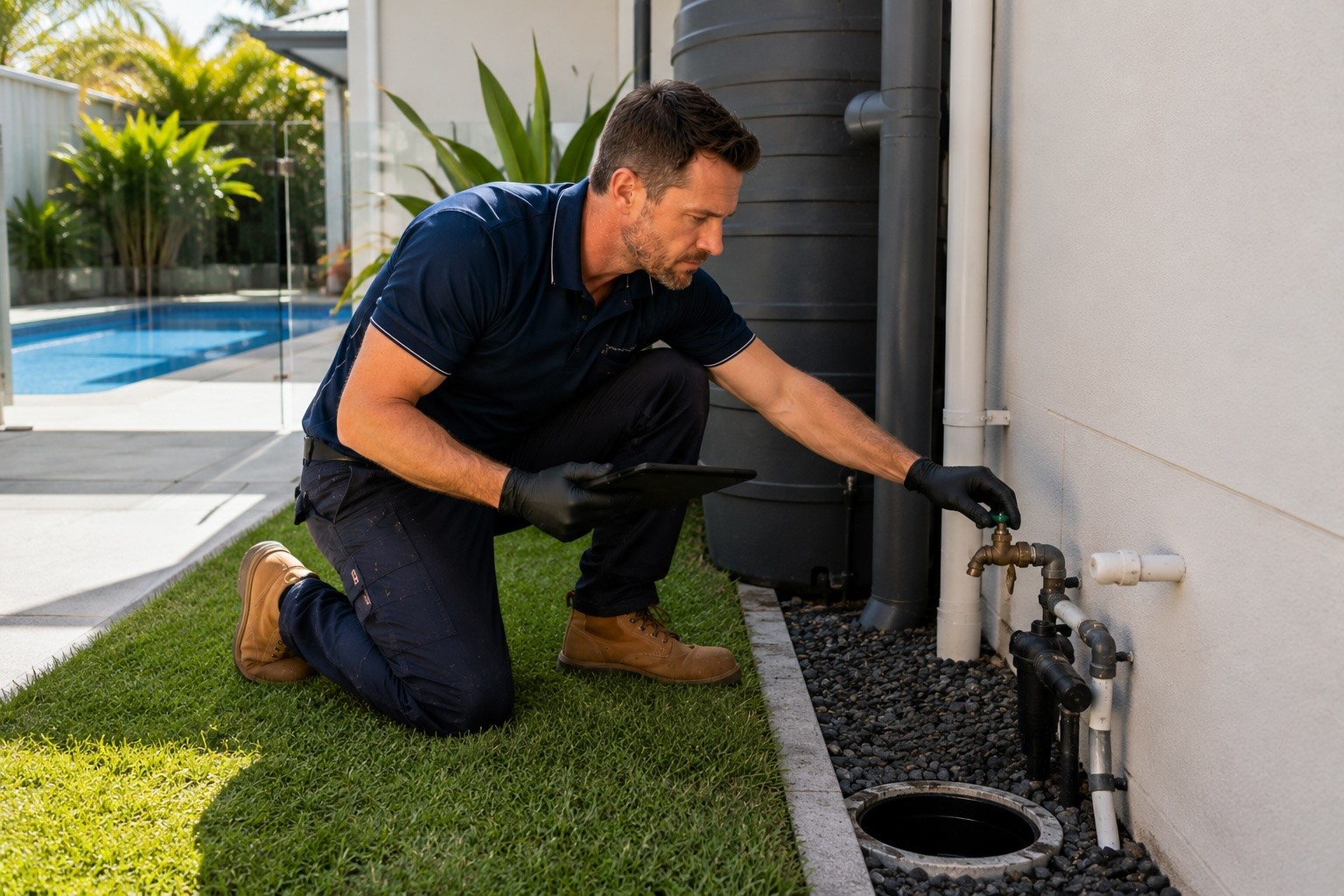
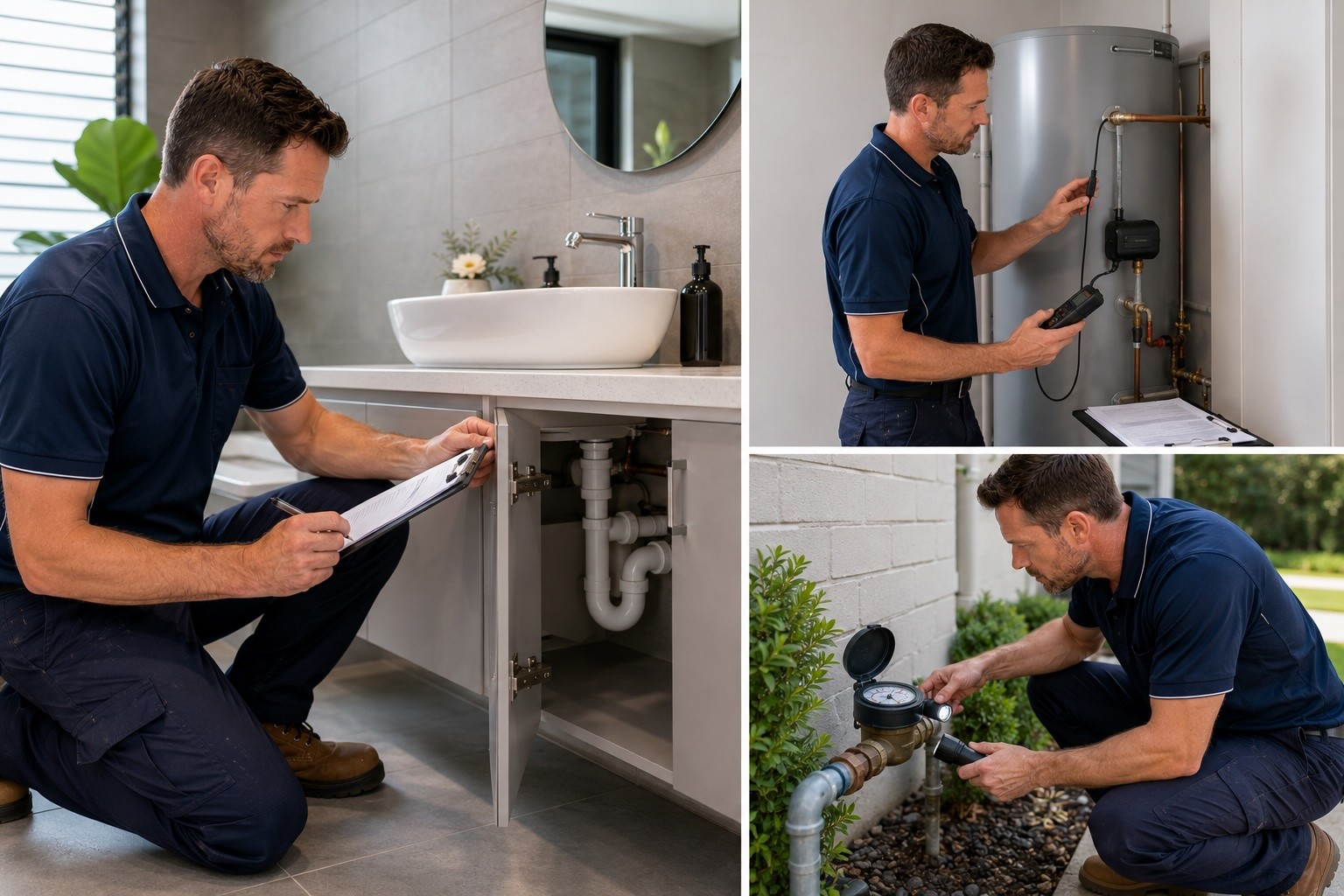
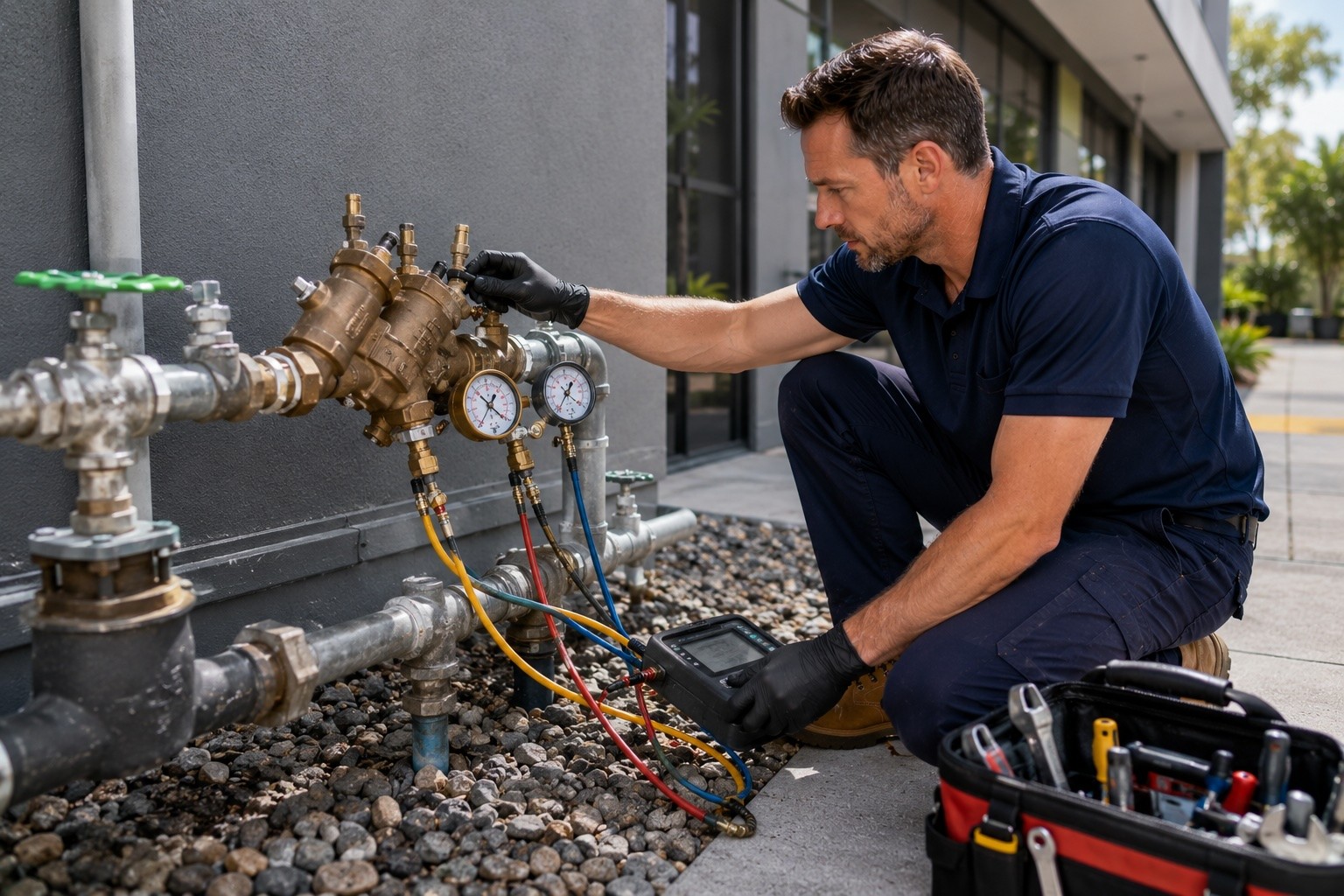
What Annual Backflow Testing Involves is a short visit from a licensed tester. The plumber isolates each valve, connects a calibrated test kit, checks pressures and operation, then records results on a form that goes to council or Unitywater. This confirms plumbing compliance and that backflow protection is working as designed.
-
How MJP Plumbing Keeps Your Property Compliant links local knowledge with steady service. The team schedules annual backflow testing Sunshine Coast wide, handles council paperwork, gives clear advice on repairs, and builds testing into wider maintenance plans for landlords, body corporates, builders and business owners.
What Is A Backflow Prevention Device?
A backflow prevention device on a Sunshine Coast property is a mechanical valve or physical gap that only allows water to travel in the safe direction. It acts like a one‑way gate that lets clean mains water in but blocks dirty water from flowing back out. That is why backflow prevention devices sit at meters, on irrigation lines, near tanks and on commercial plant.
According to the World Health Organization, at least 2 billion people worldwide use a drinking water source contaminated with faeces, which shows why protecting potable water is so important. On local sites, devices range from simple dual check valves at residential meters through to Reduced Pressure Zone (RPZ) units on high risk medical or industrial connections. Unitywater and Sunshine Coast Council treat these devices as shared protection for the whole community network.
How Does A Backflow Prevention Device Work?
A backflow prevention device works by keeping normal flow into the property free while blocking any attempt by water to travel backwards. Under normal pressure from Unitywater mains, internal springs and check valves sit open so taps, toilets and appliances receive water as usual. If pressure drops in the main or rises inside the property, the device reacts by closing or by dumping water to a safe drain.
Some backflow prevention devices use physical separation, such as an air gap between a tap and the water level in a tank or trough. Others rely on mechanical parts such as double check valves or an RPZ backflow preventer that vents water if something fails. In all cases, the aim is simple water supply protection for the drinking supply even when pumps, heaters or hoses change pressures behind the scenes.
Key Backflow Terms You’ll See On Quotes And Compliance Reports
Common terms on quotes, backflow certification reports or Unitywater notices can feel confusing at first:
-
A backflow prevention device, backflow preventer and backflow valve all describe equipment that stops reverse flow into potable water.
-
A non testable dual check valve is a compact low hazard option, while a testable Double Check Valve Assembly (often written as DCV or DCVA) suits many medium hazard sites.
-
An RPZ, or Reduced Pressure Zone backflow preventer, is a high hazard device with test ports and a relief outlet that discharges to atmosphere.
-
Boundary protection refers to devices on the main feed near the meter, and zone protection refers to valves protecting certain parts of a building such as an irrigation line or commercial kitchen.
When plumbers talk about plumbing backflow protection, they mean the full mix of devices and design choices that keep drinking water safe.
How Does Backflow Contamination Occur On Sunshine Coast Properties?
Backflow contamination on Sunshine Coast properties happens when pressure changes in water pipes cause dirty water to move towards the mains instead of away from it. Two main effects, back siphonage and back pressure, explain most incidents in local homes, strata blocks and commercial buildings. Both can introduce germs, chemicals and sediment into Unitywater’s supply if backflow prevention devices are missing or faulty.
Research from the World Health Organization links unsafe water, sanitation and hygiene with around 485,000 diarrhoeal deaths each year worldwide, which underlines the stakes of water contamination prevention. On the Sunshine Coast, the combination of pools, irrigation, rainwater tanks and growing commercial activity means the risk is real if plumbing is not managed well.
Back-Siphonage And Back-Pressure Explained In Plain English
Back siphonage happens when pressure in the Unitywater main suddenly drops and water is sucked backwards towards the street. A burst main in a Maroochydore road or firefighting in Caloundra can create this effect. If a hose is sitting in a pool, bucket or chemical drum at that moment, the dirty water can be drawn into pipework. Without a working backflow preventer, that mix can reach neighbours.
Back pressure is the opposite problem because the pressure on the property side becomes higher than the mains. Pumps on rainwater tanks, hot water systems in high‑rise plant rooms or irrigation pumps in Nambour gardens can all push water back if connected directly. A simple way to picture the difference is a straw: sucking on the straw is like back siphonage, blowing through it is like back pressure. Backflow valves stop both effects from sending contamination upstream.
Common Sources Of Contamination In Homes, Strata And Businesses
Real‑world contamination sources across Sunshine Coast suburbs are usually everyday fittings rather than unusual factories. For example:
-
Garden taps and irrigation systems in Buderim or Nambour backyards become risky when hoses sit in ponds, animal troughs or fertiliser sprayers.
-
Pools and spas in Mooloolaba, Kawana or Coolum add chlorine, salt and algaecides, so any mains top‑up line needs proper irrigation backflow preventer or air gap protection.
-
Rainwater tanks with mains top‑up lines or changeover valves can create a direct mixing point between tank water and potable supply.
-
Commercial and industrial sites such as cafes in Mooloolaba, car washes near Birtinya, mechanical workshops and medical or dental clinics use cleaning agents and chemicals that must stay out of drinking water.
-
Fire hydrants and hose reels in large complexes around Kawana and Birtinya also contain water that can stagnate without correct backflow valve installation.
Why Does Backflow Prevention Matter For Sunshine Coast Properties?
Backflow prevention devices matter on Sunshine Coast properties because they shield people and businesses from the health and financial impact of contaminated water. They stop dirty water from private plumbing reaching public mains, and in turn protect families, tenants, staff and visitors. They also help owners meet Queensland backflow regulations so projects, rentals and businesses run smoothly.
According to the National Health and Medical Research Council, the Australian Drinking Water Guidelines set a limit of zero Escherichia coli in each 100 millilitres of drinking water. That strict target highlights why one faulty backflow preventer can never be treated as a minor issue. For builders, landlords and property managers, strong backflow control supports both safety and long‑term asset value.
Health And Safety Risks From Contaminated Drinking Water
Contaminated water from backflow can carry bacteria, viruses, fertilisers, hydrocarbons and pool chemicals into taps and showers. That mix may cause gastro, skin irritation, eye damage or chemical burns, with higher risk for children, older residents and people with weaker immune systems. Outbreaks can appear as clusters of stomach illness in a single building or across a street when one site feeds back into the Unitywater main.
Reports from Queensland Health stress that waterborne germs such as Campylobacter and Salmonella are ongoing causes of gastrointestinal illness across the state. A single unprotected hose in a bucket on one property can affect neighbours who never knew a risk existed. Backflow prevention devices reduce the chance of these silent events reaching that point.
Legal, Financial And Reputation Impacts Of Poor Backflow Control
Poor backflow control also creates legal and financial headaches for owners and businesses. Sunshine Coast Council and Unitywater can issue notices, fines or directions when required devices are missing, unregistered or overdue for testing. Non‑compliant plumbing can delay approvals for new builds or fit‑outs, leaving builders and developers with idle sites.
Insurers may question claims when backflow prevention requirements were ignored and contamination causes damage or injury. For public‑facing businesses such as restaurants, medical centres, schools or accommodation providers, any link to unsafe water can harm reputation long after the plumbing fault is fixed. Working with MJP Plumbing on backflow preventer service and testing helps owners avoid these cascading problems.
“Backflow isn’t just a plumbing issue; it’s a public health risk. If contaminated water can run back into the main, every connected property is exposed.”
— Senior Plumbing Inspector, South East Queensland (paraphrased)
Are Backflow Prevention Devices Required By Law On The Sunshine Coast?
Backflow prevention devices are required by law on many Sunshine Coast properties because they protect Unitywater’s network and public health. Queensland plumbing laws, Australian Standards and local council policies set clear rules for where devices must be installed, registered and tested. Owners cannot simply decide to skip them without facing compliance issues.
The Plumbing and Drainage Act 2018 (Qld) and Plumbing and Drainage Regulation link directly to standards such as AS/NZS 3500 for water services and AS/NZS 2845 for backflow prevention. Sunshine Coast Council treats regulated backflow as a notifiable plumbing matter and requires testable devices to appear on a register. Unitywater regards backflow as a shared risk, so it expects regular backflow device testing on higher hazard sites.
Key Laws, Standards And Unitywater Requirements
The Plumbing and Drainage Act 2018 (Qld) sets the base legal framework for who can do plumbing work and how it must be certified. AS/NZS 3500 describes how water services must be laid out, while AS/NZS 2845 details backflow prevention requirements and device selection. Together, they guide where an RPZ backflow preventer, double check valve or other device is needed.
Unitywater and Sunshine Coast Council class many connections as testable, including:
-
Larger irrigation systems
-
Fire services and fire booster connections
-
Commercial kitchens and food premises
-
Healthcare and medical sites
-
Some mixed rainwater or mains setups
Those devices must be installed by appropriately licensed plumbers, such as MJP Plumbing, then registered and tested at regular intervals. According to Unitywater, the utility supplies drinking water and sewerage services across the Sunshine Coast, Noosa and Moreton Bay regions, so any local incident can have wide reach.
Who Is Responsible For Compliance And Annual Backflow Testing?
Responsibility for backflow prevention compliance usually rests with:
-
The property owner or body corporate, not tenants
-
Owners who must make sure required devices are installed, registered and tested by an accredited plumber each year
-
Landlords and property managers who handle bookings, access and record keeping on behalf of owners
Builders and developers must include compliant backflow valve installation during construction and renovation so projects pass final plumbing inspections. MJP Plumbing helps by designing device layouts, performing commercial backflow preventer installation and handling the first round of backflow testing Sunshine Coast wide. For ongoing sites, the same team can then return annually and keep council paperwork up to date.
Which Sunshine Coast Properties Commonly Require Backflow Devices?
Many Sunshine Coast properties need backflow prevention devices because they have higher hazard uses or complex plumbing systems. These include standard homes with added risk features, strata complexes, mixed‑use buildings and a wide range of commercial and industrial sites. Owners often only realise this when Unitywater or council sends a notice.
Guidance from the Queensland Government notes that any cross‑connection between potable water and contaminated sources raises the need for protection. Local growth in tourism, health services and irrigation‑heavy landscaping has increased the number of properties that fall into medium or high hazard classes. MJP Plumbing regularly helps owners across Warana, Kawana, Maroochydore and Caloundra understand their obligations before issues arise.
Residential Properties, Strata Complexes And Mixed-Use Sites
Standard residential homes usually have a non‑testable dual check valve at the water meter that gives low‑level protection. Extra devices are often needed once owners add:
-
Pools and spas
-
Large irrigation systems
-
Rainwater tanks with mains top‑up or changeover valves
In those cases, a dedicated irrigation backflow preventer or air gap may be required on the new line.
Townhouses and apartment buildings in Maroochydore, Mooloolaba, Kawana or Birtinya frequently share irrigation, pools, spas, hot water plant and fire services. That shared setup usually pushes them into medium hazard, meaning testable double check valves or RPZ units near the boundary. Granny flats and home‑based businesses such as hair salons or small medical rooms also increase risk, and body corporates must keep a register and manage annual backflow testing.
Commercial, Industrial And Special Use Properties
Commercial and industrial properties carry the highest backflow risks on the Sunshine Coast. Examples include:
-
Cafes, bars and restaurants using dishwashers, glass washers and chemical dosing units that often require zone protection
-
Medical, dental and allied health clinics in suburbs such as Sippy Downs or Nambour, which typically need RPZ backflow preventers on certain services because of exposure to blood and chemicals
-
Car washes, workshops, manufacturing plants, food processing sites and abattoirs where detergents, oils and waste products are present
-
Facilities with major irrigation, fire services with boosters, boilers, cooling towers or chemical dosing gear, which nearly always need testable devices
MJP Plumbing supports builders, owners and managers on these sites with hazard assessment and backflow preventer installation that aligns with Unitywater expectations and local backflow regulations.
Types Of Backflow Prevention Devices Explained
Different backflow prevention devices suit different hazard levels, from simple dual checks for basic homes through to high‑end RPZ units for hospitals and industry. Understanding the main types helps owners read quotes and compliance reports with confidence. Device choice depends on risk, pressure, flow and how the plumbing is arranged.
According to NCC and Standards Australia, device selection must match the assessed hazard class to give safe potable water protection. Local councils then decide which installations must be testable so performance can be confirmed each year. MJP Plumbing works within these rules to pick options that give reliable water supply protection without unnecessary cost or complexity.
Low To Medium Hazard Devices (Dual Checks, Double Check Valves, Vacuum Breakers)
Low hazard sites often use non testable dual check valves, which are compact units with two internal check valves in series. Many Sunshine Coast homes already have one built into the meter assembly.
Medium hazard sites typically use a testable Double Check Valve Assembly (DCV), which includes test ports and shut‑off valves so a plumber can verify performance.
Vacuum breakers and hose connection devices protect against back siphonage where hoses, irrigation lines or external taps pose risk. These appear on:
-
Garden taps feeding sprinklers in Buderim, Nambour or Coolum
-
Some commercial hose points and wash‑down areas
While dual checks are not testable, DCVs and some vacuum breakers must be checked regularly, so annual backflow preventer service remains important for these installations.
High Hazard Protection (Air Gaps And RPZ Backflow Preventers)
High hazard protection usually calls for air gaps or RPZ assemblies.
-
Air gaps are simple physical separations, such as a tap outlet sitting a set distance above the overflow level of a tank or trough, so water cannot be siphoned back. They suit tank inlets, break tanks and some high risk equipment where space allows and pressure is not an issue.
-
An RPZ backflow preventer is a specialised valve set with two check valves and a relief zone that vents if pressure conditions become unsafe. These devices are common on hospital, laboratory, industrial and some commercial irrigation or fire services across the Sunshine Coast.
They must sit above ground with clear access and drainage because they can discharge water during backflow device testing or fault conditions. RPZ plumbing work, along with annual testing and certification, must always be carried out by licensed plumbers such as MJP Plumbing.
Backflow Testing And Compliance Requirements On The Sunshine Coast
Backflow prevention devices on the Sunshine Coast are not fit‑and‑forget items because moving parts wear and water conditions change. Testable devices such as DCVs, PVBs and RPZs must be checked at least once a year by a licensed tester. This keeps Unitywater, council and owners confident that plumbing backflow protection is still working.
Guidance from NSW Health on water quality notes that regular inspection and maintenance of backflow devices is an important control for contamination. Similar expectations apply in Queensland, where councils rely on annual reports from plumbers to monitor local risk. MJP Plumbing builds backflow preventer testing into preventive maintenance plans so owners do not miss deadlines or face avoidable fines.
What Happens During Annual Backflow Device Testing?
Annual backflow device testing generally follows these steps:
-
Booking a visit from a licensed, backflow‑endorsed plumber.
-
Isolating the device and connecting a calibrated test kit.
-
Checking each valve in turn for correct opening, closing and pressure retention.
-
For an RPZ backflow preventer, checking the relief valve to make sure it opens at the right pressure and discharges to the drain.
-
Recording results on the approved form, issuing a certificate to the owner and submitting the report to council or Unitywater.
Most tests at Sunshine Coast commercial or strata sites take around fifteen to thirty minutes per device, depending on access. This process confirms the device is still providing water contamination prevention as designed.
What Affects Backflow Preventer Testing Cost And Repair Decisions?
Backflow preventer testing cost varies with:
-
Device type and size (e.g. small DCV vs large RPZ)
-
Number of units on the site
-
How easy each one is to access (ground level vs roof plant deck)
-
Whether isolation valves are hard to reach or locked behind panels
-
Whether minor repairs or parts replacement are needed during testing
Age, water quality and coastal exposure around places such as Mooloolaba or Caloundra also influence how often internal parts wear out. At some point, replacement can be cheaper than repeated repairs.
MJP Plumbing discusses backflow preventer testing price and options with owners before work begins and can group testing across multiple devices or sites for better value. Programmed maintenance plans help property managers spread costs and avoid sudden failures.
Signs Your Property May Need A Backflow Prevention Device Or Upgrade
Several changes on a Sunshine Coast property suggest that new backflow prevention devices or upgrades are needed. New pools, irrigation, rainwater connections or higher risk business uses can all raise the hazard level above basic residential. In many cases, it is better to act early than wait for a Unitywater or council notice.
According to the Australian Building Codes Board, plumbing upgrades and changes of use can trigger new compliance obligations even on existing buildings. When owners understand the common red flags, they can bring in a plumber like MJP Plumbing before plans progress too far, saving redesign time and unexpected backflow prevention device testing cost later.
Red Flags In Homes, Rentals And Strata Complexes
Several clear signs in homes and rentals point towards a need for a backflow review:
-
Installing or upgrading pools, spas, large irrigation systems or rainwater tanks with mains top‑up
-
Adding granny flats, home salons, clinics or similar businesses on a property
-
Frequent habits such as leaving hoses sitting in pools, buckets, drains or animal troughs
-
Body corporates and landlords receiving letters from Sunshine Coast Council or Unitywater about backflow prevention or overdue testing
-
Past plumbing work that did not come with clear backflow certification
In these situations, a check from MJP Plumbing adds peace of mind and helps maintain plumbing compliance.
Changes In Commercial Use And Building Services
Commercial and industrial sites on the Sunshine Coast face extra triggers for backflow upgrades. Warning signs include:
-
Converting a tenancy to food service, medical, dental or beauty use
-
Installing new plant such as commercial dishwashers, boilers, chemical dosing equipment or car wash gear
-
Upgrading fire services, irrigation or adding alternative water sources like bore or recycled water
-
Ownership changes and new developments where backflow compliance history is unclear
MJP Plumbing can carry out compliance checks on these properties and give clear, written recommendations for any required backflow preventer installation or backflow valve upgrades.
Maintenance And Ongoing Responsibilities For Backflow Devices
Backflow prevention devices need steady care across their lifespan so they keep protecting Sunshine Coast water supplies. Owners are responsible for arranging annual testing, fixing faults, replacing worn units and keeping good records. Ignoring devices after installation invites failures just when protection is needed most.
Industry guidance from the American Water Works Association highlights that regular testing and maintenance of backflow preventers is key to reliable performance. Local conditions such as coastal air, sediment, pressure fluctuations and landscaping changes make this especially true for Unitywater customers. MJP Plumbing offers long‑term maintenance partnerships that fold backflow, hot water and other compliance checks into one simple program.
Looking After Your Backflow Prevention Device Between Tests
Between annual tests, simple checks keep devices in better shape. Owners and caretakers can:
-
Look for leaks, corrosion, impact damage or signs of vandalism around each valve
-
Keep vegetation, soil and building materials away from devices so future testing and repairs are safer and quicker
-
Report any sign of a backflow preventer leaking, unusual noises or sudden pressure drops at downstream taps to a plumber quickly
Devices should never be boxed in, buried under paving or altered through DIY adjustments. RPZ backflow preventers in particular must not be removed or bypassed, as that can leave high hazard systems connected directly to the mains.
Record-Keeping, Compliance Certificates And Working With MJP Plumbing
Good records help owners and managers prove plumbing compliance when councils, insurers or buyers ask questions. A simple register listing:
-
Device locations
-
Types and sizes
-
Serial numbers
-
Test dates and results
is enough for many single properties. Body corporates and commercial portfolios across suburbs like Birtinya, Maroochydore and Caloundra benefit from a shared spreadsheet or software system.
Copies of test reports, backflow certification and invoices should be stored for future reference. MJP Plumbing provides compliance certification after each backflow valve test, lodges reports with council and sends reminders when annual testing is due. Many clients bundle backflow, Thermostatic Mixing Valve checks and general plumbing maintenance into one programmed plan so nothing important is missed.
Frequently Asked Questions
Question: What Is The Difference Between A Backflow Prevention Device And A Check Valve?
A backflow prevention device is an approved assembly that meets standards for specific hazard levels, while a simple check valve only stops reverse flow in basic situations. Testable devices such as DCVs and RPZ units include shut‑off valves and test ports and are required for many regulated hazards. Councils will not accept a standard check valve alone where a certified backflow preventer is needed.
Question: How Often Do Backflow Prevention Devices Need To Be Tested On The Sunshine Coast?
Most testable backflow devices on the Sunshine Coast must be tested every twelve months under Queensland regulations and local Unitywater and council policies. High risk sites such as hospitals or major industrial plants may adopt more frequent checks as part of internal safety systems. MJP Plumbing builds annual backflow testing into maintenance plans so owners stay on schedule without chasing reminders.
Question: How Much Does Backflow Preventer Testing Cost In Queensland?
Backflow preventer testing cost in Queensland depends on device type and size, how many units are on the property, access difficulty and whether repairs are needed during testing. Larger RPZ assemblies and rooftop devices usually take longer and cost more than small ground‑level DCVs. MJP Plumbing gives clear, upfront pricing and can group testing across several properties or devices to keep fees sensible.
Question: Do All Homes Need A Backflow Prevention Device Installed?
Most homes already have a basic dual check device at the water meter supplied by the authority, so no extra valve is needed for simple low risk use. Extra devices may be required when owners add pools, big irrigation systems, rainwater and mains combinations or home businesses. A licensed plumber such as MJP Plumbing can review any higher risk setup and advise on residential backflow prevention needs.
Question: Who Can Install Or Test A Backflow Prevention Device In Queensland?
Only appropriately licensed plumbers with backflow endorsement can install and test regulated backflow prevention devices in Queensland. This requirement protects Unitywater’s network and public health. MJP Plumbing provides fully licensed backflow services across the Sunshine Coast, covering backflow preventer installation, annual backflow testing, repairs and compliance paperwork.
Question: What Happens If My Backflow Test Fails?
If a backflow test fails, the plumber identifies which part of the device is not working and recommends repair or replacement. Once parts are fixed or the unit is replaced, the plumber retests to confirm compliance and then updates the test report. MJP Plumbing manages this full process so the device remains correctly listed as compliant on the council register.
Question: Can I Ignore A Council Or Unitywater Notice About Backflow Testing?
Ignoring a backflow testing notice can lead to follow‑up letters, fines and enforcement action, including possible limits on water supply. Delays also increase the chance that a hidden fault will allow contamination to reach the mains. Contacting MJP Plumbing promptly after receiving any notice lets testing be booked, carried out and reported before problems escalate.
Conclusion
Backflow prevention devices play a quiet but important role in keeping Sunshine Coast drinking water safe, legal and reliable. From simple dual checks at home meters through to complex RPZ assemblies on hospitals and factories, each device acts as a one‑way guard between private plumbing and Unitywater mains. When those guards are chosen well, installed correctly and tested on time, owners avoid health scares, fines and costly rework.
For homeowners, landlords, body corporates, builders and business operators, the safest path is to treat backflow prevention as part of normal plumbing compliance, not an afterthought. That means checking whether pools, irrigation, rainwater systems, fire services or new commercial uses have changed your risk level, and arranging annual backflow device testing where required. The small effort involved is far less than dealing with contamination or a failed inspection.
MJP Plumbing brings more than ten years of local Sunshine Coast experience to this work, along with a strong focus on clear communication and compliant workmanship. The team can assess your property, recommend the right backflow prevention devices, handle backflow preventer installation, and build annual testing into a simple maintenance plan.
To protect your water supply and stay on the right side of Unitywater and council, contact MJP Plumbing by phone or online and book a backflow compliance check today.