
Hidden water leaks are a silent threat to any Sunshine Coast property, causing damage that can lead to significant repair bills and health risks. Spotting the early signs of a water leak in your house is the best way to prevent extensive property damage.
This guide from MJP Plumbing will help you understand how to detect a water leak that’s out of sight, offering practical advice and detailing when to call in the experts.
A hidden water leak can waste thousands of litres and compromise your home’s structure before you see a single drop. Knowing the warning signs allows you to act quickly. This guide will walk you through everything you need to know about finding and dealing with these concealed problems.
Key Takeaways
-
Spotting an unexplained high water bill is often the first clue to a hidden water leak.
-
Regularly checking your water meter can definitively confirm if water is escaping your closed system.
-
Visible signs like mould, damp patches, bubbling paint, or warped flooring point to concealed moisture.
-
Hidden leaks can lead to costly structural damage, health issues from mould, and pest infestations.
-
Professional leak detection uses non-invasive technology to accurately pinpoint leaks without damaging your home.
Jump to section
- How Can I Tell If I Have a Hidden Water Leak in My Sunshine Coast Home?
- Where Do Hidden Water Leaks Often Occur in Sunshine Coast Properties?
- What Are the Risks and Costs of Ignoring a Hidden Water Leak?
- How Do Professionals Detect Hidden Water Leaks Without Damaging My Home?
- How Can I Prevent Future Water Leaks in My Sunshine Coast Property?
- What Should I Do If I Suspect a Hidden Water Leak?
- Trust MJP Plumbing for Your Sunshine Coast Water Leak Detection and Repair
- Frequently Asked Questions
How Can I Tell If I Have a Hidden Water Leak in My Sunshine Coast Home?
You can tell if you have a hidden water leak by looking for a few key indicators that often appear before any water is visible. The most reliable signs of a hidden water leak in your home include an unexpectedly high water bill, movement on your water meter when all taps are off, and physical clues like damp patches, musty odours, or changes to your walls and floors. Being observant and knowing what to look for is the first step in protecting your property from serious damage.
These signs are your home’s early warning system. Paying attention to them can be the difference between a simple repair and a major restoration project. Let’s explore how to investigate each of these clues more closely.
What Are the Common Signs of a Hidden Water Leak? (Checklist)
Identifying a hidden water leak early on can save you a great deal of trouble and expense. Here’s a practical checklist of common indicators to watch for in your Sunshine Coast property:
-
Unusually High Water Bills: A sudden and unexplained spike in your Unitywater bill, despite no changes in your water usage habits.
-
Water Meter Movement: Your water meter continues to tick over or the leak indicator dial spins, even when all water appliances and taps inside and outside your home are turned off.
-
Damp Patches: Persistent wet or moist areas on walls, ceilings, or floors that don’t dry out.
-
Mould or Mildew Smells: A musty, earthy odour, particularly in areas like bathrooms, laundries, or near cupboards, indicating unseen moisture and mould growth.
-
Bubbling or Peeling Paint: Paintwork that shows blisters, bubbles, or peels away from the wall, caused by moisture trapped behind it.
-
Warped Flooring: Timber floorboards that are cupping or bowing, or laminate and vinyl flooring that is lifting, buckling, or discoloured.
-
Low Water Pressure: A noticeable drop in water pressure across multiple taps in your home, which could signal a significant leak in the supply lines.
-
Sounds of Running Water: Hearing the sound of trickling, dripping, or running water when no taps are open and no appliances are in use. This often points to a pipe leak inside walls or under floors.
-
Wet Areas Around Walls or Cupboards: Unexplained moisture or water pooling around skirting boards, under kitchen or bathroom cupboards, or at the base of walls.
-
Ceiling Stains: Discoloured patches, often yellowish or brownish, on your ceilings, indicating water accumulating in the roof space above.
-
Unexplained Moisture: Any other persistent dampness or puddles that appear without an obvious cause, whether indoors or outdoors.
-
Persistent Dripping Taps or Toilets: Even minor drips or a toilet that constantly runs can add up and indicate internal valve issues.
-
Corrosion Around Hot Water Systems: Rust or wet spots near the base of your hot water system could signal a tank leak or faulty pressure relief valve.
-
Green Patches in the Yard: Areas of your lawn that are unusually green, lush, or soggy compared to the surrounding grass, indicating an underground pipe leak.
Does My Water Bill Seem Unusually High?
One of the most common first signs of a hidden water leak is a sudden spike in your Unitywater bill. If your water usage habits haven’t changed – perhaps you haven’t filled a new pool, watered the garden excessively during a dry spell, or hosted extra guests – but your bill is significantly higher than previous quarters, it’s a strong signal that water is being lost somewhere in your system. Even a slow, continuous drip from a pipe concealed in a wall or under the floor can waste thousands of litres over a billing cycle. This is especially true on the Sunshine Coast during storm season when increased rainfall might make you think your garden is naturally well-watered, masking an underground leak.
When you receive your bill, compare the total kilolitres used to the same period last year. Also, consider the number of occupants in your home or any recent changes to appliances. If you simply cannot account for the increase, it’s definitely time to investigate further and consider a professional water leak detection service.
How Can I Use My Water Meter to Detect a Leak?
Using your water meter is the most definitive way to confirm a hidden water leak in your home. This simple test can be performed by any homeowner on the Sunshine Coast. First, locate your meter, which is usually at the front boundary of your property. Next, make sure every tap, toilet, and water-using appliance like your dishwasher and washing machine is turned off completely. Double-check that all garden hoses are switched off too.
Take a photo of the meter’s reading, noting the position of the red numbers (these usually indicate litres or fractions of a kilolitre) and the small leak indicator dial (often a small red or black spinning wheel or a triangle that moves with even slight water flow). Wait for at least two hours without using any water; leaving it overnight provides the most accurate result as no one will accidentally use water. Finally, check the meter again. If the numbers have changed or the indicator has moved, even slightly, you have a confirmed leak somewhere in your plumbing system.
What Visual Clues Indicate Hidden Water Damage?
Even if you can’t see the leak itself, the escaping water often leaves behind tell-tale water damage signs. On the Sunshine Coast, high humidity can sometimes make these signs less obvious until they’re quite advanced. Keep an eye out for damp or discoloured patches on your walls, often appearing as yellow or brown water stains on ceilings. Moisture trapped behind paint will cause it to bubble, peel, or blister, particularly around cornices, architraves, or skirting boards.
You might also notice the growth of mould or mildew, which gives off a persistent musty smell. This is particularly concerning in the warm, humid climate of the Sunshine Coast, where mould can spread rapidly. Check your floors for any changes, such as timber boards that are warping or cupping, or laminate flooring that is lifting at the seams. For homes with carpet, look for areas that feel persistently damp or squishy underfoot. These are all signs that a water leak under the floor or in a nearby wall has been present for some time, slowly causing deterioration.
Where Do Hidden Water Leaks Often Occur in Sunshine Coast Properties?
Hidden water leaks frequently happen in concealed areas where pipes are located, such as inside walls, within ceiling cavities, and underneath floors. These areas can remain undetected until significant damage has already occurred, making them particularly problematic. In Sunshine Coast homes, the most vulnerable spots are often wet areas like bathrooms and kitchens, as well as outdoor and underground pipework exposed to environmental pressures. Many older Queenslander homes, with their intricate sub-floor plumbing, are also particularly susceptible.
Constant water use and the complex network of plumbing in these locations create numerous opportunities for leaks to develop out of sight. Understanding these high-risk zones can help you focus your attention when searching for a potential problem, whether you’re a homeowner, landlord, or tenant.
What Are the Risks of Leaks in Walls, Ceilings, and Under Floors?
A water leak in a wall can silently rot timber frames and encourage rapid mould growth long before a damp spot becomes visible on the plasterboard. This is especially problematic in the Sunshine Coast’s humid climate, where mould thrives. The moisture can also compromise electrical wiring, posing a serious safety hazard. Similarly, water leaking through a ceiling can pool in the roof cavity, saturating insulation and weakening ceiling materials, before potentially causing the entire ceiling to collapse. This can be particularly dangerous during a severe storm season when existing leaks are exacerbated.
Leaks under the floor are just as dangerous, as the moisture can damage structural timbers, concrete slabs, and create an ideal environment for pests like termites, which are prevalent in our region. Older Queenslander-style homes, often built with timber stumps and suspended floors, can be especially vulnerable to these issues, with significant timber rot developing unseen. At MJP Plumbing, we use advanced detection tools to find these hidden leaks with minimal disruption, helping to preserve your home’s structure and prevent further damage.
Are There Common Leak Spots in Bathrooms and Kitchens?
Bathrooms and kitchens are hotspots for hidden leaks due to their high concentration of plumbing fixtures and frequent water use. A leaking shower is a very common culprit, often caused by failed waterproofing membranes, cracked grout, or damaged tiles that allow water to seep into the floor and wall structures. Over time, this can lead to extensive damage to the shower recess, surrounding walls, and even the sub-floor beneath. Toilets can also have silent leaks from worn-out internal valves, causing them to run constantly without you noticing, leading to a surprisingly high water bill.
Other common issues include drips from worn washers in taps, deterioration of flexible hoses connected to dishwashers, washing machines, and sinks, and leaks around the waste pipes under basins. A burst pipe water leak from one of these flexible hoses, particularly older ones, can release a huge volume of water in a short time, causing widespread damage to cabinetry, flooring, and personal belongings. For renovators, checking existing plumbing in these wet areas before new installations is always a smart move. For landlords, regular inspections of these high-use areas are crucial to prevent costly damage in rental properties.
Can Outdoor or Underground Pipes Also Leak?
Yes, outdoor and underground leaks are very common and can be notoriously difficult to detect without professional help. The main supply pipe running from the street to your house can be damaged by invasive tree roots, ground movement (common in our coastal soil conditions), or general pipe corrosion. A water leak under a slab is another serious issue, where pipes within the concrete foundation crack and leak water directly into the ground beneath your home, potentially causing structural subsidence and cracks in the slab itself.
You might notice an unusually green and lush patch of grass in your yard, particularly if there’s no logical reason for it (e.g., specific sprinklers). Unexplained wet areas in your garden, or cracks appearing in your driveway, paths, or external walls can also point to underground issues. The Sunshine Coast’s storm season can also put extra pressure on aging underground pipes, leading to bursts. MJP Plumbing has extensive local knowledge of Sunshine Coast soil conditions and plumbing infrastructure and uses specialised CCTV drain cameras for accurate water pipe leak detection underground, ensuring we find the problem with minimal excavation.
What Are the Risks and Costs of Ignoring a Hidden Water Leak?
Ignoring a hidden water leak leads to rapidly escalating consequences that affect your finances, your property’s structure, and your family’s health. What starts as a small issue can quickly compound, turning a minor repair into a major and expensive restoration project involving multiple trades. The longer a leak is left unaddressed, the more severe the damage becomes, making prompt action a necessity for any Sunshine Coast homeowner or property manager.
The financial burden extends far beyond the cost of wasted water, while the physical damage can threaten the very integrity and long-term value of your home.
What Are the Financial Impacts of Undetected Leaks?
The most immediate financial impact of a hidden leak is an unexplained high water bill, which will continue to grow with every billing cycle, essentially pouring money down the drain. However, the secondary costs are far more significant. A persistent leak will eventually saturate building materials, requiring expensive replacement of plasterboard, flooring, cabinetry, insulation, and possibly even electrical components. This water leak repair cost can easily run into thousands of dollars, making a small drip suddenly become a major renovation expense.
Furthermore, many insurance policies do not cover damage that occurs gradually over time due to a lack of maintenance. If an insurer determines a leak was ignored for an unreasonable period, they may deny your claim, leaving you to cover the entire cost of repairs out of pocket. For landlords, this can mean significant unexpected expenses and disruption to rental income. MJP Plumbing’s commitment to “Get It Right the First Time” is designed to save you from this stress and unnecessary expense by providing a lasting repair and thorough documentation for potential insurance claims.
How Do Leaks Affect Home Structure and Health?
Prolonged exposure to moisture from a hidden leak will cause timber frames, floor joists, and other structural elements to rot, severely weakening the structural integrity of your home. This dampness also creates a perfect breeding ground for pests like termites, which are attracted to moist wood and can cause devastating damage that is often difficult and expensive to rectify. Over time, constant water exposure can lead to subsidence, foundational cracks, and compromised structural stability, significantly reducing your property’s value.
From a health perspective, the biggest risk is mould. Toxic black mould from a water leak can begin to grow within 48 hours in damp, hidden spaces like wall cavities, ceiling voids, and under floors. These mould spores become airborne and can cause serious respiratory problems, asthma exacerbations, allergies, skin irritations, and chronic sinus issues for your family or tenants. This is particularly concerning in the Sunshine Coast’s humid climate, where mould can become a pervasive problem. A comprehensive service from MJP Plumbing, from detection to repair and offering advice on remediation, helps protect both your property and your well-being.
How Do Professionals Detect Hidden Water Leaks Without Damaging My Home?
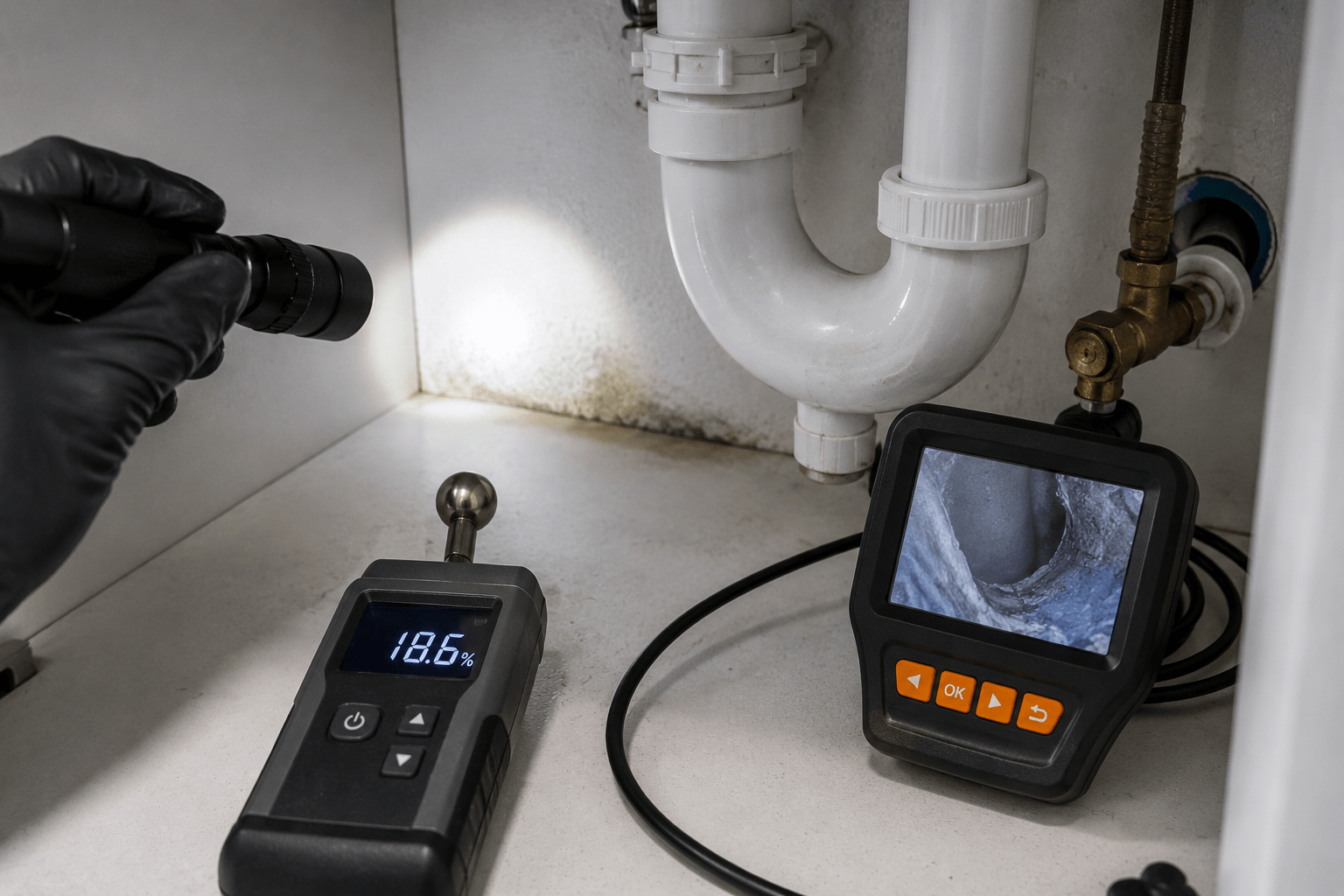
Professional plumbers use advanced, non-invasive technology to pinpoint hidden water leaks with remarkable accuracy, avoiding the need for destructive guesswork. This modern equipment allows specialists to “see” and “hear” through walls, concrete slabs, and soil to find the exact source of a leak. This approach ensures that repairs are targeted and efficient, saving you time, money, and unnecessary disruption to your Sunshine Coast home or property.
By investing in these state-of-the-art tools and continuous training, reputable plumbers like MJP Plumbing can resolve your leak with minimal impact on your property, protecting its value and integrity.
What Technologies Do Plumbers Use for Hidden Leaks?
For expert water leak detection, plumbers rely on several key technologies. Acoustic leak detectors use highly sensitive microphones that can hear the specific sound frequency of water escaping from a pressurised pipe, even through thick concrete, soil, or plasterboard. This ‘listening’ technology is particularly effective for finding a water leak under a slab or deep within a wall. The distinct hiss or drip sound allows plumbers to narrow down the exact location with precision.
Thermal imaging cameras detect minute temperature differences on surfaces. They can reveal the moisture pattern of a hot or cold water leak in a wall or ceiling, displaying it as a distinct colour pattern on a screen. Water leaking from a hot water pipe will show as a warm spot, while cold water will appear cooler than its surroundings. For very small or tricky leaks, particularly in hard-to-reach areas, plumbers may use tracer gas detection. A safe, inert gas, typically a mixture of hydrogen and nitrogen, is pumped into the pipes, and a special “sniffer” device detects exactly where it escapes, pinpointing the leak’s location with extreme accuracy.
Can Cameras Help Find Leaks in Pipes and Drains?
Yes, cameras are an invaluable tool for certain types of water pipe leak detection, particularly for drainage systems. For issues in sewer or stormwater drains, plumbers use CCTV drain camera inspections. A small, waterproof, high-resolution camera on a flexible rod is pushed into the pipe network, broadcasting a live video feed to a monitor.
This allows the plumber to see the inside of the pipes in real-time. They can visually identify problems like cracks, collapsed sections, misaligned joints, or blockages from tree roots that are causing wastewater to leak into the surrounding soil. For properties undergoing renovations, a pre-renovation camera inspection can reveal hidden issues before walls or floors are sealed. This technology provides definitive visual proof of the problem and allows for highly targeted repairs without unnecessary excavation, saving time and money. MJP Plumbing uses this technology for thorough and accurate drain diagnostics and water pipe leak detection on the Sunshine Coast.
How Can I Prevent Future Water Leaks in My Sunshine Coast Property?
You can significantly reduce the risk of future water leaks by combining simple, regular maintenance tasks with proactive professional checks. Taking preventative steps to protect vulnerable plumbing components and manage environmental factors like water pressure is the most effective way to safeguard your property. This proactive approach helps you avoid the stress and expense of an emergency leak, which can be particularly disruptive during the Sunshine Coast’s busy holiday periods.
On the Sunshine Coast, where high humidity and intense storms are common, being vigilant about plumbing maintenance is especially important for the long-term health of your home, whether it’s an owner-occupied residence or a rental property.
Are There Simple Steps to Reduce My Leak Risk?
Absolutely. One of the most important preventative measures for any Sunshine Coast homeowner is to proactively replace all flexible braided hoses (often called flexi-hoses) that connect your sinks, toilets, and appliances like dishwashers and washing machines. These hoses have a limited lifespan, typically 5-10 years, and should be replaced before they fail to avoid a sudden and catastrophic burst. A burst flexi-hose can release hundreds of litres of water per minute, causing immediate and extensive damage.
Another key step is to manage your home’s water pressure. High pressure from the street puts constant strain on your pipes and fixtures, accelerating wear and tear. Ask a plumber to test your water pressure; if it’s too high, installing a pressure limiting valve (PLV) can prevent a water pressure drop in the house caused by a burst pipe and significantly extend the life of your entire plumbing system. Regularly check outdoor taps and irrigation systems for drips or unusual wet spots, especially after prolonged dry spells or heavy rain. MJP Plumbing can easily perform these checks and adjustments for you.
How Can Regular Plumbing Checks Help?
Professional plumbing health checks are like a regular service for your car—they catch small issues before they become major problems. An annual inspection from a licensed plumber can identify early signs of corrosion, test water pressure, check the function of your hot water system’s relief valve, inspect tapware and toilet internals for wear, and spot other potential weaknesses in your system. This is particularly valuable for older homes or rental properties where plumbing may be more prone to issues.
Regular maintenance is key to long-term prevention. This includes servicing your hot water system to prevent tank leaks and clearing drains to remove tree roots or blockages that could damage pipes over time. For landlords, these inspections can protect your investment by identifying issues before they cause significant damage or disrupt tenants. MJP Plumbing offers specific preventive maintenance plans for Sunshine Coast homeowners and property managers, giving you peace of mind that your plumbing is in top condition and helping you prevent costly surprises.
What Should I Do If I Suspect a Hidden Water Leak?
If you suspect a hidden water leak, you should take immediate action to minimise potential damage and then contact a licensed professional to diagnose and fix the problem. Acting quickly can save you a significant amount of money and protect your property from extensive harm, which can be particularly severe in the humid Sunshine Coast climate. Knowing the right steps to follow ensures you handle the situation safely and effectively.
Never ignore the signs of a leak. A swift response is the most important factor in controlling the situation and mitigating potential damage to your home, whether it’s structural or health-related.
What Are the Immediate Steps for a Suspected Leak?
First, you need to isolate the water supply to stop the flow of water. Find your home’s main water shut-off valve, which is usually located at the water meter near your property boundary, and turn it off completely. If water is leaking near any electrical outlets or appliances, go to your switchboard and shut off the main power immediately to prevent the risk of electrocution, which is a serious safety concern.
Next, open the lowest tap on your property (like a garden tap or laundry trough tap) to drain the remaining water out of the pipes and relieve the pressure. This can help reduce further leakage. Move any furniture, rugs, or valuables away from the affected area and use towels or buckets to soak up any visible water to prevent it from spreading. Finally, take clear photos and videos of the leak and any damage, as this will be essential for your insurance claim and for showing your plumber the scope of the issue.
When Should I Call a Licensed Sunshine Coast Plumber?
You should call a licensed water leak plumber as soon as you confirm a leak with a water meter test or if you discover significant water damage. Professional help is essential for accurately locating and repairing leaks in complex locations, such as behind walls, under concrete slabs, in ceilings, or deep underground. These situations require the specialised equipment and expertise that only a professional can provide, preventing unnecessary damage from trial-and-error repairs.
For an emergency like a burst pipe water leak or significant water flow, you need an emergency water leak repair service immediately to minimise damage. MJP Plumbing offers a rapid response for urgent situations across the Sunshine Coast, having the team and equipment ready to respond promptly to minimise damage to your property. Using a licensed plumber is also necessary to ensure all repairs are compliant with Australian Standards and to maintain the validity of your home insurance. For landlords, a professional repair is critical for tenant safety and property maintenance.
Trust MJP Plumbing for Your Sunshine Coast Water Leak Detection and Repair
Detecting a hidden water leak early is the key to protecting your Sunshine Coast home or business from costly damage and potential health risks. By staying vigilant for the subtle signs discussed, you can take proactive steps to safeguard your property. Remember, a trusted local plumbing partner like MJP Plumbing offers advanced detection, comprehensive repairs, and specific preventive maintenance plans. Don’t let a hidden leak become a visible disaster. Contact MJP Plumbing today for expert leak detection, plumbing inspections, repairs, or urgent plumbing support—we’re here to help keep your Sunshine Coast property safe and dry.
Frequently Asked Questions
Why is my Unitywater bill so high if I don’t see a visible water leak?
A high Unitywater bill is often caused by a hidden leak. Water can escape from pipes located behind walls, underground, or under your floor, remaining completely invisible while wasting thousands of litres. The warm, humid conditions on the Sunshine Coast can also make it harder to spot subtle signs of moisture. A water meter test, as outlined in this guide, is the best way to confirm if an unseen leak is the culprit.
How quickly can a hidden water leak cause significant structural damage?
Significant damage can occur within a few weeks or months, depending on the leak’s size, location, and the materials involved. Continuous moisture leads to timber rot, accelerates the growth of mould from a water leak, and attracts destructive pests like termites, which are common in our region. In older Queenslander-style homes, timber structures can deteriorate quickly. Early detection is the key to preventing major structural issues and expensive repairs.
Is a leak behind a wall always a plumbing issue, or could it be something else?
While a burst pipe water leak is a common cause, moisture in a wall can also come from a leaking roof, failed external waterproofing, a crack in the building’s exterior, or blocked stormwater drains. It’s important not to assume. An expert plumber like MJP Plumbing uses advanced diagnostic tools, including thermal cameras and acoustic detectors, to accurately determine the true source of the problem, whether it’s a plumbing issue or related to building integrity.
Can I use a DIY leak detection kit to find a hidden leak?
DIY kits can sometimes indicate the presence of moisture but lack the accuracy and specificity of professional equipment. They might confirm dampness but won’t precisely pinpoint the source of a water leak behind concrete or inside walls. For locating a hidden leak precisely, professionals use sophisticated acoustic, thermal, and tracer gas technologies for non-invasive and reliable results, saving you time and preventing further damage from incorrect diagnoses.
What are the specific signs of a water leak under a concrete slab?
The main signs of a water leak under a slab include unexplained warm spots on your floor (from a hot water pipe), cracks appearing in your foundation or walls, and a sudden drop in water pressure. You might also notice standing water around the perimeter of your house, particularly after dry weather, or unusually lush, damp areas in your garden adjacent to the slab. An unexpectedly high water bill is also a very strong indicator of a slab leak.
Does MJP Plumbing provide emergency water leak repair services on the Sunshine Coast?
Yes, MJP Plumbing provides a rapid-response emergency water leak repair service across the entire Sunshine Coast. We understand that burst pipes and major leaks require immediate attention to minimise damage and ensure safety. Our team has the expertise and equipment ready to respond promptly to urgent situations, whether it’s day or night, to protect your property from extensive water damage.
What kind of documentation do I need for an insurance claim related to a water leak?
For an insurance claim related to a water leak, you will need clear photos and videos showing the leak and all resulting damage. It’s crucial to document the issue thoroughly before any repairs begin. Most importantly, your insurer will require a detailed report from a licensed plumber, outlining the cause, exact location, and scope of the repair. MJP Plumbing can provide a comprehensive report that assists you with your insurance claim, making the process smoother.