
Starting a kitchen renovation is an exciting project, but overlooking the plumbing can turn your dream into a costly nightmare. Common kitchen renovation plumbing mistakes include poor layout planning, incorrect appliance installations, reusing old pipework, and failing to comply with Queensland’s plumbing codes. Proper planning, ideally with a licensed professional like MJP Plumbing, ensures your design is feasible and prevents expensive issues, particularly for Sunshine Coast homeowners and renovators.
This guide will walk you through the key plumbing considerations to help make your Sunshine Coast kitchen renovation a success from the ground up.
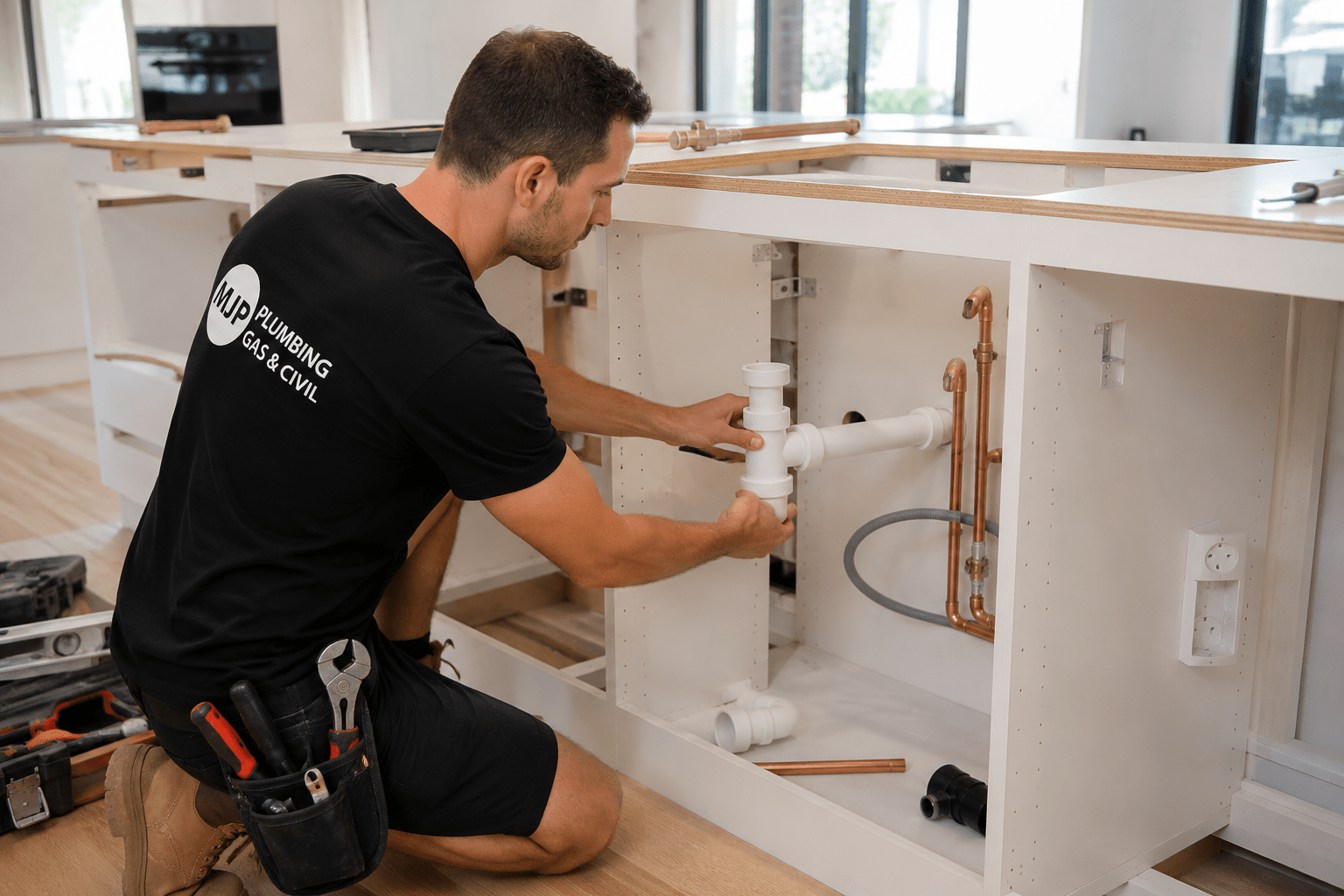
Key Takeaways
-
Understanding common plumbing pitfalls saves time, money, and stress.
-
Early professional planning with a licensed plumber is important for a smooth kitchen renovation.
-
Full compliance with Queensland plumbing standards and QBCC regulations protects your investment.
-
MJP Plumbing offers specialised local expertise for all Sunshine Coast kitchen renovations.
-
Following a comprehensive checklist makes certain no important plumbing detail is missed.
Why is Expert Planning Vital for Kitchen Renovation Plumbing on the Sunshine Coast?
Expert planning for your kitchen renovation plumbing is the most important step to a successful outcome. Poor planning is the leading cause of expensive mistakes and frustrating project delays, turning what should be an exciting upgrade into a source of stress. Engaging a licensed plumber at the very beginning of your project makes sure your design is practical, compliant with Queensland regulations, and stays within your budget.
On the Sunshine Coast, many homes have specific challenges, from older pipework in established suburbs to concrete slab foundations that make relocating services complex. An experienced local plumber can identify these potential issues before they become major problems. MJP Plumbing brings this local knowledge to every project, providing a clear path forward that aligns your vision with the practical realities of your home’s infrastructure.
The Dangers of Last-Minute Plumbing Decisions
Delaying plumbing decisions until after you have finalised your layout is a recipe for disaster. Modern kitchen designs, focusing on open-plan living and features like island benches, often clash with a home’s existing pipework. The traditional “working triangle” of sink, stove, and fridge might look good on paper, but moving the associated water and drainage lines can become the most expensive part of your renovation. This is particularly true for homes built on concrete slabs, a common construction style on the Sunshine Coast, which requires cutting and trenching to relocate pipes.
Last-minute changes can lead to compromised designs, unexpected costs, and major delays as other trades are put on hold. At MJP Plumbing, we offer early consultations to prevent these headaches. We assess your home’s infrastructure, discuss the feasibility of your ideas, and provide a transparent, no-obligation quote, making sure your project is done right the first time.
Understanding Queensland Compliance and MJP Plumbing’s Role
In Queensland, plumbing is a heavily regulated industry designed to protect homeowners and their properties. It is illegal to perform most plumbing tasks yourself, including altering water supply, drainage, or gas lines. All work must adhere to the AS/NZS 3500 standards and be performed by a professional holding a current Queensland Building and Construction Commission (QBCC) licence.
Choosing unlicensed individuals for your kitchen renovation plumbing can have severe consequences, including voiding your home insurance, facing large fines, and suffering from poor workmanship that leads to water damage and reduced property value. For any significant “notifiable work,” such as moving a sink or installing new pipework, a Form 4 Certificate of Compliance is mandatory. MJP Plumbing makes certain all work is fully compliant and provides this essential documentation, safeguarding your investment and giving you peace of mind that your kitchen is safe and legal.
Are You Avoiding Common Plumbing Pitfalls in Your Kitchen Layout?
A successful kitchen layout depends heavily on its plumbing foundation, and common pitfalls can lead to ongoing problems. Relocating fixtures like sinks and dishwashers requires more than just a new spot on the floor plan; it demands careful planning of drainage gradients and waste pipe routes to prevent blockages. Furthermore, the popular kitchen island bench introduces specific plumbing challenges for venting and pipe concealment that require expert approaches to function correctly and look seamless.
Failing to address these layout issues early can result in slow-draining sinks, foul odours, and the need for costly rework after your beautiful new kitchen is already installed. A professional plumber will analyse your proposed layout against the home’s existing plumbing system to engineer a system that works flawlessly behind the scenes.
The Challenges of Relocating Your Kitchen Sink and Drainage
Moving your kitchen sink might seem simple, but it is a complex task governed by the laws of gravity. Wastewater pipes need a consistent and correct gradient, often called a “fall,” to make sure water and food scraps flow away efficiently. In Sunshine Coast homes with slab-on-ground construction, achieving the right fall over a longer distance can be difficult without extensive concrete cutting. An incorrect gradient will inevitably lead to blockages, slow drainage, and unpleasant smells.
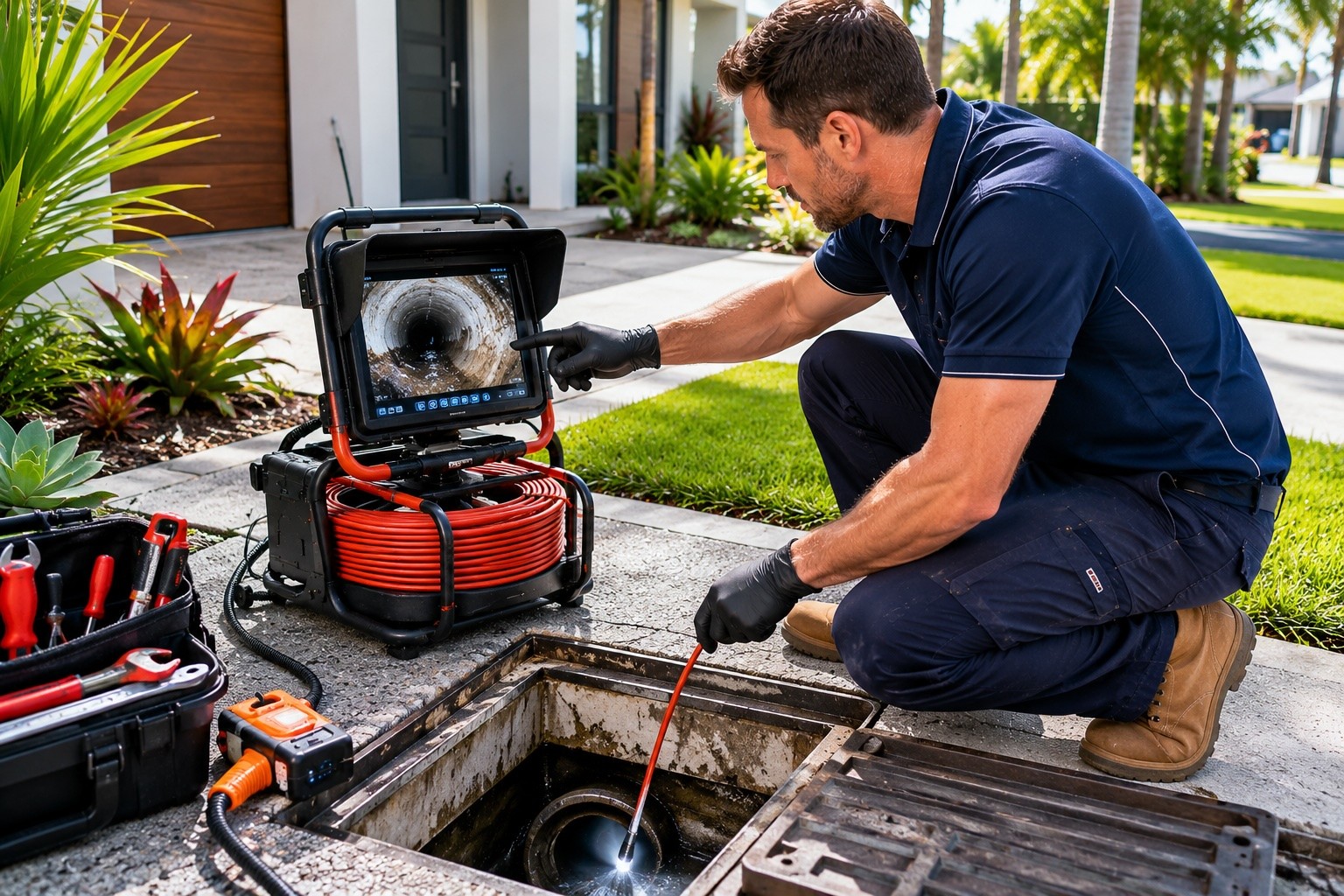
During a renovation, it is also the perfect time to assess the condition of existing pipes. Older homes may have corroding galvanised steel pipes that restrict water pressure or failing polybutylene pipes prone to bursting. MJP Plumbing conducts thorough assessments, sometimes using CCTV drain cameras, to identify these hidden issues and recommends upgrading to durable, modern materials like PEX or copper to make certain your new kitchen’s plumbing lasts for decades.
“Many homeowners on the Sunshine Coast are surprised by what we find behind their walls, especially in older properties. Addressing these hidden plumbing issues during a renovation is always more cost-effective than waiting for a burst pipe or a serious blockage later on.” – MJP Plumbing Specialist
What to Consider for Island Bench Plumbing
An island bench with a sink or dishwasher is a centrepiece of many modern kitchens, but it requires specialised plumbing. Unlike sinks against a wall, an island has no wall cavity to hide a traditional vent pipe, which is needed to stop the sink trap’s water seal from being siphoned out, allowing sewer gases to enter your home. The compliant option is an Air Admittance Valve (AAV), a mechanical device installed discreetly within the island cabinetry.
Bringing services to the island also requires running pipes through the floor. For concrete slabs, this means precision cutting and trenching to avoid compromising the structural integrity of your home. This process demands clear communication between your plumber and cabinet maker to create service channels that perfectly conceal the pipework without sacrificing valuable storage space, reflecting the personalised and detailed service MJP Plumbing provides.
Don’t Overlook These Important Appliance and Fixture Plumbing Details
In the excitement of choosing new appliances and stylish fixtures, the small plumbing details that make them work are often overlooked. However, correct installation and dedicated connections for appliances like dishwashers and ice-making refrigerators are essential for them to function reliably and to prevent catastrophic leaks. Similarly, selecting the right tapware and making sure you have adequate hot water access will significantly influence the daily usability and efficiency of your new kitchen.
These elements are not afterthoughts; they require planning during the rough-in plumbing stage. A professional plumber will make certain every connection point is correctly placed, protected, and easily accessible for future maintenance.
Essential Plumbing for Dishwashers and Fridges
Correct dishwasher connection is more than just connecting a hose. The dishwasher’s drain hose must have a “high loop“—secured as high as possible under the benchtop before connecting to the sink’s waste pipe. This simple step, often missed in DIY jobs, prevents dirty sink water from flowing back into your clean dishwasher. For refrigerators with ice makers and water dispensers, a dedicated fridge water point is a must. MJP Plumbing recommends installing this in a recessed box behind the fridge or in an adjacent cupboard for easy access.
Furthermore, it is important to install a pressure limiting valve (PLV) on the fridge line, as high mains water pressure can damage the appliance’s internal components. Adding easily accessible isolation valves (mini stopcocks) for every appliance is a key part of our “Done Right the First Time” guarantee, allowing you to shut off the water immediately in an emergency.
Why Your Tapware and Hot Water System Matter
Your choice of tapware affects not just the look of your kitchen but also its water efficiency. Selecting fixtures with a high WELS (Water Efficiency Labelling and Standards) rating is a smart move for eco-conscious Sunshine Coast homeowners wanting to lower their utility bills. However, water pressure also plays a part. Fluctuating or high mains pressure can affect fixture performance and damage appliances, making a pressure limiting valve a wise investment for the whole house.
Another common frustration is waiting a long time for hot water to reach the kitchen tap. This is caused by a long pipe run, or “dead leg,” from your hot water system. During a renovation, MJP Plumbing can address this by optimising pipe runs or installing a compact, point-of-use instantaneous heater under the sink, giving you energy-efficient hot water right where you need it. This improves hot water access and reduces water wastage, a key consideration for Queensland coastal properties.
How Can You Future-Proof Your Kitchen Plumbing During Renovation?
A kitchen renovation offers the perfect opportunity to do more than just update surfaces; it allows you to future-proof the hidden plumbing infrastructure of your home. This is the ideal time to identify and replace any outdated or compromised pipework that could cause major problems down the line. By making proactive upgrades, you can prevent future costly repairs, improve your home’s efficiency, and provide for the longevity and value of your kitchen investment.
Ignoring what lies behind the walls is a gamble that can undermine all your hard work. A thorough inspection and strategic upgrades will provide peace of mind for years to come.
Addressing Old Pipework and Hidden Issues
When the walls come down, old plumbing problems often come to light. Many older Sunshine Coast homes, particularly in established suburbs, contain galvanised steel pipes, which corrode from the inside, leading to poor water pressure and rusty water. Another common culprit is polybutylene piping, notorious for becoming brittle and causing spontaneous, destructive leaks. A renovation is the best and most cost-effective time to replace these materials.
Demolition can also uncover evidence of slow leaks that have caused hidden timber rot and mould. MJP Plumbing can use inspection cameras to identify potential problems before demolition even begins. It is also important to be aware that homes built before 1990 may contain asbestos, which requires licensed professionals for safe removal if discovered.
The Benefits of Proactive Upgrades
Choosing to upgrade your plumbing infrastructure during a renovation is one of the smartest financial decisions you can make. It is far more economical to replace old pipes or install a new, energy-efficient hot water system while the walls are open and trades are already on-site than to deal with an emergency repair later. These upgrades are not just about preventing failures; they are about improving your home.
Modern, durable piping like PEX and copper, combined with water-efficient WELS-rated fixtures, can significantly reduce your utility bills and improve your property’s value. MJP Plumbing specialises in recommending and installing modern systems, including energy-saving heat pump hot water units, that are perfectly suited to the Sunshine Coast climate and will protect your investment for the long term. This is especially beneficial for rental upgrades or family kitchens looking for long-term savings.
Your Essential Kitchen Renovation Plumbing Checklist for the Sunshine Coast
A successful renovation relies on careful planning and clear communication. This practical checklist is designed for Sunshine Coast homeowners, builders, and property managers to navigate the kitchen renovation plumbing process. Following these steps makes certain all important details are accounted for, from initial design and compliance right through to the final fit-out, leading to a smooth project and a flawless result.
Use this guide to coordinate with your licensed plumber and other trades, making sure everyone is on the same page. This proactive approach is the key to avoiding common mistakes and achieving a kitchen that is both beautiful and highly functional.
Planning and Compliance Milestones
Use this list to cover your bases during the initial stages of your kitchen renovation. Getting these steps right sets the foundation for the entire project.
-
Initial Consultation and Design Review: Before finalising any plans, have a licensed plumber like MJP Plumbing review your architectural drawings. We will assess the feasibility of your desired sink location, appliance placement, and drainage paths.
-
Existing Infrastructure Assessment: Book an inspection of your current pipework. We can check the age, condition, and material of your water, drainage, and gas lines to identify any necessary upgrades or potential issues like low water pressure.
-
Budgeting for Relocation & Upgrades: Factor the real costs of plumbing into your budget. This should include any concrete cutting for relocating services, upgrading old pipes, or installing new systems like water filters or a more efficient hot water unit.
-
QBCC Notifiable Work & Form 4: Confirm with your plumber that any “notifiable work” will be registered with the QBCC. Make sure you will receive a Form 4 Certificate of Compliance upon completion to protect your home insurance and property value.
Fixture and Appliance Considerations
This checklist covers the specific details for fixtures and appliances. Discuss these points with your plumber to prevent common installation errors.
-
Sink Location and Drainage: Double-check that the new sink location allows for the correct drainage gradient (fall). If you are installing an island sink, confirm that an Air Admittance Valve (AAV) or other compliant venting method is included.
-
Dishwasher Connections: Plan for a dedicated cold water supply point with an accessible isolation valve. Make sure your plumber installs a “high loop” in the drain hose to prevent dirty water backflow.
-
Refrigerator Water Point: Specify a recessed fridge water point with an isolation valve, Pressure Limiting Valve (PLV), and water hammer arrestor for your ice-making fridge. Place it behind the fridge or in an adjacent cupboard for easy access.
-
Tapware Selection: Choose WELS-rated tapware. Before purchasing a tap with a pull-out spray, confirm with your plumber that there is enough clear space under the sink for the hose to retract smoothly.
-
Hot Water Access: Discuss the hot water delivery time to your kitchen. Consider options like better-insulated pipes or a point-of-use heater to avoid long waits and water wastage.
-
Gas Appliance Specs: Provide your plumber with the specifications for any new gas appliances. This makes certain the gas line sizing is adequate for the megajoule (MJ) rating and that all safety clearances are met.
-
Coordination with Other Trades: Share the final plumbing plan with your cabinet maker, electrician, and stonemason. Clear communication on pipe locations and required benchtop cut-outs is essential for a seamless fit-out, especially when dealing with complex unit renovations or kitchen remodels.
Planning a kitchen renovation on the Sunshine Coast?
Get the plumbing right before the cabinets go in. Contact MJP Plumbing today for expert renovation plumbing advice, compliant installation, and a clear quote before your project begins.
Frequently Asked Questions About Kitchen Renovation Plumbing
Question: What is “rough-in plumbing” during a kitchen renovation?
Answer: The rough-in plumbing is the critical phase after demolition but before wall linings are installed. During this stage, all the concealed pipework for water, drainage, and gas is run to the new fixture locations. Precision is vital, as this hidden framework dictates where your final fixtures will sit. MJP Plumbing makes certain every pipe is pressure-tested and perfectly placed before being sealed away.
Question: How much does kitchen renovation plumbing typically cost on the Sunshine Coast?
Answer: Costs vary widely based on the project’s scope. A simple like-for-like fixture swap will be much more affordable than a full layout change that requires concrete cutting. Other factors include material upgrades and any unforeseen issues with old pipework. For an accurate and transparent price, MJP Plumbing provides detailed, no-obligation quotes after a thorough site assessment.
Question: Can I move my kitchen sink to an island bench?
Answer: Yes, it is a popular choice, but it is a complex plumbing task. It involves running new water and drainage lines through the floor, which may require concrete trenching. The main challenges are making sure the drain has the correct gradient (fall) to prevent blockages and installing a compliant ventilation system, like an Air Admittance Valve (AAV). MJP Plumbing specialises in developing these systems.
Question: What are the risks of attempting DIY kitchen plumbing in Queensland?
Answer: In Queensland, it is illegal for anyone unlicensed to alter water, drainage, or gas systems. The risks are severe and include voiding your home and contents insurance, facing heavy fines from the QBCC, and causing major water or gas leaks. Poor workmanship can lead to structural damage and significantly devalue your property. Always use a licensed professional like MJP Plumbing.
Question: How do I ensure my new hot water system is efficient for my renovated kitchen?
Answer: To get hot water faster and waste less water, consider installing a point-of-use instantaneous heater directly under the kitchen sink. Alternatively, during the renovation, your plumber can run a new, well-insulated pipe directly to the kitchen. MJP Plumbing can also supply and install modern, energy-efficient systems like heat pumps that reduce your overall utility bills, perfect for water efficiency goals on the Sunshine Coast.
Question: Why is a Form 4 Certificate of Compliance so important for my kitchen renovation?
Answer: A Form 4 is a legal document confirming that “notifiable” plumbing work meets Australian Standards and QBCC regulations. It is your proof of a safe and professional installation. This certificate is essential for maintaining your home insurance policy, for the future sale of your property, and gives you complete peace of mind. MJP Plumbing provides a Form 4 for all applicable work, ensuring Queensland plumbing compliance.
Question: How do renovation timelines typically factor into kitchen plumbing?
Answer: Plumbing work is usually split into two main phases: rough-in plumbing (before walls are closed) and fit-off (installing fixtures and appliances after benchtops and cabinets are in). Good coordination with other trades like cabinet makers and electricians is essential to avoid delays. Allowing adequate time for inspections and unexpected issues, especially in older homes, is vital for keeping your project on schedule.
Renovation Ready: Your MJP Plumbing Partner for a Flawless Kitchen
To avoid common kitchen renovation plumbing mistakes, expert planning and professional execution are key. Addressing layouts, compliance, and hidden infrastructure early protects your investment and helps create a stress-free project. MJP Plumbing is committed to delivering quality, compliant, and personalised service for every renovation on the Sunshine Coast. Choosing a trusted, local expert means your new kitchen will not only look fantastic but will function flawlessly for years to come.
Ready to start planning your kitchen renovation?
Contact MJP Plumbing today for a consultation and quote to make certain your kitchen renovation is beautiful, functional, and built to last.