Commercial bathroom fitout plumbing for an Australian business means designing, installing and certifying all water, drainage and hot water systems so they meet the National Construction Code (NCC), Plumbing Code of Australia and Queensland laws.
For a Sunshine Coast premises this covers correctly sized water supply, sanitary drainage and vents, floor wastes with puddle flanges, hot water plant, thermostatic mixing valves (TMVs), backflow prevention devices and accessible fixtures that line up with AS/NZS 3500 and AS 1428. All work must be done by licensed plumbers, lodged with Form 4 certificates and cleared by Sunshine Coast Council or a private certifier.
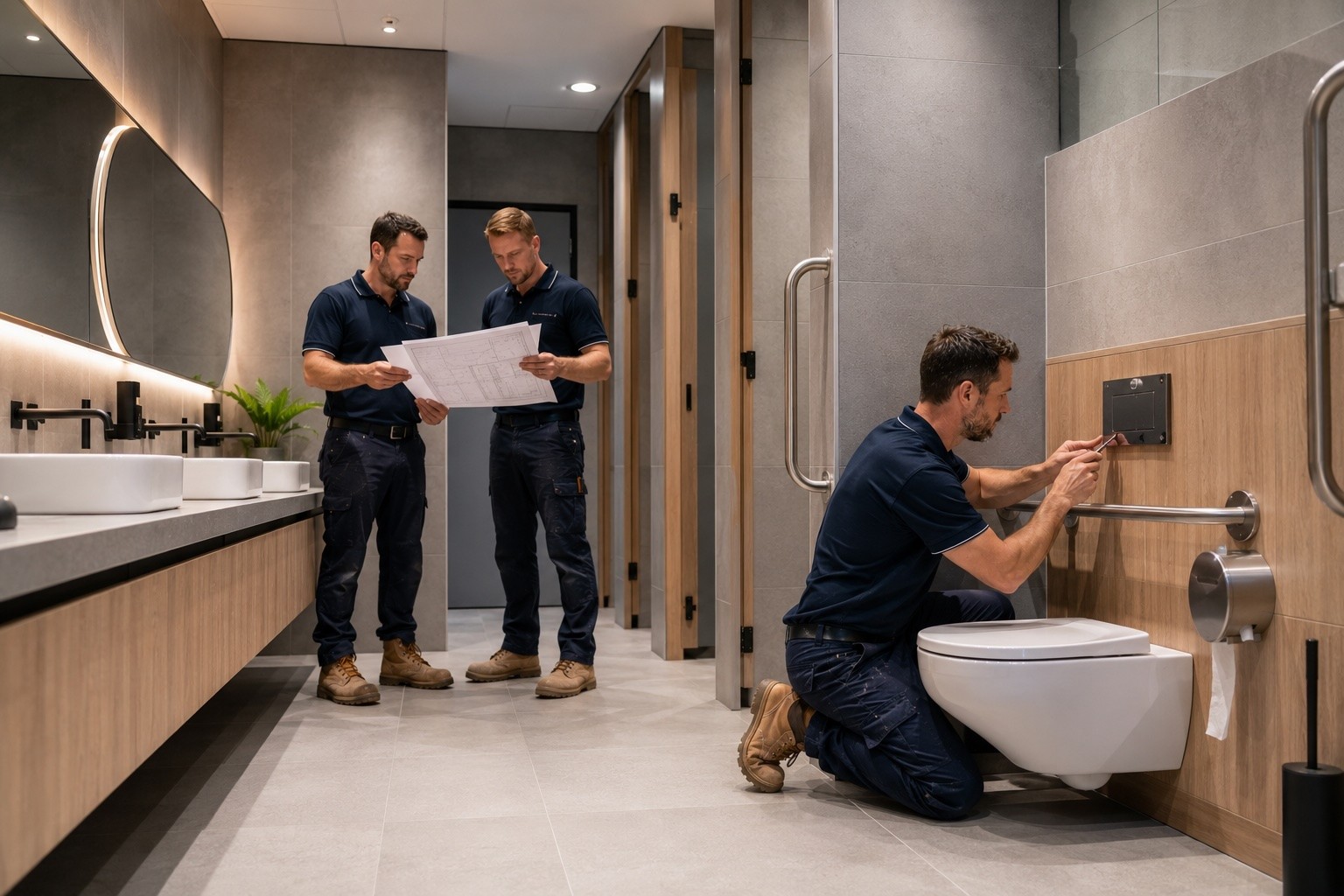
The plumbing side of a commercial bathroom renovation usually runs through clear stages. You start with scoping and design input, move into approvals, rough in for pipes and drainage, then fitoff of toilets, basins, urinals, tapware and accessories, followed by commissioning and maintenance planning. Compared with a home ensuite, commercial bathroom plumbing installation has higher user loads, tighter compliance, more fixtures and bigger consequences if anything goes wrong.
MJP Plumbing brings over a decade of local Sunshine Coast experience to this full process. The team manages layout advice, hydraulic set out, commercial toilet installation, backflow devices, hot water sizing, accessibility requirements and final compliance paperwork. The rest of this guide walks through the key decisions, regulations and design choices so business owners, builders and facility managers can plan bathrooms that work from day one and keep working for years.
Ready to see how the pieces fit together in practice? Keep reading for a step by step breakdown, all from a Sunshine Coast point of view.
Key Takeaways
Planning commercial bathroom fitout plumbing with the right team saves money, time and stress for Sunshine Coast businesses. The following points give a fast snapshot of what matters most.
-
Plan plumbing early with your design team so drainage, hot water and service cavities line up before concrete is poured or walls are framed. Early input from a commercial plumber Sunshine Coast clients trust, such as MJP Plumbing, often avoids slab cutting, layout changes and lost trading days later. Coordinated drawings also help other trades move smoothly.
-
Get compliance and accessibility right the first time by aligning layouts with the NCC, AS/NZS 3500 and AS 1428. Inclusive commercial bathroom design keeps certifiers, staff, customers and insurers satisfied, and it is far cheaper than retrofitting grab rails or pan positions after inspection. Accessibility also supports the 18 percent of Australians who live with disability, with disparities in access to health and support services well documented across Australian research.
-
Choose commercial grade fixtures for heavy use instead of domestic products that wear out quickly or invite vandalism. Wall hung or back to wall pans, concealed cisterns, sensor taps and durable urinals reduce cleaning time, breakages and callouts. Over several years this usually costs less than regular repair work and reputational damage from shabby amenities.
-
Design for water efficiency, hot water demand and future growth so you do not pay twice for plant upgrades or extra pipework. WELS rated toilets, taps and showers, efficient hot water systems and smart pipe sizing can cut water and energy bills by a large margin compared with older fittings, according to the federal WELS program. Allowing for extra fixtures or layout changes later avoids major demolition during expansions.
-
Partner with a local Sunshine Coast commercial plumber such as MJP Plumbing who understands council processes, coastal conditions and typical usage patterns in hospitality, retail, offices, tourism, medical facilities and education. One point of contact from set out through to maintenance makes commercial restroom plumbing simpler to manage and keeps sites on schedule.
What Is Involved In A Commercial Bathroom Fitout?
A commercial bathroom fitout involves a structured sequence of plumbing tasks that starts well before demolition and ends long after the opening day. For Sunshine Coast projects, commercial bathroom fitout plumbing links design advice, approvals, hydraulic rough in, fixture fitoff, commissioning and long term maintenance.
Typical Stages Of A Commercial Bathroom Fitout
The process usually starts with briefing and scoping between the owner, builder, designer and MJP Plumbing. At this point building type, user numbers, accessibility needs, budget and program are clarified, and early layout issues around sewer points, water entry and hot water plant are flagged.
Design and approvals follow, where hydraulic layouts, fixture schedules and backflow requirements are finalised in line with the NCC, Plumbing Code of Australia and Sunshine Coast Council rules. During rough in, MJP Plumbing sets out pipework, floor wastes, in wall cisterns and vents, using laser levelling and pressure tests before linings go on. Fitoff covers toilets, basins, urinals, TMVs and accessories, followed by commissioning, balancing and handover documentation. Construction rework can add 5 to 20 percent to project costs, according to McKinsey & Company, so getting these stages right matters.
Typical plumbing tasks across a commercial bathroom fitout include:
-
Hydraulic design review and coordination
-
Isolation of existing services and safe demolition support
-
Below ground drainage and trade waste adjustments
-
Rough in of water, sanitary plumbing and vents
-
Installation of hot water systems and circulation lines
-
Fitoff of fixtures, tapware and accessories
-
Testing, flushing, commissioning and certification
-
Setting up maintenance and testing schedules
How Commercial Bathrooms Differ From Residential Bathrooms
Commercial bathroom plumbing carries higher user volumes, longer opening hours and tougher hygiene expectations than a typical home ensuite. Facilities often need:
-
More fixtures and higher capacity commercial drainage
-
Backflow prevention and TMVs
-
Commercial hot water plant sized for peaks
-
Accessible layouts that match AS 1428 rather than personal preference
-
Finishes and fixtures that handle cleaning chemicals and heavy use
There is also closer inspection from certifiers and council, and any downtime affects revenue, staff productivity and brand reputation across the whole tenancy. For Sunshine Coast hospitality venues, offices, retail premises, schools and public amenities, the bathroom is a visible part of the customer experience, not just a back of house space.
Why Plumbing Planning Matters Early
Early planning for commercial bathroom fitout plumbing sets the foundation for compliant, reliable and easy to maintain bathrooms. When plumbing input comes in at concept stage, pipe routes, fixture numbers and hot water sizing can align with structure, electrical, mechanical and fitout decisions before anything is built.
Key Planning Decisions For Business Owners And Builders
Early on, business owners, project managers and builders should work through:
-
Intended use of the space
-
Hospitality, retail, office, healthcare, education, tourism or public amenities
-
Expected number of users and peak times (e.g. school breaks, restaurant sittings)
-
-
Fixture numbers and types
-
Standard WCs, urinals, basins, showers
-
Ambulant cubicles and accessible toilets
-
End of trip facilities for cyclists and staff
-
-
Future changes and tenancy flexibility
-
Potential shift from office to hospitality or medical use
-
Gender neutral layouts or extra cubicles
-
Capacity for more fixtures and extra hot water load
-
-
Operational constraints during the build
-
Whether the premises must stay open
-
Staging and after hours work
-
Temporary amenities for staff and customers during a commercial bathroom renovation
-
Spending time on these decisions early gives your commercial plumbing installation a clear brief and reduces late design changes.
How MJP Plumbing Supports Early Stage Planning On The Sunshine Coast
MJP Plumbing regularly reviews concept drawings for sites in Maroochydore, Kawana, Caloundra, Buderim, Mooloolaba and Nambour to highlight drainage conflicts, low ceiling spots and hot water constraints before works start. The team advises on set out for floor wastes, in wall cisterns, service cavities and access panels so future maintenance stays practical.
By collaborating with local builders, shopfitters and designers, MJP Plumbing helps:
-
Align bathroom layouts with existing sewer and water entry points
-
Avoid clashing with structural beams and post-tensioned slabs
-
Right-size hot water systems for the actual business model
-
Build in access to TMVs, valves and meters for long term servicing
“Early consultation with your plumber saves more money than almost any other step in a bathroom fitout.” – Project observations from MJP Plumbing, Sunshine Coast
Commercial Plumbing Compliance Requirements
Commercial bathroom plumbing in Queensland must follow a tight legal framework that protects health, safety and water quality. For Sunshine Coast properties this means commercial bathroom fitout plumbing must match the NCC, Plumbing Code of Australia, AS/NZS 3500 series, AS 1428 accessibility rules and the Queensland Plumbing and Drainage Act 2018.
Codes, Standards And Approvals You Must Know
Key rules that affect bathroom fitout compliance include:
-
National Construction Code (NCC)
-
Sets minimum numbers of toilets, basins, urinals and showers for each building class and occupant load
-
Outlines performance outcomes for drainage, ventilation and water supply
-
-
Plumbing Code of Australia (PCA) and AS/NZS 3500 series
-
Technical detail for water services, sanitary plumbing and drainage
-
Requirements for hot water systems, circulation and venting
-
-
AS 1428 accessibility standards
-
Clearances, heights and layouts for accessible toilets and showers
-
Requirements for grab rails, door swings and fixtures
-
-
Queensland Plumbing and Drainage Act 2018 and Regulation
-
Licensing rules for plumbers and drainers
-
Plumbing approvals, inspections and notifiable work (Form 4)
-
On the Sunshine Coast, plumbing plans often need submission to council, with notifiable work lodged through Form 4 certificates when fixtures move or drainage is altered. Non compliant work can lead to:
-
Failed inspections and delayed tenancy openings
-
Costly rectification works
-
Insurance and liability issues if an incident occurs
How MJP Plumbing Manages Compliance And Inspection On Your Behalf
MJP Plumbing uses fully licensed plumbers and drainers for all commercial plumbing installation tasks, from drainage modifications to backflow device installation. The team:
-
Reviews or prepares hydraulic drawings and fixture schedules
-
Coordinates with certifiers and Sunshine Coast Council plumbing inspectors
-
Lodges Form 4 certificates and other required documentation
-
Organises inspections at below ground, rough in and final stages
By aiming for work that passes first time, MJP Plumbing helps business owners and builders keep programs on track and avoid stressful last minute fixes just before handover.
Accessibility And Disability Access Considerations
Accessibility in commercial bathrooms is a legal requirement and a business advantage across Australia. With around 18 percent of Australians living with disability, according to the Australian Institute of Health and Welfare, inclusive commercial bathroom fitout plumbing makes facilities more usable for customers, staff and visitors.
Designing Accessible Toilets And Showers That Actually Work
AS 1428 sets detailed rules for accessible toilets and showers. In practice this means:
-
Accessible toilets
-
Clear floor space for wheelchair turning
-
Correct door swings and latch positions
-
Compliant pan positions measured from side and back walls
-
Grab rails at correct heights and angles
-
Flush buttons and toilet paper within reach
-
-
Accessible basins
-
Knee and toe clearance below the basin
-
Reachable taps, soap dispensers and hand dryers
-
Mixer or lever handled taps that are easy to operate
-
-
Accessible showers
-
Hobless entries and graded floors to a properly sized drain
-
Fold down seats where required
-
Well placed grab rails and hand held shower heads
-
Simple mixer controls with safe temperature limits
-
Rough in accuracy is vital, as a few millimetres can put grab rails or flush buttons outside allowed tolerances and trigger failed inspections. MJP Plumbing sets out centre lines and mounting heights carefully so finished fixtures meet both documentation and real world usability.
Ambulent And Family Friendly Facilities For Different Sectors
Many sites also need ambulant cubicles for people who use walking frames or have limited mobility but do not use wheelchairs. These cubicles include:
-
Grab rails on both sides
-
Different dimensions from standard cubicles
-
Correct door swing and latch details
-
Clear signage
Family friendly layouts in hospitality, tourism and retail often require:
-
Extra space around basins and cubicles for prams
-
Baby change tables and benches
-
Additional hooks and shelves for bags and nappy bags
MJP Plumbing works with designers and access consultants on Sunshine Coast projects so plumbing points match these layouts, rather than fighting them.
Water Efficiency And Sustainable Design
Water and energy costs add up quickly in busy commercial bathrooms, especially in hospitality, tourism, medical centres and education. Modern commercial bathroom fitout plumbing can cut these running costs while still giving users good pressure and reliable hot water.
Reducing Water And Energy Bills Through Plumbing Choices
Well planned water efficient commercial bathrooms often combine:
-
WELS rated dual flush toilets and low flow taps
-
Efficient shower heads aligned with end of trip needs
-
Sensor or timed flow tapware and urinal controls
-
Pressure management and correct pipe sizing
Replacing old 11 litre single flush pans with 4 star dual flush models can reduce toilet water use by around two thirds, according to the federal WELS program. Sensor or timed flow tapware and urinal controls stop water running when no one is using the fixtures, which is ideal for schools, shopping centres and public amenities.
Pressure management, good pipe sizing and early leak detection protect fixtures and reduce hidden water losses. Green Star certified buildings use roughly half the potable water of standard Australian buildings, according to the Green Building Council of Australia, and efficient commercial bathroom plumbing systems are a major part of that result.
Future Proofing Your Commercial Bathroom Fitout
Planning for future growth means allowing space and pipe capacity for:
-
Extra toilets or showers if your tenancy grows
-
Gender neutral reconfigurations
-
Additional end of trip or staff facilities
Hot water units and main pipework can be sized or arranged so they cope with extra load without wholesale replacement. MJP Plumbing can also set up preventive maintenance and inspection programs so commercial bathroom fitout plumbing keeps running efficiently over its life, rather than wasting water and energy as parts age.
Fixture Selection For Commercial Bathrooms
Fixture choice shapes durability, cleaning time and how customers perceive a business. Commercial bathroom fitout plumbing works best when toilets, basins, tapware and accessories match building type, brand level and expected user behaviour.
Choosing The Right Toilets, Basins And Tapware For Commercial Use
When selecting fixtures for a Sunshine Coast commercial bathroom renovation, consider:
-
Toilets
-
Wall hung or back to wall pans for easier cleaning
-
Concealed cisterns to save space and protect components
-
Vandal resistant pans for public and school amenities
-
-
Basins
-
Wall hung or pedestal basins for compact spaces
-
Inset or undermount basins in vanity tops for offices and medical suites
-
Solid surface troughs for schools and high traffic venues
-
-
Tapware
-
Mixer taps and lever handles for ease of use
-
Sensor taps where hygiene and water saving is a priority
-
WELS rated fittings to support lower water bills
-
While commercial grade fixtures cost more upfront than domestic gear, they usually offer better spare part support and longer life, which reduces total spend over time.
Sector Specific Fixture Considerations
Different sectors have distinct needs:
-
Schools and public amenities
-
Vandal resistant stainless steel pans and basins
-
Concealed flush valves and tamper resistant fittings
-
-
Professional offices, medical facilities and allied health
-
Clean lines and high hygiene tapware
-
Rimless toilet bowls and easy-clean basins
-
Provision for infection control where required
-
-
Hospitality venues and tourism accommodation
-
Durable, easy to clean commercial bathroom fixtures
-
Consistent style with the venue’s brand
-
Fixtures that tolerate frequent cleaning chemicals
-
MJP Plumbing advises on product families from multiple suppliers without locking clients into a single brand, so the final selection suits both use and budget.
Drainage And Wastewater Requirements
Good drainage is central to hygiene, odour control and building longevity in commercial bathrooms. Commercial drainage on the Sunshine Coast must deal with heavy loads, cleaning water and local sewer depths while keeping floors dry and smells under control.
Designing Reliable Drainage For High Use Bathrooms
Reliable drainage design for commercial bathroom fitout plumbing focuses on:
-
Correct pipe sizes and gradients to reduce blockages
-
Grouping fixtures to suit existing sewer connection points
-
Adequate venting to keep traps charged and avoid gurgling
-
Floor wastes positioned where cleaners actually wash floors
-
Puddle flanges installed so waterproof membranes connect properly
MJP Plumbing coordinates drainage layouts with waterproofers and tilers so falls, junctions and penetrations line up with the membrane system. This reduces the chance of hidden leaks that show up later as swelling skirtings, mould or stained ceilings.
Managing Odours, Trade Waste And Stormwater Interfaces
Odour control in commercial bathrooms usually comes down to:
-
Working water traps at every fixture and floor waste
-
Regular use or topping up of seldom used floor wastes
-
Correct venting and avoidance of siphoning
Where businesses also have trade waste, such as cafés, restaurants or hair salons, those discharges must stay separate from standard sanitary drainage and meet trade waste approval conditions.
Older buildings sometimes have complex links between bathroom drainage and wider site stormwater or sewer upgrades. MJP Plumbing uses methods such as CCTV drain inspection to understand existing systems before connecting new commercial bathroom plumbing so odours and overflows do not appear later.
Hot Water System Considerations
Hot water is central to user comfort, cleaning and hygiene in commercial bathrooms and end of trip facilities. Because water heating can account for around a quarter of energy use in typical Australian homes, according to YourHome, efficient design matters even more in larger amenities blocks with frequent use.
Sizing And Selecting Hot Water Systems For Commercial Amenities
Correctly sizing hot water for a new commercial bathroom fitout on the Sunshine Coast means looking at:
-
Number of fixtures, especially showers and basins
-
Peak usage patterns for your business type
-
Required temperature at outlets and reheat times
Common systems include:
-
Gas storage units for steady loads
-
Gas instantaneous for high peaks with limited space
-
Electric storage, particularly where gas is unavailable
-
Heat pump or solar boosted systems for lower running costs
Centralised plant suits larger buildings with many fixtures, while localised units can work for small tenancies or remote bathrooms where long pipe runs cause delays. MJP Plumbing assesses Sunshine Coast climate, available services and space to recommend hot water systems that match real usage, instead of guessing.
Temperature Control, Safety And Compliance
Australian rules limit outlet temperatures from most ablution fixtures to 50 degrees or lower in certain sensitive settings, to prevent scalding. TMVs or tempering valves mix hot and cold water so stored water can stay hot enough to control bacteria such as Legionella, while outlets remain safe. Guidance from agencies such as Queensland Health explains why these controls are needed, especially for children and older users.
MJP Plumbing installs and maintains TMVs and tempering valves as part of commercial bathroom fitout plumbing and ongoing service programs. Regular testing, cleaning of strainers and recalibration keeps outlet temperatures steady over time and supports compliance.
Common Mistakes In Commercial Bathroom Fitouts
Across Sunshine Coast projects, certain commercial bathroom mistakes show up again and again. Most problems link back to rushed design decisions, poor coordination or cutting corners on commercial bathroom fitout plumbing.
Design And Specification Mistakes To Watch For
Common planning pitfalls include:
-
Finalising layouts without checking how drainage can connect within slab depths or structural beams
-
Choosing domestic fixtures for high traffic venues, leading to quick wear and leaks
-
Guessing grab rail locations, pan heights or basin clearances instead of checking AS 1428 details
-
Underestimating hot water demand when a tenancy upgrades from office to hospitality or healthcare
-
Forgetting access panels for future servicing of TMVs, valves and concealed cisterns
Early input from MJP Plumbing during design helps catch these problems while plans are still flexible.
Construction And Maintenance Oversights
During construction, avoid issues such as:
-
Misplaced penetrations that clash with tiles, partitions or joinery
-
Damaged or poorly coordinated waterproofing around floor wastes and penetrations
-
Valves, TMVs or junctions hidden behind fixed finishes with no access
-
Skipped pressure tests before closing walls or ceilings
-
No maintenance plan for backflow devices, TMVs and hot water systems
These mistakes often lead to leaks, odours, customer complaints and higher life cycle costs for owners and facility managers.
Working With Builders And Other Trades
Commercial bathroom projects work best when plumbing, building, electrical, HVAC, waterproofing and tiling teams communicate clearly. Commercial bathroom fitout plumbing touches structure, finishes and services, so sequencing and clear set out have a big effect on program and quality.
How Trade Coordination Affects Your Bathroom Fitout Timeline
Well run Sunshine Coast projects usually:
-
Schedule drainage rough in with slab pours and structural penetrations
-
Coordinate pipework with electrical conduits, mechanical ducting and fire services
-
Lock in fixture selections before tiling and joinery are ordered
-
Allow time for inspection stages and commissioning before handover
When trades work from accurate information and share updates, timelines are easier to hold and fewer surprises appear during inspections. MJP Plumbing is used to working with Sunshine Coast builders, shopfitters and project managers to keep communication steady and avoid program slippage.
Why Sunshine Coast Builders Partner With MJP Plumbing
Many local builders prefer dealing with one consistent plumbing team from set out through to handover. MJP Plumbing provides a single contact who understands:
-
The project history and design intent
-
Site-specific challenges such as access, ground conditions or opening hours
-
Client expectations around finish level and handover dates
Familiarity with local suppliers, Sunshine Coast Council processes and typical ground conditions helps the team solve problems quickly on site. With experience across schools, hospitality venues, offices, medical facilities and public amenities, MJP Plumbing has a track record of delivering commercial bathroom fitout plumbing that works in real use, not just on paper.
Commercial Bathroom Maintenance Considerations
Once a new bathroom opens, the focus shifts from fitout to keeping systems safe, hygienic and reliable. Planned maintenance for commercial bathroom fitout plumbing helps avoid breakdowns, manage water use and maintain compliance with testing requirements.
According to the U.S. Department of Energy, good preventive maintenance programs can reduce maintenance costs by 12 to 18 percent compared with reactive approaches. For busy Sunshine Coast venues, that difference can easily outweigh the cost of regular inspections.
What Should Be Included In A Commercial Bathroom Maintenance Plan?
A good maintenance plan for commercial bathrooms typically covers:
-
Routine checks of taps, mixers, cisterns, flush valves and traps
-
Inspection of floor wastes, silicone joints and grout to stop leaks early
-
Regular servicing of hot water systems, including thermostats and safety valves
-
Scheduled testing and cleaning of TMVs and tempering valves
-
Periodic drainage inspection and cleaning for high risk venues such as restaurants, schools and public amenities
-
Annual testing of backflow prevention devices in Queensland, with results lodged to the relevant water authority
Staying on top of these items reduces major failures and extends the life of your plumbing assets.
How MJP Plumbing Supports Ongoing Compliance And Reliability
MJP Plumbing builds customised maintenance schedules for commercial, strata and institutional clients across the Sunshine Coast. Programs can combine:
-
Annual plumbing inspections
-
TMV testing and servicing
-
Backflow device testing and reporting
-
Hot water servicing and system checks
When urgent issues such as bursts, major leaks or severe blockages occur, MJP Plumbing provides quick response to reduce downtime and protect finishes. Clear reporting after each visit helps facility managers prove compliance and plan future upgrades.
FAQs
This section answers common questions Sunshine Coast business owners, commercial property owners and builders ask about commercial bathroom fitout plumbing. Each reply stands alone, so you can read the questions that match your situation.
Question How Long Does A Commercial Bathroom Fitout Usually Take?
Question: How Long Does A Commercial Bathroom Fitout Usually Take?
A small single bathroom refurb can take around one to two weeks once approvals are in place. Larger multi cubicle amenities or combined staff and public facilities can run from four to eight weeks. Design complexity, lead times for fixtures, council inspections and whether the site must stay partly operational all influence the timeline with MJP Plumbing and your builder.
Question Do I Need To Close My Business While The Bathroom Is Being Renovated?
Question: Do I Need To Close My Business While The Bathroom Is Being Renovated?
Many businesses can stay open during a commercial bathroom renovation by staging works and using temporary amenities. MJP Plumbing and your builder can sequence demolition, rough in and fitoff around quieter trading periods or after hours. Hospitality, retail and office tenants on the Sunshine Coast often rely on portable toilets or neighbouring facilities for short periods during key plumbing stages.
Question What Licences Should My Commercial Plumbing Contractor Hold In Queensland?
Question: What Licences Should My Commercial Plumbing Contractor Hold In Queensland?
Your contractor must hold current Queensland plumbing and draining licences under the Plumbing and Drainage Act 2018, along with appropriate insurance. It is wise to choose a team with proven experience in commercial bathroom plumbing, not just residential repairs. MJP Plumbing meets Queensland licensing requirements and focuses heavily on commercial bathroom fitout plumbing across the Sunshine Coast.
Question How Often Should Backflow Devices And TMVs Be Tested In Commercial Buildings?
Question: How Often Should Backflow Devices And TMVs Be Tested In Commercial Buildings?
Most testable backflow prevention devices in Queensland require annual testing, with reports lodged to the local water authority or council. TMVs should also be tested and serviced regularly, with many public, healthcare and education facilities adopting annual checks. MJP Plumbing sets up reminder schedules and carries out this testing as part of ongoing maintenance programs.
Question Can I Reuse Existing Pipework In An Older Commercial Bathroom Renovation?
Question: Can I Reuse Existing Pipework In An Older Commercial Bathroom Renovation?
Sometimes existing pipework can be reused, but only after inspection and pressure testing confirm its condition and capacity. Old galvanised or undersized copper lines, non compliant venting or damaged drains often need upgrading during a commercial bathroom upgrade. MJP Plumbing assesses existing systems and recommends the most cost effective mix of reuse and renewal for Sunshine Coast refurbishments.
Conclusion
Well planned commercial bathroom fitout plumbing gives Sunshine Coast businesses bathrooms that look good, work smoothly and stay compliant for years. Early plumbing input helps align layouts, accessibility, commercial bathroom design choices, hot water systems, drainage and venting with the NCC, Queensland regulations and Sunshine Coast Council processes.
MJP Plumbing offers end to end support for commercial bathroom plumbing from concept advice and hydraulic set out through to rough in, fitoff, commissioning and long term maintenance. The team works across Maroochydore, Buderim, Kawana, Caloundra, Mooloolaba, Nambour and surrounding areas, supporting hospitality venues, offices, retail premises, medical facilities, schools and tourism accommodation.
Whether you are planning an office bathroom renovation, a new commercial washroom fitout or a broader business restroom upgrade as part of a tenancy change, getting the plumbing right up front protects your budget and your reputation. For practical design input, quotations or maintenance plans on the Sunshine Coast, contact MJP Plumbing and turn your next commercial bathroom project into a reliable asset for your business.