
A gas smell at home is a serious warning sign demanding immediate action for Sunshine Coast residents. If you detect this odour, evacuate everyone, avoid electrical switches, and turn off the gas supply if safe. From a safe distance, call for professional help. This guide offers clear, practical advice to protect your family and property by explaining urgent safety steps for suspected gas leaks.
While unsettling, understanding what to do can safeguard your family and property on the Sunshine Coast. This guide provides clear, practical advice for responding safely to a suspected gas leak. We’ll cover everything from the immediate do’s and don’ts to long-term prevention.
This advice from MJP Plumbing will help homeowners, tenants, and business owners act effectively. Let’s explore the essential steps to make sure your safety.
Key Takeaways
-
Act immediately upon smelling gas; do not wait for the smell to get stronger or go away on its own.
-
Prevent any potential sparks or open flames by not using light switches, phones, or lighters inside the property.
-
Evacuate the property safely and quickly, making sure all people and pets are a safe distance away from the building.
-
Always call a licensed gas fitter like MJP Plumbing or emergency services (000) for a strong leak.
-
Regular professional maintenance is the most effective way to prevent future gas leaks and keep your system safe.
Jump to section
- What Does That Rotten Egg Smell at Home Truly Mean?
- What Urgent Steps Should You Take If You Smell Gas at Home?
- Why Do Gas Leaks Happen in Sunshine Coast Homes and Businesses?
- How Do MJP Plumbing’s Licensed Gas Fitters Detect and Repair Leaks?
- How Can You Prevent Future Gas Leaks and Maintain Home Safety?
- How Does MJP Plumbing Prioritise Your Gas Safety?
- Frequently Asked Questions
What Does That Rotten Egg Smell at Home Truly Mean?
That distinctive “rotten egg” smell is an added safety warning, not a natural property of the gas itself. Both natural gas and LPG are odourless, so this smell is a crucial alert system. Understanding whether your Sunshine Coast property uses natural gas or LPG is also important, as it affects how the gas behaves during a leak and what the best ventilation strategy is. Many family homes, rental properties, and older homes on the Sunshine Coast use LPG, while newer developments often have natural gas.
The smell is a deliberate safety feature designed to be unmistakable, prompting immediate action. The type of gas you have dictates whether it will rise or sink, which is vital information for safe evacuation and ventilation. Knowing these fundamentals provides the context you need to act correctly and safely when you detect a gas smell at home.
Why Does Gas Smell Like Rotten Eggs?
In their natural state, both natural gas and Liquefied Petroleum Gas (LPG) are completely colourless and odourless. This makes a pure gas leak undetectable by human senses and therefore extremely dangerous. To counteract this risk, gas supply companies are legally required by Australian standards to add a chemical odorant called Mercaptan (or methanethiol) to the gas supply. This harmless compound is the source of the recognisable smell.
Mercaptan produces a pungent, sulphur-like odour that is often compared to rotten eggs or decaying cabbage. The human nose is incredibly sensitive to this smell and can detect it at very low concentrations, often in parts per million. This high sensitivity acts as a vital early warning system. It makes sure that even a small leak is noticeable long before the gas can accumulate to a dangerous, explosive level, which could lead to fire or an explosion, giving you time to take immediate safety measures.
Is it Natural Gas or LPG I’m Smelling, and Why Does it Matter?
Knowing which type of gas your property uses is a key piece of information for managing a leak safely. On the Sunshine Coast, you’ll find a mix of both, with many older or rural homes using LPG bottles while newer estates often have reticulated natural gas. The primary difference between them lies in their density relative to air, which dictates how they behave when they escape.
-
Natural Gas (Methane): Delivered to your property through an underground pipe network, natural gas is lighter than air. If a leak occurs inside, the gas will rise and accumulate in higher spaces like ceilings or roof cavities. Effective ventilation for natural gas involves opening high windows to allow it to escape. This is particularly important in multi-story family homes or buildings with high ceilings common across the Sunshine Coast.
-
LPG (Propane): Stored under pressure in steel cylinders or bottles, LPG is heavier than air. During a leak, LPG will sink and pool in the lowest points, such as along floorboards, in basements, or down drains. To ventilate an LPG leak, you must open doors and low-level openings to sweep the gas out. This behaviour poses a significant risk in outdoor kitchens, BBQ areas, and even boats, where LPG bottles are frequently used, as the gas can settle in confined, low spaces.
What Urgent Steps Should You Take If You Smell Gas at Home?
When you detect a gas smell at home, your immediate actions are the most important for safety. The top priorities are to eliminate any potential sources of ignition and to get everyone out of the building. Knowing what not to do is just as important as knowing the correct steps, as a single spark can have catastrophic consequences in a gas-filled environment.
This section provides a clear, step-by-step emergency action plan. Follow the “do” list precisely to control the situation, and strictly adhere to the “do not” list to prevent making a dangerous situation worse. Your calm and correct response can protect your family and your property.
What Should You Do Immediately If You Smell Gas?
-
Act Immediately: Do not hesitate or assume the smell will go away. Stay calm but move with purpose. Every second counts in a potential gas leak situation.
-
Evacuate Everyone: Your first priority is to get all people and pets out of the house or building right away. Move to a safe location, such as across the street or to a neighbour’s yard, well away from the property.
-
Turn Off Main Gas Supply (If Safe): If you can do so without risk, shut off the gas. For natural gas, find the meter and turn the valve handle so it is at a 90-degree angle to the pipe (often called the gas isolation valve). For LPG, turn the valve on top of the bottles clockwise to close it.
-
Turn Off Electrical Mains (If Safe): If your main switchboard is outside or in a well-ventilated area away from the smell, turn off the main electricity supply. This helps eliminate potential ignition sources from appliances.
-
Ventilate the Area: Open all doors and windows to create a cross-breeze that helps disperse the gas. Do not use any mechanical fans, as the switch could create a spark. Remember the density differences for natural gas and LPG as discussed earlier.
-
Call for Help: Once you are at a safe distance, call for professional assistance. For urgent situations on the Sunshine Coast, contact MJP Plumbing on 0428 146 437. If the smell is overwhelming or you hear a loud hissing sound, call 000 for the fire brigade. For issues with gas main supply lines outside your property, you might also need to call your gas network operator (e.g., APA Group).
What Absolutely Should You NOT Do During a Gas Smell Incident?
-
Do NOT Attempt DIY Repairs: You should never try to locate or fix a gas leak on your own. Gas fitting is complex and dangerous work that legally requires a licensed and experienced professional.
-
Do NOT Use Electrical Switches or Appliances: Do not flip light switches on or off, use exhaust fans, turn on the air conditioning, or plug in any devices. Even pressing a doorbell can create a tiny, invisible spark sufficient to ignite gas. This includes your gas cooktop or gas hot water system.
-
Do NOT Use Phones Indoors: Mobile phones and even landlines can generate static electricity or small internal sparks. Only make emergency calls once you are completely outside and a safe distance from the property.
-
Eliminate All Open Flames: Under no circumstances should you light a match, use a cigarette lighter, or smoke anywhere near the area. If you have candles burning, extinguish them immediately if you can do so safely. This also applies to pilot lights on older appliances – do not try to re-light them.
-
Do NOT Start Vehicles: If you smell gas in or near your garage or driveway, do not start your car or any other engine. A vehicle’s ignition system is a major potential source of ignition. This is especially relevant in homes with attached garages on the Sunshine Coast.
Why Do Gas Leaks Happen in Sunshine Coast Homes and Businesses?
A gas smell at home is often the result of deteriorating appliances or damage to the pipework that carries gas through your property. Over time, components wear out, and connections can loosen. Furthermore, environmental factors specific to the Sunshine Coast, like high humidity and salt-laden air, can accelerate corrosion and material breakdown, increasing the risk of leaks.
Poor installation practices or uncertified work are also significant contributors to gas system failures. Understanding these common causes can help you recognise potential vulnerabilities in your own home or business and highlight the importance of professional installation and regular maintenance to prevent dangerous situations from developing.
Are Your Gas Appliances Causing the Problem?
Gas appliances are a frequent source of gas leaks, especially as they age. Over time, the internal seals, valves, and connectors within gas ovens, cooktops, and hot water systems can degrade and fail. This wear and tear can lead to small, persistent leaks that you might only notice intermittently at first.
A faulty pilot light or a failed ignition system is another common issue. In older heaters or hot water units, a pilot light that blows out can allow unburnt gas to flow continuously. Additionally, on the Sunshine Coast, the heavy daily use of commercial gas appliances in cafes and restaurants significantly speeds up this degradation process. A lack of regular professional servicing means these developing micro-leaks or component failures can go undetected until they become a serious hazard.
What Role Do Pipes and Environmental Factors Play in Gas Leaks?
The network of pipes that delivers gas to your appliances is also a point of vulnerability. This pipework, often made of copper, brass, or older galvanised iron, can be damaged in several ways. Ground movement, soil subsidence, or accidental impact during landscaping or renovations can crack or fracture these lines, particularly in older homes or during renovations where existing pipework might be disturbed.
The coastal environment of the Sunshine Coast introduces a specific challenge. The humid, salty air aggressively speeds up the corrosion of metal pipes and fittings, especially on external runs or in outdoor kitchens and BBQ areas. Uncertified work or DIY installations are a major danger, as incorrectly fitted connections or the use of non-compliant materials will almost certainly lead to leaks. Finally, severe weather events common in our region, such as strong winds or heavy storms, can damage external gas lines or connections, making post-storm checks a wise precaution for all Sunshine Coast homeowners and property managers.
How Do MJP Plumbing’s Licensed Gas Fitters Detect and Repair Leaks?
When you have a gas smell at home, a licensed gas fitter from MJP Plumbing uses much more than their sense of smell to find the source. We employ a systematic process with advanced diagnostic equipment to pinpoint leaks with absolute precision. This technology allows us to find even the smallest leaks hidden behind walls or within appliances.
Once the leak is located, our approach is focused on providing a safe, durable, and legally compliant repair. MJP Plumbing makes sure every job is completed with comprehensive re-testing and official certification, giving you lasting peace of mind and guaranteeing the safety of your Sunshine Coast property. Our adherence to Australian Standards is non-negotiable.
What Advanced Tools Do Professionals Use to Pinpoint Gas Leaks?
Our licensed technicians do not rely on guesswork when your safety is at stake. We use a range of specialised tools to make sure accurate and non-invasive leak detection. This professional equipment allows us to confirm and locate leaks far more reliably than simple observation.
-
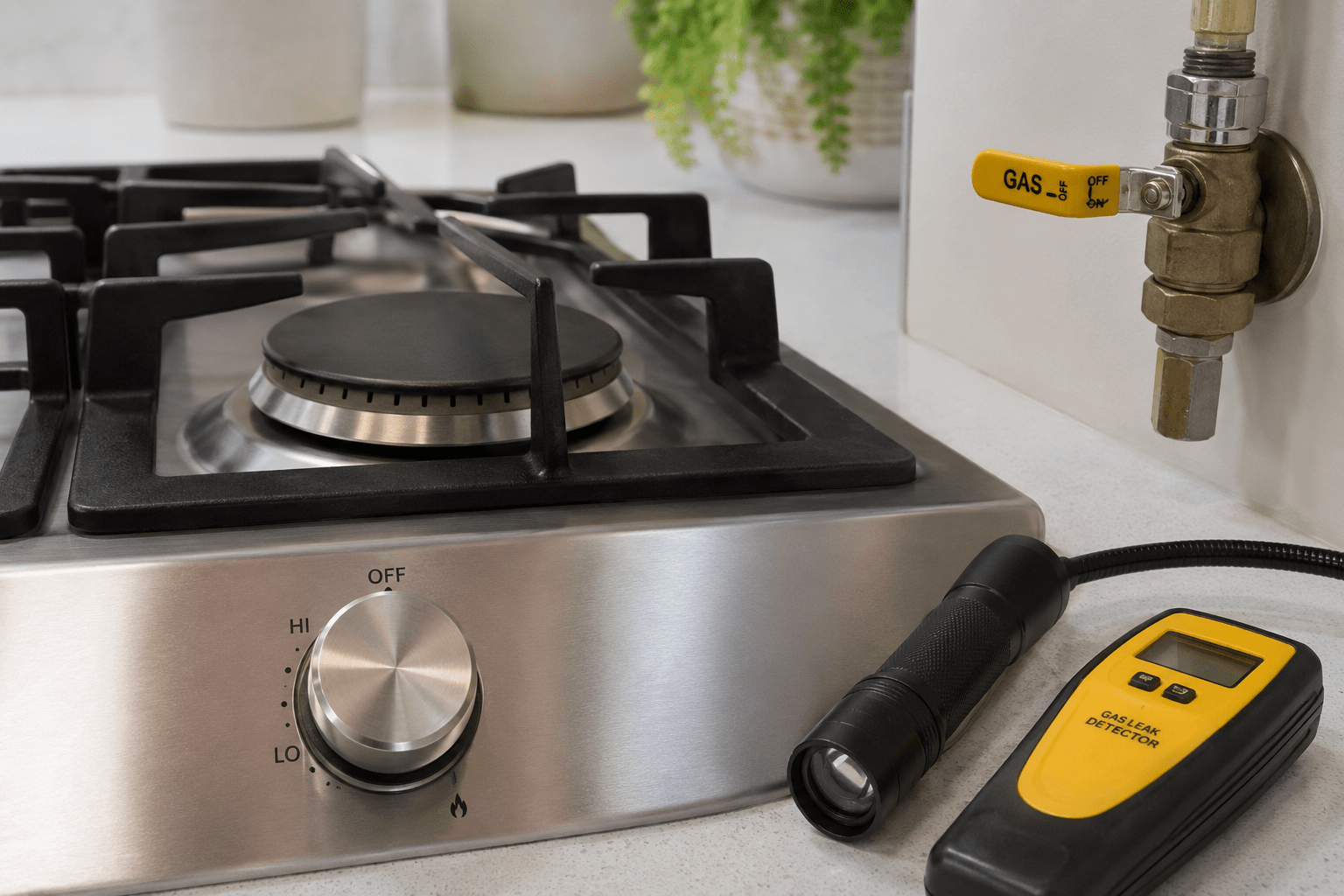
Electronic Gas Sniffers: These are highly sensitive handheld devices that can detect minute concentrations of gas in the air, measured in parts per million (ppm) — a detection methodology also central to professional fumigant monitoring, as detailed in phosphine best management practices for hazardous gas detection. By systematically tracing the highest concentration of gas, our sniffers can pinpoint microscopic leaks behind walls, inside cabinets, or under floors, even when the smell might be faint or diffused. This non-invasive method is incredibly effective for hard-to-reach areas.
-
Manometer Pressure Testing: This is the definitive diagnostic method for confirming the integrity of your entire gas system. We connect a precise pressure gauge (a manometer) to your gas lines after isolating the main supply and pressurise the system to a specific level. If the pressure drops over a set period, it confirms a leak exists somewhere in the network, even if it is too small to smell or visually detect. This test provides undeniable proof of a leak’s presence.
-
The Bubble Test: For visible confirmation on accessible joints, fittings, and connections, we apply a specialised, non-corrosive leak detection solution (often a soapy liquid). Any escaping gas creates obvious bubbles and foam at the point of leakage, visually identifying the exact point of failure. This method is particularly useful for appliance connections, LPG bottle regulators, and visible pipe joints. The expert team at MJP Plumbing uses these state-of-the-art tools for a swift and accurate diagnosis, getting to the heart of the problem efficiently.
What Does a Licensed Gas Fitter Do to Repair and Certify Your Gas System?
Our first step is always to make the area safe by isolating the leaking section of your gas network. The repair process itself is then carried out with meticulous attention to detail. This may involve tightening connections, replacing sections of degraded copper piping, or overhauling faulty valves within an appliance, always using the highest-grade materials to prevent future failures. For repairs involving older pipework, we make sure the new materials are compatible and installed to modern Australian standards.
After the physical repair, we conduct a rigorous re-testing of the entire system using the manometer again. This makes certain the original leak is fixed and that no other issues are present throughout the gas lines. Once the system is confirmed to be 100% gas-tight, we safely turn the supply back on and re-light any pilot lights or re-ignite electronic ignition systems. As fully licensed gas fitters, MJP Plumbing issues an official Gas Compliance Certificate for the work, which guarantees it meets all Queensland legal requirements and protects your property insurance. This certificate provides invaluable peace of mind for Sunshine Coast homeowners and property managers.
How Can You Prevent Future Gas Leaks and Maintain Home Safety?
The most effective way to deal with a gas smell at home is to prevent it from happening in the first place. Proactive, regular maintenance of your gas appliances and plumbing system is the best defence against leaks and the separate, silent threat of carbon monoxide poisoning. This is according to a report on gas appliance safety by the Victorian Building Authority.
Implementing a schedule of comprehensive safety checks and considering environmental monitoring solutions will significantly improve the long-term safety of your property. For homeowners, landlords, and business operators on the Sunshine Coast, a small investment in prevention provides invaluable peace of mind and protection.
Why Is Routine Gas Appliance Servicing Crucial for Safety?
Gas appliances are not “set and forget” items. Most manufacturers recommend that gas heaters, ovens, and hot water systems undergo a professional service every 12 to 24 months. During this service, a licensed gas fitter from MJP Plumbing performs a thorough inspection far beyond a simple visual check.
We clean burners of carbon build-up, test gas pressures, and inspect heat exchangers for dangerous cracks, which are a primary cause of carbon monoxide leaks. All safety valves and thermocouples are tested to make sure they are fully operational. This proactive maintenance identifies hidden corrosion and wear before they become hazardous, extends the life of your appliances, improves energy efficiency, and keeps your system compliant with safety standards.
“Don’t wait for a problem to arise. Proactive gas appliance servicing can detect minor issues before they become major hazards, safeguarding your property and loved ones. It’s an investment in enduring peace of mind.”
What Are Essential Gas Safety Checks for Sunshine Coast Properties?
Beyond individual appliance servicing, a broader approach to safety provides another layer of protection. For landlords and property managers, scheduling comprehensive gas safety checks between tenancies is a critical part of your duty of care, protecting both your tenants and your liability.
-
Environmental Monitoring: Install dual-sensor alarms that can detect both explosive gases like LPG and natural gas, as well as the odourless killer, Carbon Monoxide (CO). These should be placed near gas appliances according to manufacturer instructions, offering an extra layer of defence in Sunshine Coast homes.
-
LPG Cylinder Safety: Regularly check that LPG bottles are stored upright, securely restrained, and clear of ignition sources or combustible materials, especially in BBQ areas or outdoor kitchens. Inspect the flexible “pigtail” hoses for cracks or perishing, as they have a limited lifespan and are a common point of failure.
-
Pipework Vigilance: Periodically look over any exposed gas lines for signs of physical damage, corrosion, or sagging supports, paying special attention to pipes in the harsh coastal air. Regular inspections help your systems remain compliant with Queensland’s legal requirements, which is vital for maintaining valid property insurance. This is especially important in older Sunshine Coast homes where original pipework might be nearing its end-of-life.
How Does MJP Plumbing Prioritise Your Gas Safety?
A gas smell in your Sunshine Coast home or business is a clear call to action, not a cause for panic if you know the right steps. By understanding the warnings, following crucial safety protocols, and entrusting professional detection and repair to licensed experts like MJP Plumbing, you protect what matters most. Don’t hesitate—if you suspect a gas leak, act immediately and call MJP Plumbing for rapid, reliable, and legally compliant gas fitting services, to provide peace of mind and the safety of your property.
Frequently Asked Questions
Question: What Does a Gas Leak Smell Like?
A natural gas or LPG leak has a very distinct smell that is intentionally added for safety, as the gas itself is odourless. Most people describe it as smelling like rotten eggs, sulphur, or even decaying cabbage. This pungent, unmistakable odour serves as a strong warning sign that should never be ignored, with the intensity of the smell often indicating the potential severity of the leak.
Question: What Should I Do If I Smell a Faint Gas Odour Near My Gas Stove or Hot Water System?
Even a faint odour should be treated seriously. First, check that all appliance control knobs are securely in the “off” position. Immediately open nearby doors and windows to ventilate the area. If the smell persists, gets stronger, or you are ever in doubt, do not take any risks. Evacuate the property and call a licensed gas fitter like MJP Plumbing for a professional inspection of your gas cooktop or gas hot water system.
Question: Can I Smell a Gas Leak Outside My House, and What Does It Mean?
Yes, you can absolutely smell a gas leak outside. This could indicate a problem with an outdoor appliance like a BBQ or hot water system, a leak from an LPG cylinder connection, or a more serious issue with the underground supply line leading to your gas meter. Even an outdoor leak is hazardous, as gas can accumulate or seep into your home, so you should call your gas supplier or MJP Plumbing immediately. This is especially important for Sunshine Coast properties with external LPG bottles or extensive outdoor kitchen setups.
Question: Who Should I Call Immediately If I Smell a Strong Gas Leak in My House on the Sunshine Coast?
If the smell is very strong, overwhelming, or you can hear a hissing sound, evacuate everyone from the property immediately. Once you are at a safe distance, your first call should be to emergency services on 000 to request the fire brigade. For other urgent gas leak situations on the Sunshine Coast, call a licensed emergency gas plumber like MJP Plumbing on 0428 146 437 for prompt assistance.
Question: As a Landlord or Property Manager, What Are My Responsibilities Regarding Gas Safety?
You have a significant legal duty of care to make sure your rental properties are gas-safe. This includes arranging for regular inspections and maintenance of all gas appliances and installations by a licensed professional. You must hold current Gas System Compliance Certificates for any work performed and provide tenants with clear emergency instructions. Failing to meet these obligations can lead to severe liability and may void your insurance. For Sunshine Coast rental properties, it’s advisable to have these checks performed annually or between tenancies to maintain optimal safety and compliance.
Question: What Are the Signs of a Carbon Monoxide Leak, and How Is It Different From a Natural Gas Smell?
Carbon Monoxide (CO) is a byproduct of faulty or poorly ventilated gas appliances. Unlike natural gas, CO is completely odourless, colourless, and tasteless. Its poisoning symptoms are often mistaken for the flu and include headaches, dizziness, nausea, and fatigue. The only reliable way to detect it is with a dedicated CO alarm. A gas smell signifies unburnt gas, whereas CO is a silent, deadly byproduct of combustion, which makes proper ventilation and detection especially critical.
Question: How Often Should Gas Appliances and Systems Be Checked by a Licensed Professional?
For domestic properties, gas safety regulations and appliance manufacturers recommend a comprehensive service by a licensed professional every 12 to 24 months. For commercial properties with heavy usage, such as kitchens in Sunshine Coast cafes or restaurants, more frequent checks, such as every six months, are highly advisable. Regular maintenance from a trusted professional like MJP Plumbing helps prevent leaks, maintains efficiency, and keeps critical safety compliance in place for your Sunshine Coast home or business.